If they judge wrong from excusable error, you ought to correct it, as to-day it is proposed, by an explanatory bill,--or if by corruption, by bill of penalties declaratory, and by punishment.
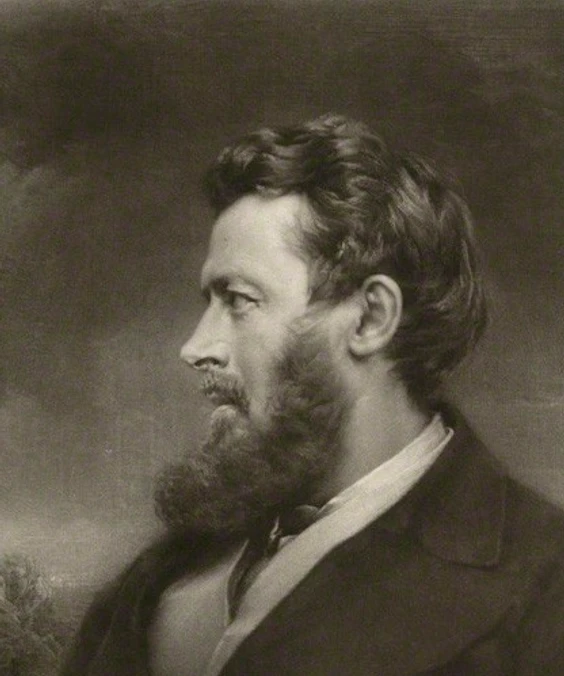
Edmund Burke
The Public Record
Edmund Burke was an Anglo-Irish writer, philosopher, and politician who is widely credited as the founder of the cultural and political philosophy of conservatism. Regarded as one of the most influential conservative thinkers and political writers of the 18th century, Burke spent the majority of his career in Great Britain and was elected as a member of Parliament (MP) from 1766 to 1794 in the House of Commons of Great Britain with the Whig Party. His writings played a significant role in influencing public views and opinions in both Great Britain and France following the French Revolution in 1789, and he remains a major figure in modern conservative circles.
gutenberg.org
But, after all, is it fit that this dishonorable contention between the court and juries should subsist any longer?
So that this hope of the power of juries to assert their own jurisdiction must be a principle blind, as being without reason, and as changeable as the complexion of men and the temper of the times.
They give no reason for their verdict, they can but condemn or acquit; and no man can tell the motives on which they have acquitted or condemned.
But supposing them full of knowledge and full of manly confidence in themselves, how will their knowledge or their confidence inform or inspirit others?
A timid jury will give way to an awful judge delivering oracularly the law, and charging them on their oaths, and putting it home to their consciences to beware of judging, where the law had given them no competence.
First, because juries, being taken at random out of a mass of men infinitely large, must be of characters as various as the body they arise from is large in its extent.
This law of court cabal and of party, this mens quædam nullo perturbata affectu, this law of complexion, ought not to be endured for a moment in a country whose being depends upon the certainty, clearness, and stability of institutions.
Whether a black-haired man or a fair-haired man presided in the Court of King's Bench, I would have the law the same; the same, whether he was born in domo regnatrice and sucked from his infancy the milk of courts, or was nurtured in the…
My law should not depend upon the fluctuation of the closet or the complexion of men.
I would not leave it to the chances of promotion, or to the characters of lawyers, what the law of the land, what the rights of juries, or what the liberty of the press should be.
If judges are so full of levity, so full of timidity, if they are influenced by such mean and unworthy passions that a popular clamor is sufficient to shake the resolution they build upon the solid basis of a legal principle, I would…
These suppositions become the strongest reasons with me to evince the necessity of some clear and positive settlement of this question of contested jurisdiction.
Whatever is most ancient and venerable in our Constitution, royal prerogative, privileges of Parliament, rights of elections, authority of courts, juries, must have been modelled according to the occasion.
To suppose that juries are something innate in the Constitution of Great Britain, that they have jumped, like Minerva, out of the head of Jove in complete armor, is a weak fancy, supported neither by precedent nor by reason.
You cannot open your statute-book without seeing positive provisions relative to every right of the subject.
This charter, the inestimable monument of English freedom, so long the boast and glory of this nation, would have been at once an instrument of our servitude and a monument of our folly, if this principle were true.
If so, very ill would the purchase of Magna Charta have merited the deluge of blood which was shed in order to have the body of English privileges defined by a positive written law.
For it would be a most dangerous, as it is a most idle and most groundless conceit, to assume as a general principle, that the rights and liberties of the subject are impaired by the care and attention of the legislature to secure them.
It may be more advisable to leave such matters to the enlightened discretion of a judge, awed by a censorial House of Commons.
If juries are confined to the fact, no writing which censures, however justly or however temperately, the conduct of administration, can be unpunished.
No intent can make a defamatory publication good, nothing can make it have a good tendency; truth is not pleadable.
But when the magistrate gives up his office and his duty, the people assume it, and they inquire too much and too irreverently, because they think their representatives do not inquire at all.
An inquiry is wished, as the most effectual way of putting an end to the clamors and libels which are the disorder and disgrace of the times.
I would rather stand the consequences of my first error than carry it to a judgment that must disgrace my prosecution or the court.
Politicians like Edmund Burke