
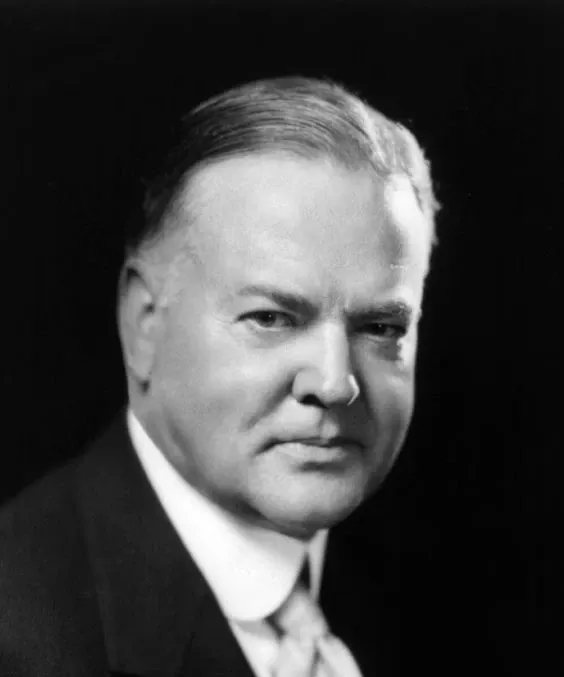

@webdubois· Jan 1, 1903
The soul, long pent up and dwarfed, suddenly expands in new-found freedom.
From the public-domain record · 81,371 quotes
Founders, statesmen and world leaders — cited from their collected works.
The figures
The soul, long pent up and dwarfed, suddenly expands in new-found freedom.
At the same time, through schools and periodicals, discussions and lectures, he is intellectually quickened and awakened.
Driven from his birthright in the South by a situation at which every fibre of his more outspoken and assertive nature revolts, he finds himself in a land where he can scarcely earn a decent living amid the harsh competition and the color…
Nor is this situation peculiar to the Southern United States, is it not rather the only method by which undeveloped races have gained the right to share modern culture?
His real thoughts, his real aspirations, must be guarded in whispers; he must not criticise, he must not complain.
The death of Denmark Vesey and Nat Turner proved long since to the Negro the present hopelessness of physical defence.
Deception is the natural defence of the weak against the strong, and the South used it for many years against its conquerors; to-day it must be prepared to see its black proletariat turn that same two-edged weapon against itself.
Is it not the tendency, born of Reconstruction and Reaction, to found a society on lawlessness and deception, to tamper with the moral fibre of a naturally honest and straightforward people until the whites threaten to become ungovernable…
It is no idle regret with which the white South mourns the loss of the old-time Negro,—the frank, honest, simple old servant who stood for the earlier religious age of submission and humility.
To-day the two groups of Negroes, the one in the North, the other in the South, represent these divergent ethical tendencies, the first tending toward radicalism, the other toward hypocritical compromise.
But, after all, is not this simply the writhing of the age translated into black,—the triumph of the Lie which today, with its false culture, faces the hideousness of the anarchist assassin?
The one type of Negro stands almost ready to curse God and die, and the other is too often found a traitor to right and a coward before force; the one is wedded to ideals remote, whimsical, perhaps impossible of realization; the other…
Thus we have two great and hardly reconcilable streams of thought and ethical strivings; the danger of the one lies in anarchy, that of the other in hypocrisy.
On the other hand, another type of mind, shrewder and keener and more tortuous too, sees in the very strength of the anti-Negro movement its patent weaknesses, and with Jesuitic casuistry is deterred by no ethical considerations in the…
Conscious of his impotence, and pessimistic, he often becomes bitter and vindictive; and his religion, instead of a worship, is a complaint and a curse, a wail rather than a hope, a sneer rather than a faith.
Feeling that his rights and his dearest ideals are being trampled upon, that the public conscience is ever more deaf to his righteous appeal, and that all the reactionary forces of prejudice, greed, and revenge are daily gaining new…
Such a double life, with double thoughts, double duties, and double social classes, must give rise to double words and double ideals, and tempt the mind to pretence or revolt, to hypocrisy or radicalism.
The worlds within and without the Veil of Color are changing, and changing rapidly, but not at the same rate, not in the same way; and this must produce a peculiar wrenching of the soul, a peculiar sense of doubt and bewilderment.
They must perpetually discuss the “Negro Problem,”—must live, move, and have their being in it, and interpret all else in its light or darkness.
Thus, when Emancipation finally came, it seemed to the freedman a literal Coming of the Lord.
For fifty years Negro religion thus transformed itself and identified itself with the dream of Abolition, until that which was a radical fad in the white North and an anarchistic plot in the white South had become a religion to the black…
Through fugitive slaves and irrepressible discussion this desire for freedom seized the black millions still in bondage, and became their one ideal of life.
But we must not forget that his chief influence was internal,—was exerted on the black world; and that there he was the ethical and social leader.