
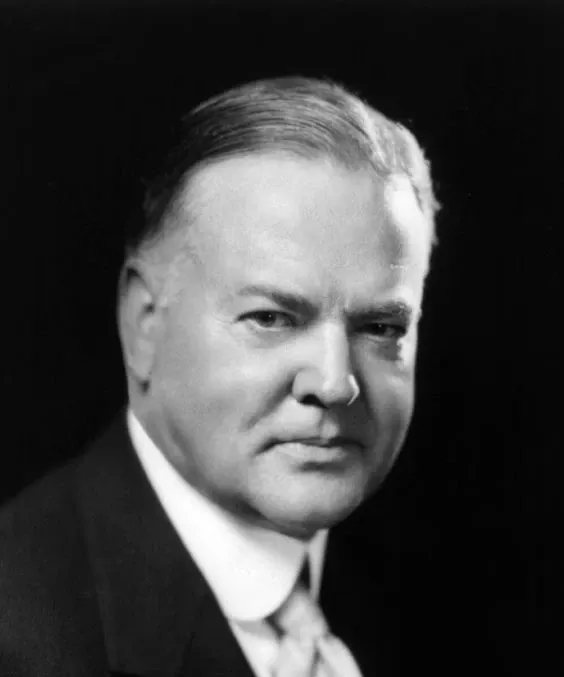

@teddyroosevelt· Republican · NY· Jan 1, 1900
No nation ever yet retained its freedom for any length of time after losing its respect for the law, after losing the law-abiding spirit, the spirit that really makes orderly liberty.
From the public-domain record · 81,371 quotes
Founders, statesmen and world leaders — cited from their collected works.
The figures
No nation ever yet retained its freedom for any length of time after losing its respect for the law, after losing the law-abiding spirit, the spirit that really makes orderly liberty.
He saw that lawlessness in all its forms was the handmaiden of tyranny.
The man who more than any other, save Lincoln, had changed us into a nation whose citizens were all freemen, realized entirely that these freemen would remain free only while they kept mastery over their own evil passions.
Grant, the champion whose sword was sharpest in the great fight for liberty, was no less sternly insistent upon the need of order and of obedience to law.
He did not plunge lightly into war, but once in, he saw the war through, and when it was over, it was over entirely.
He did not denounce an evil in strained and hyperbolic language; but when he did denounce it, he strove to make his denunciation effective by his action.
He was not in the least of the type which gets up mass-meetings, makes inflammatory speeches or passes inflammatory resolutions, and then permits over-forcible talk to be followed by over-feeble action.
He was a plain, quiet man, not seeking for glory; but a man who, when aroused, was always in deadly earnest, and who never shrank from duty.
At the time of the Civil War the only way to secure peace was to fight for it, and it would have been a crime against humanity to have stopped fighting before peace was conquered.
He felt nothing but impatient contempt for the weak souls who wished to hold parley with the enemy while that enemy was still capable of resistance.
Merciful oblivion has swallowed up the names of those who railed at the men who were saving the Union, while it has given us the memory of these same men as a heritage of honor forever; and brightest among their names flame those of…
But in the long run our gratitude was due primarily, not to the critics, not to the fault-finders, but to the men who actually did the work; not to the men of negative policy, but to those who struggled toward the given goal.
Above all, the great mass of the people possessed a tough and stubborn fibre of character.
A nation that has not the power of endurance, the power of dogged insistence on a determined policy, come weal or woe, has lost one chief element of greatness.
The lesson of unyielding, unflinching, unfaltering perseverance in the course upon which the nation has entered is one very necessary for a generation whose preachers sometimes dwell overmuch on the policies of the moment.
It is but an idle waste of time to celebrate the memory of the dead unless we, the living, in our lives strive to show ourselves not unworthy of them.
We meet here to pay glad homage to the memory of our illustrious dead; but let us keep ever clear before our minds the fact that mere lip-loyalty is no loyalty at all, and that the only homage that counts is the homage of deeds, not of…
But peace must be the normal condition, or the nation will come to a bloody doom.
Again and again in a nation’s history the time may, and indeed sometimes must, come when the nation’s highest duty is war.
The man who will not fight to avert or undo wrong is but a poor creature; but, after all, he is less dangerous than the man who fights on the side of wrong.
The men who have made our national greatness are those who faced danger and overcame it, who met difficulties and surmounted them, not those whose lines were cast in such pleasant places that toil and dread were ever far from them.
Rest and peace are good things, are great blessings, but only if they come honorably; and it is those who fearlessly turn away from them, when they have not been earned, who in the long run deserve best of their country.
The great man is always the man of mighty effort, and usually the man whom grinding need has trained to mighty effort.
It is only through work and strife that either nation or individual moves on to greatness.