
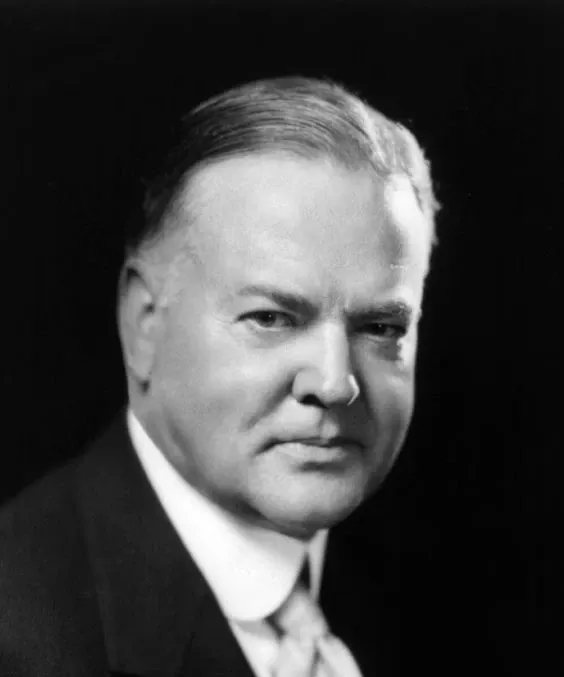

@cicero· 44 BC
For if the individual appropriates to selfish ends what should be devoted to the common good, all human fellowship will be destroyed.
From the public-domain record · 81,371 quotes
Founders, statesmen and world leaders — cited from their collected works.
The figures
For if the individual appropriates to selfish ends what should be devoted to the common good, all human fellowship will be destroyed.
This, then, ought to be the chief end of all men, to make the interest of each individual and of the whole body politic identical.
But if he believes that while such a course should be avoided, the other alternatives are much worse--namely, death, poverty, pain--he is mistaken in thinking that any ills affecting either his person or his property are more serious than…
Whence it follows that man, if he is obedient to nature, cannot do harm to his fellow-man.
The better and more noble, therefore, the character with which a man is endowed, the more does he prefer the life of service to the life of pleasure.
For it is to this that the laws have regard; this is their intent, that the bonds of union between citizens should not be impaired; and any attempt to destroy these bonds is repressed by the penalty of death, exile, imprisonment, or fine.
In all these it is with one accord ordained that no man shall be allowed for the sake of his own advantage to injure his neighbour.
For, without any conflict with nature's laws, it is granted that everybody may prefer to secure for himself rather than for his neighbour what is essential for the conduct of life; but nature's laws do forbid us to increase our means…
For, in the first place, injustice is fatal to social life and fellowship between man and man.
Well then, for a man to take something from his neighbour and to profit by his neighbour's loss is more contrary to nature than is death or poverty or pain or anything else that can affect either our person or our property.
But if anyone kills a tyrant--be he never so intimate a friend--he has not laden his soul with guilt, has he?
And he gave it no approval; for it is most immoral to think more highly of the apparently expedient than of the morally right, or even to set these over against each other and to hesitate to choose between them.
But, my dear Cicero, while the whole field of philosophy is fertile and productive and no portion of it barren and waste, still no part is richer or more fruitful than that which deals with moral duties; for from these are derived the…
I have, accordingly, written more in this short time since the downfall of the republic than I did in the course of many years, while the republic stood.
But I have learned from philosophers that among evils one ought not only to choose the least, but also to extract even from these any element of good that they may contain.
Such service calls for great men; it was commonly rendered in the days of our ancestors; if men will perform duties such as these, they will win popularity and glory for themselves and at the same time render eminent service to the state.
For there is nothing that upholds a government more powerfully than its credit; and it can have no credit, unless the payment of debts is enforced by law.
What else is that but to rob one man of what belongs to him and to give to another what does not belong to him? *84* And what is the meaning of an abolition of debts, except that you buy a farm with my money; that you have the farm, and I…
And this is the highest statesmanship and the soundest wisdom on the part of a good citizen, not to divide the interests of the citizens but to unite all on the basis of impartial justice.
That is the right way to deal with one's fellow-citizens, and not, as we have already witnessed on two occasions, to plant the spear in the forum and knock down the property of citizens under the auctioneer's hammer.
And how is it fair that a man who never had any property should take possession of lands that had been occupied for many years or even generations, and that he who had them before should lose possession of them?
Thus even though they to whom property has been wrongfully awarded be more in number than they from whom it has been unjustly taken, they do not for that reason have more influence; for in such matters influence is measured not by numbers…
They who direct the affairs of state, then, can win the good-will of the masses by no other means more easily than by self-restraint and self-denial.
For to exploit the state for selfish profit is not only immoral; it is criminal, infamous.