
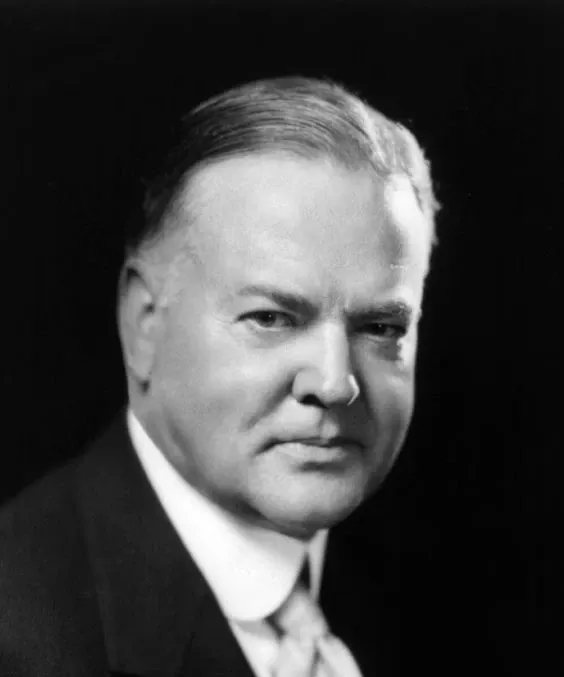

@bookertwashington· Jan 1, 1901
I have so trained myself that I can lie down for a nap of fifteen or twenty minutes, and get up refreshed in body and mind.
From the public-domain record · 81,371 quotes
Founders, statesmen and world leaders — cited from their collected works.
The figures
I have so trained myself that I can lie down for a nap of fifteen or twenty minutes, and get up refreshed in body and mind.
I try to look after the little ills, with the idea that if I take care of the little ills the big ones will not come.
When I begin my work in the morning, I expect to have a successful and pleasant day of it, but at the same time I prepare myself for unpleasant and unexpected hard places.
I believe that when one can grow to the point where he loves his work, this gives him a kind of strength that is most valuable.
There is a physical and mental and spiritual enjoyment that comes from a consciousness of being the absolute master of one’s work, in all its details, that is very satisfactory and inspiring.
I make it a rule never to let my work drive me, but to so master it, and keep it in such complete control, and to keep so far ahead of it, that I will be the master instead of the servant.
I make it a rule to clear my desk every day, before leaving my office, of all correspondence and memoranda, so that on the morrow I can begin a new day of work.
As far as I can, I make it a rule to plan for each day’s work—not merely to go through with the same routine of daily duties, but to get rid of the routine work as early in the day as possible, and then to enter upon some new or advance…
I have a strong feeling that every individual owes it to himself, and to the cause which he is serving, to keep a vigorous, healthy body, with the nerves steady and strong, prepared for great efforts and prepared for disappointments and…
This force is so organized and subdivided that the machinery of the school goes on day by day like clockwork.
One of the most encouraging signs in connection with the Tuskegee school is found in the fact that the organization is so thorough that the daily work of the school is not dependent upon the presence of any one individual.
The number of people who stand ready to consume one’s time, to no purpose, is almost countless.
They usually have some process for curing all of the ills of the world at once.
I said that I did not think it was necessary for me to go into extended explanations; if my seventeen years of work in the heart of the South had not been explanation enough, I did not see how words could explain.
In this letter I said that I had made it a rule never to say before a Northern audience anything that I would not say before an audience in the South.
The part of the speech which seems to arouse the wildest and most sensational enthusiasm was that in which I thanked the President for his recognition of the Negro in his appointments during the Spanish-American war.
One might take up the life of the worst element in New York City, for example, and prove almost anything he wanted to prove concerning the white man, but all will agree that this is not a fair test.
No one can come into contact with the race for twenty years, as I have done in the heart of the South, without being convinced that the race is constantly making slow but sure progress materially, educationally, and morally.
There never was a baser falsehood uttered concerning a race, or a statement made that was less capable of being proved by actual facts.
I have taken pains to go to the bottom of things and get facts, in a cold, business-like manner.
I know that on such occasions there is much that comes to the surface that is superficial and deceptive, but I have had experience enough not to be deceived by mere signs and fleeting enthusiasms.
I never feel so hopeful about the race as I do after being engaged in a series of these meetings.
I have done no work that I really enjoyed more than this, or that I think has accomplished more good.
It has been a matter of deep interest to me to note the number of people who have come to shake hands with me after an address, who say that this is the first time they have ever called a Negro “Mister.