
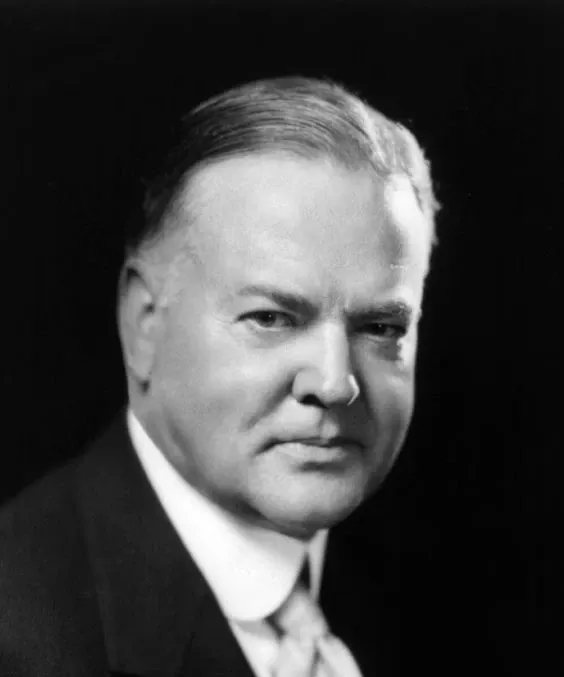

@edmundburke· Jan 1, 1790
They see no merit in the good, and no fault in the vicious management of public affairs; they rather rejoice in the latter, as more propitious to revolution.
From the public-domain record · 81,371 quotes
Founders, statesmen and world leaders — cited from their collected works.
The figures
They see no merit in the good, and no fault in the vicious management of public affairs; they rather rejoice in the latter, as more propitious to revolution.
Hypocrisy, of course, delights in the most sublime speculations; for, never intending to go beyond speculation, it costs nothing to have it magnificent.
This distemper of remedy, grown habitual, relaxes and wears out, by a vulgar and prostituted use, the spring of that spirit which is to be exerted on great occasions.
I confess to you, Sir, I never liked this continual talk of resistance and revolution, or the practice of making the extreme medicine of the Constitution its daily bread.
The body of the community, whenever it can come to act, can meet with no effectual resistance; but till power and right are the same, the whole body of them has no right inconsistent with virtue, and the first of all virtues, prudence.
By these theorists the right of the people is almost always sophistically confounded with their power.
The rights of men in governments are their advantages; and these are often in balances between differences of good,--in compromises sometimes between good and evil, and sometimes between evil and evil.
The rights of men are in a sort of middle, incapable of definition, but not impossible to be discerned.
The pretended rights of these theorists are all extremes; and in proportion as they are metaphysically true, they are morally and politically false.
But it is better that the whole, should be imperfectly and anomalously answered than that while some parts are provided for with great exactness, others might be totally neglected, or perhaps materially injured, by the over-care of a…
The simple governments are fundamentally defective, to say no worse of them.
When I hear the simplicity of contrivance aimed at and boasted of in any new political constitutions, I am at no loss to decide that the artificers are grossly ignorant of their trade or totally negligent of their duty.
The nature of man is intricate; the objects of society are of the greatest possible complexity: and therefore no simple disposition or direction of power can be suitable either to man's nature or to the quality of his affairs.
Indeed, in the gross and complicated mass of human passions and concerns, the primitive rights of men undergo such a variety of refractions and reflections that it becomes absurd to talk of them as if they continued in the simplicity of…
These metaphysic rights entering into common life, like rays of light which pierce into a dense medium, are, by the laws of Nature, refracted from their straight line.
In states there are often some obscure and almost latent causes, things which appear at first view of little moment, on which a very great part of its prosperity or adversity may most essentially depend.
The reverse also happens; and very plausible schemes, with very pleasing commencements, have often shameful and lamentable conclusions.
The science of constructing a commonwealth, or renovating it, or reforming it, is, like every other experimental science, not to be taught a priori.
The question is upon the method of procuring and administering them.
What is the use of discussing a man's abstract right to food or medicine?
It requires a deep knowledge of human nature and human necessities, and of the things which facilitate or obstruct the various ends which are to be pursued by the mechanism of civil institutions.
This it is which makes the constitution of a state, and the due distribution of its powers, a matter of the most delicate and complicated skill.
The moment you abate anything from the full rights of men each to govern himself, and suffer any artificial, positive limitation upon those rights, from that moment the whole organization of government becomes a consideration of…
In this sense the restraints on men, as well as their liberties, are to be reckoned among their rights.