
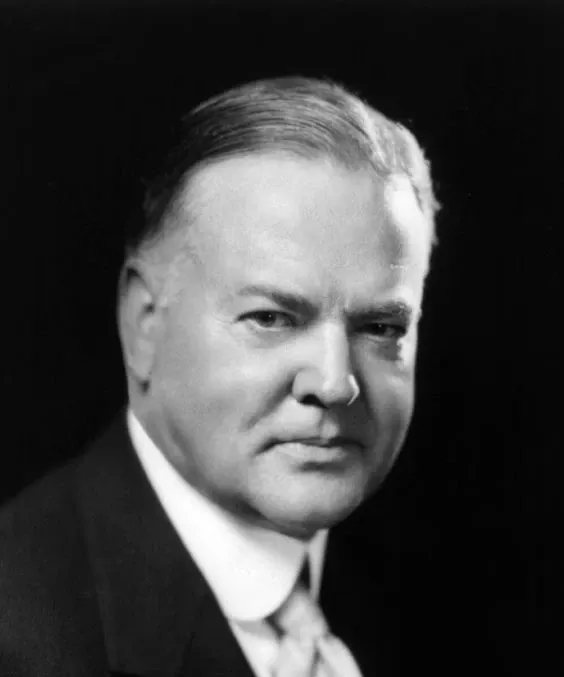

@webdubois· Jan 1, 1903
The opposition to Negro education in the South was at first bitter, and showed itself in ashes, insult, and blood; for the South believed an educated Negro to be a dangerous Negro.
From the public-domain record · 81,371 quotes
Founders, statesmen and world leaders — cited from their collected works.
The figures
The opposition to Negro education in the South was at first bitter, and showed itself in ashes, insult, and blood; for the South believed an educated Negro to be a dangerous Negro.
The greatest success of the Freedmen’s Bureau lay in the planting of the free school among Negroes, and the idea of free elementary education among all classes in the South.
If by 1874 the Georgia Negro alone owned three hundred and fifty thousand acres of land, it was by grace of his thrift rather than by bounty of the government.
But the vision of “forty acres and a mule”—the righteous and reasonable ambition to become a landholder, which the nation had all but categorically promised the freedmen—was destined in most cases to bitter disappointment.
The two great obstacles which confronted the officials were the tyrant and the idler,—the slaveholder who was determined to perpetuate slavery under another name; and, the freedman who regarded freedom as perpetual rest,—the Devil and the…
Thus it is doubly difficult to write of this period calmly, so intense was the feeling, so mighty the human passions that swayed and blinded men.
Idle to say it never should have been; it was as inevitable as its results were pitiable.
They shrank from the master who still strove for their chains; they fled to the friends that had freed them, even though those friends stood ready to use them as a club for driving the recalcitrant South back into loyalty.
And the Negro knew full well that, whatever their deeper convictions may have been, Southern men had fought with desperate energy to perpetuate this slavery under which the black masses, with half-articulate thought, had writhed and…
Then amid all crouched the freed slave, bewildered between friend and foe.
The very name of the Bureau stood for a thing in the South which for two centuries and better men had refused even to argue,—that life amid free Negroes was simply unthinkable, the maddest of experiments.
Guerrilla raiding, the ever-present flickering after-flame of war, was spending its forces against the Negroes, and all the Southern land was awakening as from some wild dream to poverty and social revolution.
The war cloud had thinned enough to allow a clearer conception of the work of Emancipation.
An institution such as that was well-nigh as difficult to end as to begin.
Behind the mists of ruin and rapine waved the calico dresses of women who dared, and after the hoarse mouthings of the field guns rang the rhythm of the alphabet.
A curious mess he looked upon: little despotisms, communistic experiments, slavery, peonage, business speculations, organized charity, unorganized almsgiving,—all reeling on under the guise of helping the freedmen, and all enshrined in the…
Thus did the United States government definitely assume charge of the emancipated Negro as the ward of the nation.
But to me neither soldier nor fugitive speaks with so deep a meaning as that dark human cloud that clung like remorse on the rear of those swift columns, swelling at times to half their size, almost engulfing and choking them.
Three characteristic things one might have seen in Sherman’s raid through Georgia, which threw the new situation in shadowy relief: the Conqueror, the Conquered, and the Negro.
And daily, too, it seemed more plain that this was no ordinary matter of temporary relief, but a national crisis; for here loomed a labor problem of vast dimensions.
Then the long-headed man with care-chiselled face who sat in the White House saw the inevitable, and emancipated the slaves of rebels on New Year’s, 1863.
The war has naught to do with slaves, cried Congress, the President, and the Nation; and yet no sooner had the armies, East and West, penetrated Virginia and Tennessee than fugitive slaves appeared within their lines.
Peremptory military commands this way and that, could not answer the query; the Emancipation Proclamation seemed but to broaden and intensify the difficulties; and the War Amendments made the Negro problems of to-day.
No sooner had Northern armies touched Southern soil than this old question, newly guised, sprang from the earth,—What shall be done with Negroes?