
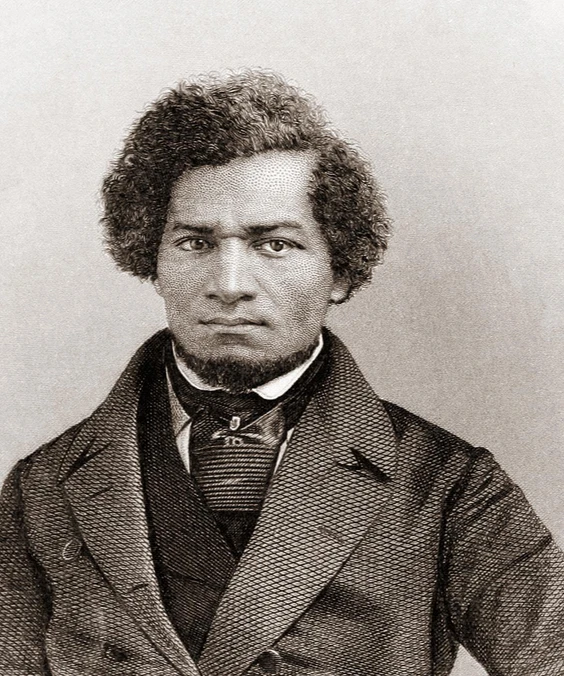

@frederickdouglass· Jan 1, 1845
It was the first work, the reward of which was to be entirely my own.
From the public-domain record · 81,371 quotes
Founders, statesmen and world leaders — cited from their collected works.
The figures
It was the first work, the reward of which was to be entirely my own.
I believe there have been no more such threats, and should there be hereafter, I doubt not that death would be the consequence.
I found among them a determination to protect each other from the blood-thirsty kidnapper, at all hazards.
I was for once made glad by a view of extreme wealth, without being saddened by seeing extreme poverty.
The people looked more able, stronger, healthier, and happier, than those of Maryland.
Every man appeared to understand his work, and went at it with a sober, yet cheerful earnestness, which betokened the deep interest which he felt in what he was doing, as well as a sense of his own dignity as a man.
And upon coming to the north, I expected to meet with a rough, hard-handed, and uncultivated population, living in the most Spartan-like simplicity, knowing nothing of the ease, luxury, pomp, and grandeur of southern slaveholders.
I had very strangely supposed, while in slavery, that few of the comforts, and scarcely any of the luxuries, of life were enjoyed at the north, compared with what were enjoyed by the slaveholders of the south.
The impression which I had received respecting the character and condition of the people of the north, I found to be singularly erroneous.
Johnson the privilege of choosing me a name, but told him he must not take from me the name of “Frederick.” I must hold on to that, to preserve a sense of my identity.
We now began to feel a degree of safety, and to prepare ourselves for the duties and responsibilities of a life of freedom.
The motto which I adopted when I started from slavery was this—“Trust no man!” I saw in every white man an enemy, and in almost every colored man cause for distrust.
The wretchedness of slavery, and the blessedness of freedom, were perpetually before me.
I felt assured that, if I failed in this attempt, my case would be a hopeless one—it would seal my fate as a slave forever.
It is my opinion that thousands would escape from slavery, who now remain, but for the strong cords of affection that bind them to their friends.
My object in working steadily was to remove any suspicion he might entertain of my intent to run away; and in this I succeeded admirably.
I thought the matter over during the next day, Sunday, and finally resolved upon the third day of September, as the day upon which I would make a second attempt to secure my freedom.
I did not allow myself a single word; but was resolved, if he laid the weight of his hand upon me, it should be blow for blow.
I told him I hired my time and while I paid him the price which he asked for it, I did not know that I was bound to ask him when and where I should go.
It was a step towards freedom to be allowed to bear the responsibilities of a freeman, and I was determined to hold on upon it.
He received all the benefits of slaveholding without its evils; while I endured all the evils of a slave, and suffered all the care and anxiety of a freeman.
But in spite of him, and even in spite of myself, I continued to think, and to think about the injustice of my enslavement, and the means of escape.
He seemed to see fully the pressing necessity of setting aside my intellectual nature, in order to contentment in slavery.
I always felt worse for having received any thing; for I feared that the giving me a few cents would ease his conscience, and make him feel himself to be a pretty honorable sort of robber.