
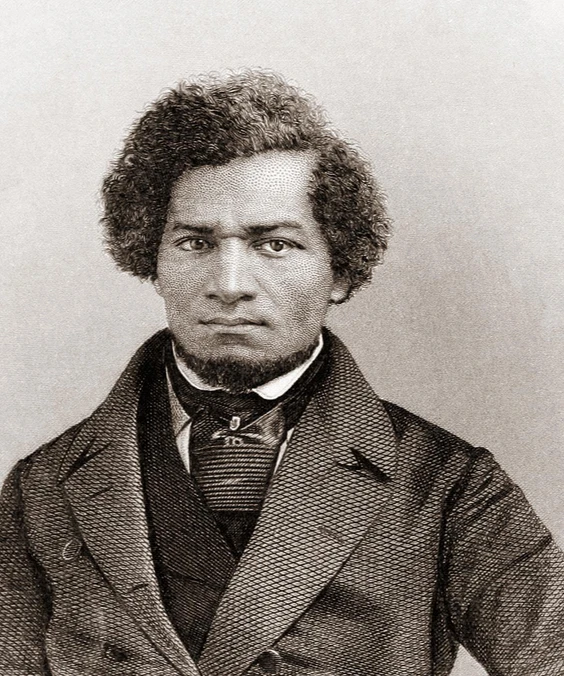

@frederickdouglass· Jan 1, 1855
I am,” thought I, “not only the slave of Thomas, but I am the slave of society at large.
From the public-domain record · 81,371 quotes
Founders, statesmen and world leaders — cited from their collected works.
The figures
I am,” thought I, “not only the slave of Thomas, but I am the slave of society at large.
This had been so when she knew we were nearly half starved; and yet, that mistress, with saintly air, would kneel with her husband, and pray each morning that a merciful God would bless them in basket and in store, and save them, at last…
A great many times have we, poor creatures, been severely pinched with hunger, when meat and bread have been moulding under the lock, while the key was in the pocket of our mistress.
It was not always convenient to steal from master, and the same reason why I might, innocently, steal from him, did not seem to justify me in stealing from others.
It was simply appropriating what was my own to the use of my master, since the health and strength derived from such food were exerted in his service.
Considering that my labor and person were the property of Master Thomas, and that I was by him deprived of the necessaries of life necessaries obtained by my own labor—it was easy to deduce the right to supply myself with what was my own.
Nor was this practice the mere result of an unreasoning instinct; it was, in my case, the result of a clear apprehension of the claims of morality.
I frankly confess, that while I hated everything like stealing, as such, I nevertheless did not hesitate to take food, when I was hungry, wherever I could find it.
We were compelled either to beg, or to steal, and we did both.
He was stingy, and she was cruel; and—what was quite natural in such cases—she possessed the ability to make him as cruel as herself, while she could easily descend to the level of his meanness.
It did seem that every time the young tendrils of my affection became attached, they were rudely broken by some unnatural outside power; and I was beginning to look away to heaven for the rest denied me on earth.
The air seemed filled with bright, descending messengers from the sky.
The influence of brandy and bad company on him, and the influence of slavery and social isolation upon her, had wrought disastrously upon the characters of both.
I was only a slave; my wishes were nothing, and my happiness was the sport of my masters.
The overseer had written his character on the living parchment of most of their backs, and left them callous; my back (thanks to my early removal from the plantation to Baltimore) was yet tender.
His going out into the world, is like a living man going into the tomb, who, with open eyes, sees himself buried out of sight and hearing of wife, children and friends of kindred tie.
There is no improvement in his condition probable,—no correspondence possible,—no reunion attainable.
Nor can those from whom they separate, give them up with that cheerfulness with which friends and relations yield each other up, when they feel that it is for the good of the departing one that he is removed from his native place.
A slave seldom thinks of bettering his condition by being sold, and hence he looks upon separation from his native place, with none of the enthusiasm which animates the bosoms of young freemen, when they contemplate a life in the far west…
On the other hand, the slave is a fixture; he has no choice, no goal, no destination; but is pegged down to a single spot, and must take root here, or nowhere.
Slaves generally dread to fall into the hands of drunken owners.
One word from the appraisers, against all preferences or prayers, was enough to sunder all the ties of friendship and affection, and even to separate husbands and wives, parents and children.
Our destiny was now to be fixed for life, and we had no more voice in the decision of the question, than the oxen and cows that stood chewing at the haymow.