
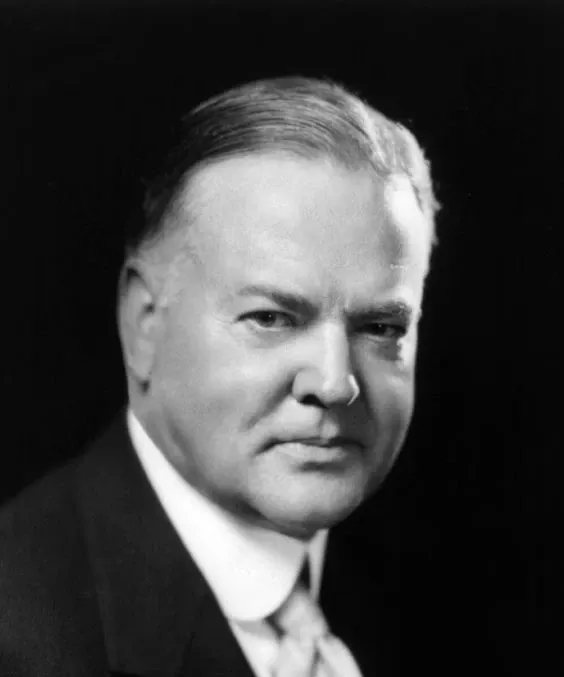

@frederickdouglass· Jan 1, 1855
No man can tell the intense agony which is felt by the slave, when wavering on the point of making his escape.
From the public-domain record · 81,371 quotes
Founders, statesmen and world leaders — cited from their collected works.
The figures
No man can tell the intense agony which is felt by the slave, when wavering on the point of making his escape.
The case, sometimes, to our excited visions, stood thus: At every gate through which we had to pass, we saw a watchman; at every ferry, a guard; on every bridge, a sentinel; and in every wood, a patrol or slave-hunter.
We could see no spot on this side the ocean, where we could be free.
The nearer are the lines of a slave state and the borders of a free one, the greater the peril.
Every slaveholder seeks to impress his slave with a belief in the boundlessness of slave territory, and of his own almost illimitable power.
I hated the secrecy; but where slavery is powerful, and liberty is weak, the latter is driven to concealment or to destruction.
LIBERTY was our aim; and we had now come to think that we had a right to liberty, against every obstacle even against the lives of our enslavers.
We did not seek to overthrow them, but to escape from them.
We were plotting against our (so called) lawful rulers; with this difference that we sought our own good, and not the harm of our enemies.
I claim to be the instigator of the high crime (as the slaveholders regard it) and I kept life in it, until life could be kept in it no longer.
We meant to reach the north—and the north was our Canaan.
Suspicion and torture are the approved methods of getting at the truth, here.
The reader will see that the good old rule—“a man is to be held innocent until proved to be guilty”—does not hold good on the slave plantation.
The slave is sometimes whipped into the confession of offenses which he never committed.
You have got the devil in you,” say they, “and we will whip him out of you.” I have often been put thus to the torture, on bare suspicion.
Conscious of the injustice and wrong they are every hour perpetrating, and knowing what they themselves would do if made the victims of such wrongs, they are looking out for the first signs of the dread retribution of justice.
They have to deal not with earth, wood, or stone, but with men; and, by every regard they have for their safety and prosperity, they must study to know the material on which they are at work.
It is the interest and business of slaveholders to study human nature, with a view to practical results, and many of them attain astonishing proficiency in discerning the thoughts and emotions of slaves.
Thoughts and purposes so incendiary as those I now cherished, could not agitate the mind long, without danger of making themselves manifest to scrutinizing and unfriendly beholders.
For my own part, I had now become altogether too big for my chains.
The intense desires, now felt, to be free, quickened by my present favorable circumstances, brought me to the determination to act, as well as to think and speak.
To be shut up entirely to the past and present, is abhorrent to the human mind; it is to the soul—whose life and happiness is unceasing progress—what the prison is to the body; a blight and mildew, a hell of horrors.
The thought of only being a creature of the present and the past, troubled me, and I longed to have a future—a future with hope in it.
I hated slavery, always, and the desire for freedom only needed a favorable breeze, to fan it into a blaze, at any moment.