
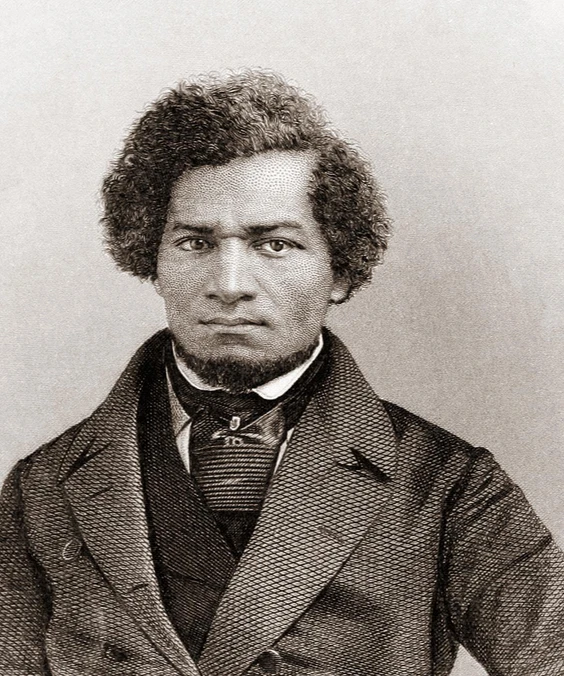

@frederickdouglass· Jan 1, 1855
The practice of publishing every new invention by which a slave is known to have escaped from slavery, has neither wisdom nor necessity to sustain it.
From the public-domain record · 81,371 quotes
Founders, statesmen and world leaders — cited from their collected works.
The figures
The practice of publishing every new invention by which a slave is known to have escaped from slavery, has neither wisdom nor necessity to sustain it.
A slaveholding community has a peculiar taste for ferreting out offenses against the slave system, justice there being more sensitive in its regard for the peculiar rights of this system, than for any other interest or institution.
The colored man, there, must not only shun evil, but shun the very appearance of evil, or be condemned as a criminal.
If there be one crevice through which a single drop can fall, it will certainly rust off the slave’s chain.
The whole relationship must not only demonstrate, to his mind, its necessity, but its absolute rightfulness.
It must not depend upon mere force; the slave must know no Higher Law than his master’s will.
To make a contented slave, you must make a thoughtless one.
He had the power to compel me to give him the fruits of my labor, and this power was his only right in the case.
The right to take my earnings, was the right of the robber.
I contracted for it, worked for it, earned it, collected it; it was paid to me, and it was rightfully my own; and yet, upon every returning Saturday night, this money—my own hard earnings, every cent of it—was demanded of me, and taken…
There was no reason why I should be the thrall of any man.
I was living among free men; and was, in all respects, equal to them by nature and by attainments.
After learning to calk, I sought my own employment, made my own contracts, and collected my own earnings; giving Master Hugh no trouble in any part of the transactions to which I was a party.
The laws and the morals of the Christian city of Baltimore, afforded no protection to the sable denizens of that city.
The slightest manifestation of sympathy or justice toward a person of color, was denounced as abolitionism; and the name of abolitionist, subjected its bearer to frightful liabilities.
He could issue no warrant on my word, against white persons; and, if I had been killed in the presence of a thousand blacks, their testimony, combined would have been insufficient to arrest a single murderer.
His indignation was really strong and healthy; but, unfortunately, it resulted from the thought that his rights of property, in my person, had not been respected, more than from any sense of the outrage committed on me as a man.
To make this enmity deep and broad, between the slave and the poor white man, the latter is allowed to abuse and whip the former, without hinderance.
The impression is cunningly made, that slavery is the only power that can prevent the laboring white man from falling to the level of the slave’s poverty and degradation.
At present, the slaveholders blind them to this competition, by keeping alive their prejudice against the slaves, as men—not against them as slaves.
The competition, and its injurious consequences, will, one day, array the nonslaveholding white people of the slave states, against the slave system, and make them the most effective workers against the great evil.
The slave is robbed, by his master, of all his earnings, above what is required for his bare physical necessities; and the white man is robbed by the slave system, of the just results of his labor, because he is flung into competition with…
The white slave has taken from him, by indirection, what the black slave has taken from him, directly, and without ceremony.