
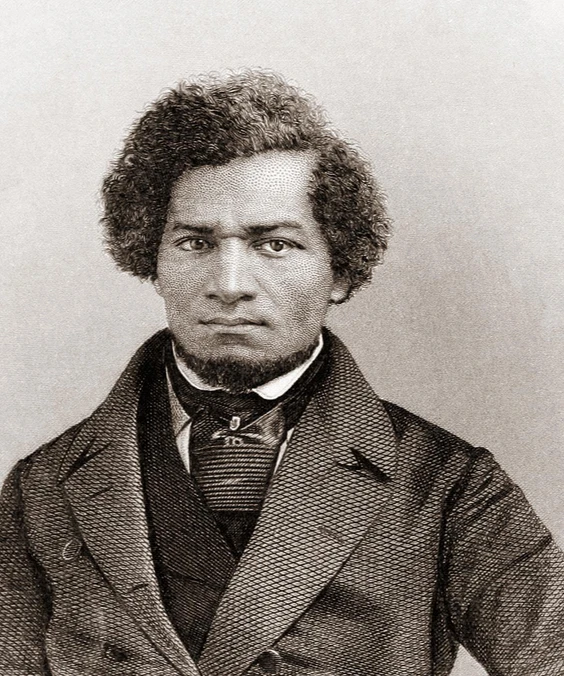

@frederickdouglass· Jan 1, 1855
They hold that they are rated according to their color, and that it is impossible for white people ever to look upon dark races of men, or men belonging to the African race, with other than feelings of aversion.
From the public-domain record · 81,371 quotes
Founders, statesmen and world leaders — cited from their collected works.
The figures
They hold that they are rated according to their color, and that it is impossible for white people ever to look upon dark races of men, or men belonging to the African race, with other than feelings of aversion.
Some people will have it that there is a natural, an inherent, and an invincible repugnance in the breast of the white race toward dark-colored people; and some very intelligent colored men think that their proscription is owing solely to…
In those days, it was thought strange that a white man and a colored man could dine peaceably at the same table, and in some parts the strangeness of such a sight has not entirely subsided.
Although often annoyed, and sometimes outraged, by this prejudice against color, I am indebted to it for many passages of quiet amusement.
After many battles with the railroad conductors, and being roughly handled in not a few instances, proscription was at last abandoned; and the “Jim Crow car”—set up for the degradation of colored people—is nowhere found in New England.
Then, again, if the declared purposes of an instrument are to govern the meaning of all its parts and details, as they clearly should, the constitution of our country is our warrant for the abolition of slavery in every state in the…
My new circumstances compelled me to re-think the whole subject, and to study, with some care, not only the just and proper rules of legal interpretation, but the origin, design, nature, rights, powers, and duties of civil government, and…
Those who could not see any honest reasons for changing their views, as I had done, could not easily see any such reasons for my change, and the common punishment of apostates was mine.
What they held to be a great and important truth, I now looked upon as a dangerous error.
I look upon the time, money, and labor bestowed upon it, as being amply rewarded, in the development of my own mental and moral energies, and in the corresponding development of my deeply injured and oppressed people.
As it is, I rejoice in having engaged in the enterprise, and count it joy to have been able to suffer, in many ways, for its success, and for the success of the cause to which it has been faithfully devoted.
A slave, brought up in the very depths of ignorance, assuming to instruct the highly civilized people of the north in the principles of liberty, justice, and humanity!
All previous attempts to establish such a journal having failed, I felt that probably I should but add another to the list of failures, and thus contribute another proof of the mental and moral deficiencies of my race.
Albeit, the lash of proscription, to a man accustomed to equal social position, even for a time, as I was, has a sting for the soul hardly less severe than that which bites the flesh and draws the blood from the back of the plantation…
I replied to the doctor as well as I could, and was successful in getting a respectful hearing before the British public, who are by nature and practice ardent lovers of fair play, especially in a conflict between the weak and the strong.
This controversy with the Alliance might be made the subject of extended remark, but I must forbear, except to say, that this effort to shield the Christian character of slaveholders greatly served to open a way to the British ear for…
But the question of slavery is too large a question to be finally disposed of, even by the Evangelical Alliance.
One good result followed the conduct of the Free Church; it furnished an occasion for making the people of Scotland thoroughly acquainted with the character of slavery, and for arraying against the system the moral and religious sentiment…
She lost a glorious opportunity for giving her voice, her vote, and her example to the cause of humanity; and to-day she is staggering under the curse of the enslaved, whose blood is in her skirts.
The Free Church held on to the blood-stained money, and continued to justify itself in its position—and of course to apologize for slavery—and does so till this day.
The deed was done, however; the pillars of the church—the proud, Free Church of Scotland—were committed and the humility of repentance was absent.
It seemed to me, as it thundered up from the vast audience, like the fall of an immense shaft, flung from shoulders already galled by its crushing weight.
Speech after speech, pamphlet after pamphlet, editorial after editorial, sermon after sermon, soon lashed the conscientious Scotch people into a perfect furore.
I have never seen a people more deeply moved than were the people of Scotland, on this very question.