
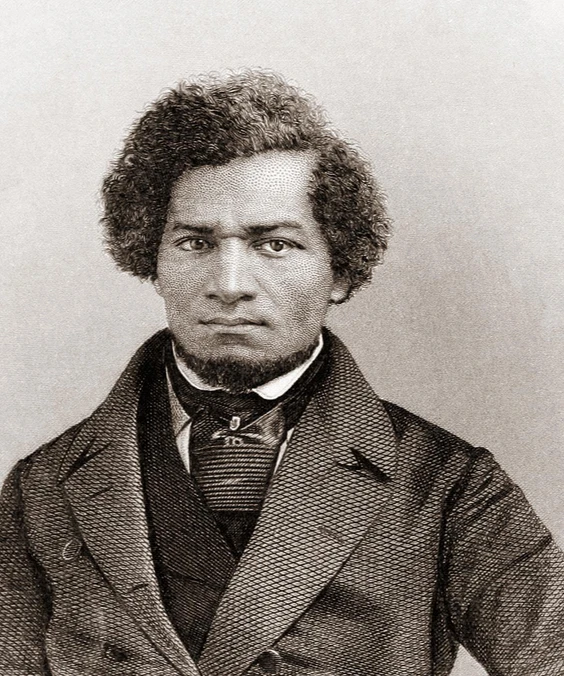

@frederickdouglass· Jan 1, 1881
My thoughts would compel utterance; and there, with no audience but the Almighty, I would pour out my soul’s complaint in my rude way with an apostrophe to the moving multitude of ships.
From the public-domain record · 81,371 quotes
Founders, statesmen and world leaders — cited from their collected works.
The figures
My thoughts would compel utterance; and there, with no audience but the Almighty, I would pour out my soul’s complaint in my rude way with an apostrophe to the moving multitude of ships.
My sufferings, as I remember them now, seem like a dream rather than a stern reality.
I was sometimes tempted to take my life and that of Covey, but was prevented by a combination of hope and fear.
Covey succeeded in breaking me--in body, soul, and spirit.
It was never too hot, or too cold; it could never rain, blow, snow, or hail too hard for us to work in the field.
It was the system of slavery which made this allowable, and which condemned the slaveholder for buying a slave woman and devoting her to this life, no more than for buying a cow and raising stock from her, and the same rules were observed…
Knowing this fact as the slaveholder did, and judging the slave by himself, he naturally concluded that the slave would be idle whenever the cause for this fear was absent.
The fear of punishment was the sole motive of any sort of industry with him.
There was no earthly inducement in the slave’s condition to incite him to labor faithfully.
No thief was ever more artful in his devices than this man Covey.
I believed I should get enough to eat at Covey’s, even if I suffered in other respects, and this to a hungry man is not a prospect to be regarded with indifference.
The whole community, with but one single exception, among the whites, frowned upon everything like imparting instruction, either to slaves or to free colored persons.
Cookman was, that whenever he met slaveholders he labored faithfully with them, as a religious duty, to induce them to liberate their bondmen.
They seemed about as unconcerned about our getting to heaven, as about our getting out of slavery.
If religion had any effect at all on him, it made him more cruel and hateful in all his ways.
This was proof to us that he was willing to give up all to God, and for the sake of God, and not to do this was, in our estimation, an evidence of hard-heartedness, and was wholly inconsistent with the idea of genuine conversion.
Slaveholders might sometimes have confidence in the piety of some of their slaves, but the slaves seldom had confidence in the piety of their masters.
Failing to command their respect, both himself and wife were ever on the alert lest some indignity should be offered him by the slaves.
To make a man a slave was to rob him of moral responsibility.
Slaveholders I held to be individually and collectively responsible for all the evils which grew out of the horrid relation, and I believed they would be so held in the sight of God.
If he stole he but took his own; if he killed his master, he only imitated the heroes of the revolution.
Slaveholders made it almost impossible for the slave to commit any crime, known either to the laws of God or to the laws of man.
I am,” I thought, “not only the slave of Master Thomas, but I am the slave of society at large.
To be sure, this was stealing, according to the law and gospel I heard from the pulpit; but I had begun to attach less importance to what dropped from that quarter on such points.