
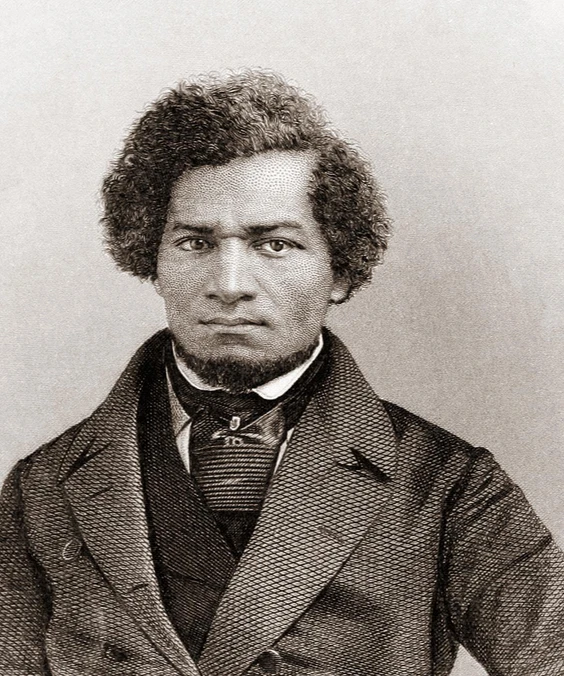

@frederickdouglass· Jan 1, 1881
But to meet for the purpose of improving the mind and heart, by learning to read the sacred scriptures, was a nuisance to be instantly stopped.
From the public-domain record · 81,371 quotes
Founders, statesmen and world leaders — cited from their collected works.
The figures
But to meet for the purpose of improving the mind and heart, by learning to read the sacred scriptures, was a nuisance to be instantly stopped.
I was not long in bringing around me twenty or thirty young men, who enrolled themselves gladly in my Sabbath-school, and were willing to meet me regularly under the trees or elsewhere, for the purpose of learning to read.
I began to address my companions on the subject of education, and the advantages of intelligence over ignorance, and, as far as I dared, I tried to show the agency of ignorance in keeping men in slavery.
Thus elevated a little at Freeland’s, the dreams called into being by that good man, Father Lawson, when in Baltimore, began to visit me again; shoots from the tree of liberty began to put forth buds, and dim hopes of the future began to…
You may hurl a man so low beneath the level of his kind, that he loses all just ideas of his natural position, but elevate him a little, and the clear conception of rights rises to life and power, and leads him onward.
Notwithstanding all the improvement in my relations, notwithstanding the many advantages I had gained by my new home and my new master, I was still restless and discontented.
It was the sober, thoughtful slave who was dangerous, and needed the vigilance of his master to keep him a slave.
Thus, when the slave asked for hours of “virtuous liberty,” his cunning master took advantage of his ignorance and cheered him with a dose of vicious and revolting dissipation artfully labeled with the name of “liberty.
The license allowed appeared to have no other object than to disgust the slaves with their temporary freedom, and to make them as glad to return to their work as they were to leave it.
Everything like rational enjoyment was frowned upon, and only those wild and low sports peculiar to semi-civilized people were encouraged.
It was not from a generous unconcern for the slave’s labor, but from a prudent regard for the slave system.
The slave’s happiness was not the end sought, but the master’s safety.
Ostensibly they were institutions of benevolence designed to mitigate the rigors of slave life, but practically they were a fraud instituted by human selfishness, the better to secure the ends of injustice and oppression.
Thus they became a part and parcel of the gross wrongs and inhumanity of slavery.
These holidays were also sort of conductors or safety-valves, to carry off the explosive elements inseparable from the human mind when reduced to the condition of slavery.
These holidays served the purpose of keeping the minds of the slaves occupied with prospective pleasure within the limits of slavery.
To enslave men successfully and safely it is necessary to keep their minds occupied with thoughts and aspirations short of the liberty of which they are deprived.
We regarded this time as our own by the grace of our masters, and we therefore used it or abused it as we pleased.
Trained from the cradle up to think and feel that their masters were superior, and invested with a sort of sacredness, there were few who could rise above the control which that sentiment exercised.
Slaves would sometimes fight with each other, and even die at each other’s hands, but there were very few who were not held in awe by a white man.
I had reached the point at which I was not afraid to die.
He only can understand the effect of this combat on my spirit, who has himself incurred something, hazarded something, in repelling the unjust and cruel aggressions of a tyrant.
A man without force is without the essential dignity of humanity.
Covey, undignified as it was, and as I fear my narration of it is, was the turning-point in my “life as a slave.” It rekindled in my breast the smouldering embers of liberty; it brought up my Baltimore dreams, and revived a sense of my own…