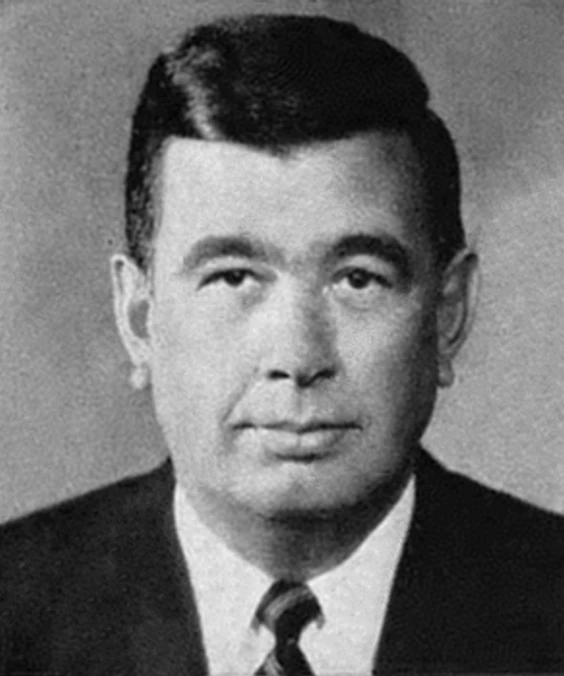
What fascinates me but angers me so much is that as I said--and you will remember this, Russell, from our August hearing--is there is such a direct comparison between this and the Gulf War Syndrome: the denial on the part of the military…
Jay Rockefeller
The Public Record
John Davison Rockefeller IV, commonly known as Jay Rockefeller, is a prominent American politician and member of the Democratic Party. Born on June 18, 1937, in New York City, he served as the Governor of West Virginia from 1977 to 1985 and later represented the state in the U.S. Senate from 1985 until his retirement in 2015. During his time in the Senate, Rockefeller was known for his work on healthcare, education, and technology issues, advocating for the expansion of access to healthcare and the improvement of education systems in West Virginia and across the nation.
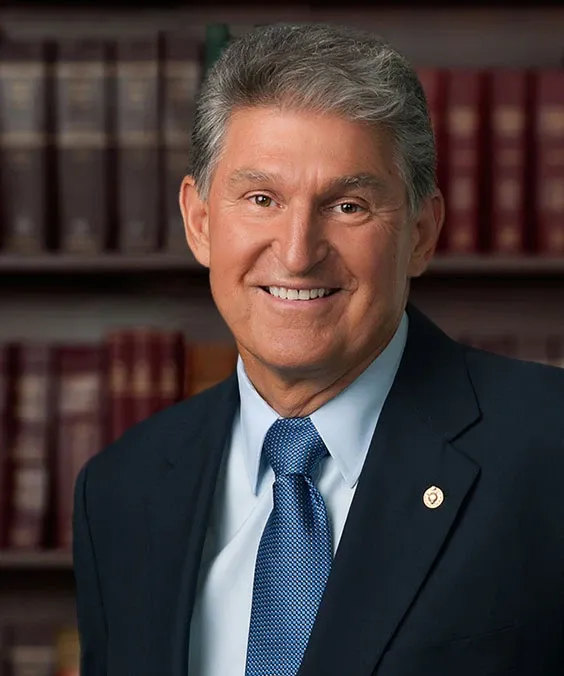
Doesn't the military have a responsibility, particularly when you are not in a huge situation...
There is something which prevents--and I have heard this in other sessions about other types of problems--soldiers taking on the military even as they suffer.
I would like to thank Senator Rockefeller and his staff, and especially the VFW, for giving soldiers and veterans much needed support through the VA system in West Virginia.
I wrote both the Secretary of Defense and the Secretary of the Department of Veterans Affairs for information and a report on what was being done to help exposed veterans.
It would be sort of nice and sort of important if your family and friends seeing your situation all felt like you could get the same thing.
This means that when a satellite subscriber in Huntington, West Virginia tunes-in to CBS, PBS, ABC, FOX or NBC, they hear about events in the state capital and see the successes and trials of their neighbors--not the weather in Manhattan.
Over the past 15 years, satellite television has grown into a strong competitor to cable by offering consumers in rural as well as urban markets a choice in pay television providers.
This has led to price and service competition, which is good for subscribers.
And yet, we could be doing even more to realize America's full export potential.
For the past 5 years, American exports have grown at double-digit yearly rates and have increased from 9.5 percent to 13 percent of our gross domestic product (GDP).
U.S. exports now support six million jobs in the manufacturing sector and nearly one million jobs in the agricultural sector.
Less than 1 percent of U.S. businesses export overseas and nearly 60 percent of these companies trade with only one foreign country.
Exports account for a smaller portion of American GDP than other leading exporting nations.
Now, as the world grows ever more connected, exports have taken an even greater role in our economic livelihood.
I want to thank all of today's witnesses for their testimony before the Subcommittee and for their ongoing work to promote America's businesses and products abroad.
That would seem to me to be a reasonable and fair requirement for a health insurance company whose business in public life is to provide health insurance with premiums that go back and forth.
Let me be clear, I am not advocating that we abandon space exploration. The case, however, has not yet been made.
In this difficult budget environment where the Federal deficit sets new records with each passing month, our country does not necessarily have the resources to do everything that we want to do.
The task of examining NASA's human spaceflight plans in a mere 90 days is not an easy one.
in response to its own analysis and testing over time, as well as in connection with resolution of class action litigation and concerns raised by the Committee's inquiry and state regulators, [that] . . . as of August 1, 2009 . . . current…
insurance companies do not appear to readily disclose this information to consumers and businesses.
Earlier this year, Senator Lautenberg and I introduced S. 1036, the Federal Surface Transportation Policy and Planning Act of 2009.