Aug 1, 2012
We urge Congress to create a robust national system--one that protects patients today and provides the flexibility to ensure we can build upon it in the future.
The Public Record
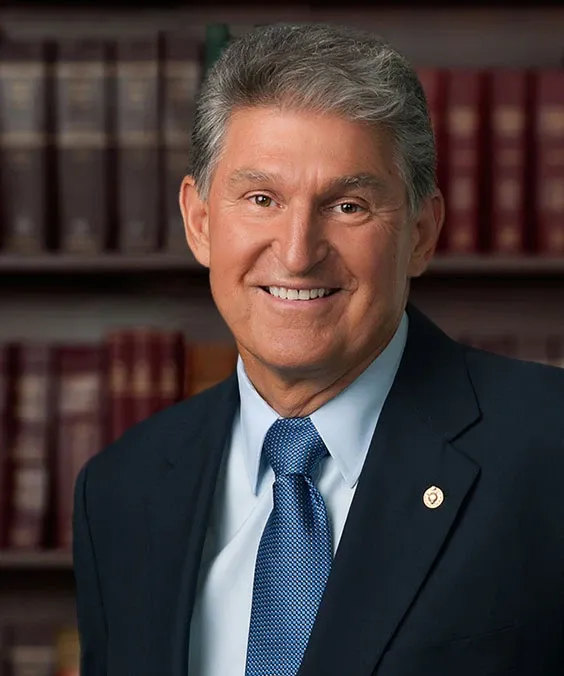
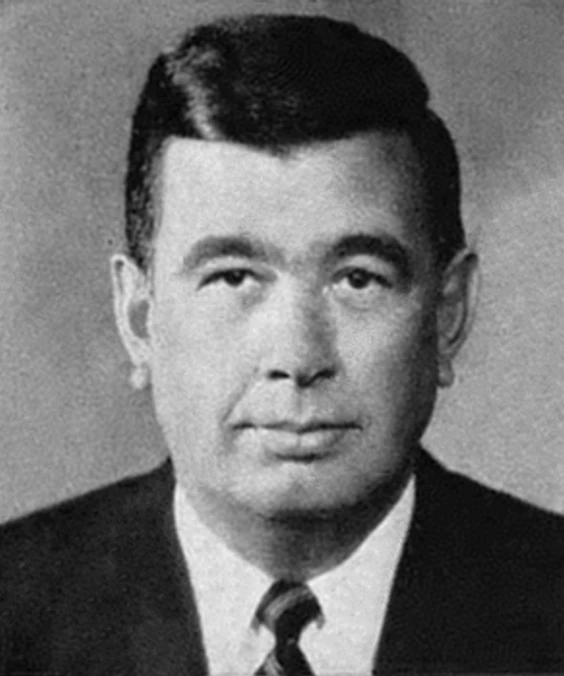
John Davison Rockefeller IV, commonly known as Jay Rockefeller, is a prominent American politician and member of the Democratic Party. Born on June 18, 1937, in New York City, he served as the Governor of West Virginia from 1977 to 1985 and later represented the state in the U.S. Senate from 1985 until his retirement in 2015. During his time in the Senate, Rockefeller was known for his work on healthcare, education, and technology issues, advocating for the expansion of access to healthcare and the improvement of education systems in West Virginia and across the nation.
We urge Congress to create a robust national system--one that protects patients today and provides the flexibility to ensure we can build upon it in the future.
Allowing states to collect sales tax on online purchases will not stop the growth of e-commerce.
This legislation is essential both for establishing a level playing field for America's retail employers and ensuring that states and territories have the legal authority they need to collect revenues that are already owed to them.
S. 1832 merely provides states the authority and ability to collect these existing uncollected taxes.
Congress has clear constitutional authority to act to regulate interstate commerce of online and remote sales.
Both large and small businesses also support S. 1832 and urge Congress to act.
State and local governments support S. 1832 and urge Congress to act on this issue.
I am pleased to join today with my colleagues, Senator Franken, Senator Lugar, Senator Collins, Senator Shaheen, Senator Wyden, Senator Blumenthal, and Senator Brown of Ohio, to introduce an important piece of bipartisan legislation, the…
It's an unfair and unequal system that forces me to compete on our current sales tax collection system, which favors an Internet seller over a local retailer.
My dear colleague, I would feel better if the Senator from Maine spoke before I did. The PRESIDING OFFICER (Mr. Whitehouse.) The Senator from Maine.
I wish all negotiations proceeded with such comity. For those of us who have lived long enough, we have seen, obviously, enormous transition. We are in a totally new age. Today, as we begin our debate, over 200 billion e-mails will be sent…
It is indefensible that we have cancer patients that have to wait to get chemotherapy.
In 2005, Hurricane Katrina hit New Orleans. It was a disaster in every sense of the word.
A constant American presence on the space station also presents a unique opportunity to inspire our children's interest in science, technology, engineering, and mathematics--the so-called STEM fields.
This is an unparalleled opportunity for these aspiring young scientists that I hope will encourage them and their peers to continue to pursue degrees and careers in science and engineering.
We are holding this hearing today because some, I would say, very unscrupulous people have figured out a way to make a quick buck at the expense of sick patients, hospitals, and, in the end, our entire health care system.
These drugs, in their shortage, make it very difficult and sometimes impossible for doctors and for hospitals and nurses and other health care professionals to do their job, which is to care for us when we're critically ill.
At its core, the space station is a laboratory and a classroom--a scientific and educational asset available not only to NASA, but to all Americans and the international community for research, discovery, and education.
Politicians like Jay Rockefeller