Feb 12, 2019
Every financial planner will tell you that people should spend no more than 30 percent of their after-tax income on housing.
The Public Record
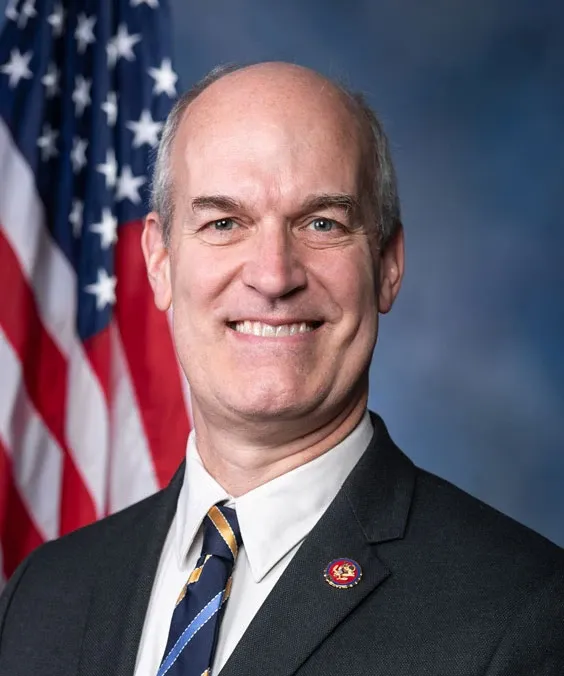
Suzan Kay DelBene is an American politician serving as the U.S. Representative for Washington's 1st congressional district since 2012. A member of the Democratic Party, she has focused on issues such as technology, healthcare, and economic development during her tenure. DelBene has been an advocate for policies that support innovation and job creation, and she has worked on legislation aimed at improving access to healthcare and addressing the needs of her constituents in Washington state.
Every financial planner will tell you that people should spend no more than 30 percent of their after-tax income on housing.
They had the gavel for eight years, and they spent all this money, created this huge debt.
I think that this Congress needs to consider how our actions are lifting up the middle class.
I am concerned that the IRS may not have the ability to accurately and fairly carry this out free from political pressure.
We need to work with our allies like the EU, Japan, and Korea, and use multilateral fora such as the G20, the G7, and the OECD.
It is clear that something needs to be done to address the problem of over-capacity.
Digital trade is an important part of our trade agenda and should be a major focus area as we look to modernize our trade agreements.
If we want to talk about something that works and helps people in a place where they do not need nutrition benefits because they are in a place where they are able to get a good job, those seem to be great investments that actually we get…
The administration's budget cuts $213 billion from Supplemental Nutrition Assistance Program, SNAP, over the next 10 years.
I am disappointed that when there has been talk about cuts or reforms, there has not been talk about return on investment.
This is an ill-conceived policy. It is going to deprive people of the most basic nutrition assistance and cost everyone more not only in quality of life, but more money in the long term.
I worry, because now the focus of this budget seems to be just on cutting SNAP and putting people in a vulnerable position.
I would encourage you to do that, because I have and it is very difficult to get by on a SNAP benefit.
The Tax Reform Act of 1986 was preceded by 30 days of full Committee hearings on tax reform.
Do you think that even $200 per family is anywhere near enough to make up for what Republicans want to take away in terms of healthcare or education resources?
The wealthiest taxpayers would see an average tax cut of over $1 million, while middle class families would get around $200
When we talk about tax reform, we should remember that, first and foremost, we need to have the revenues to pay for these basic government functions
This legislation is really about equity for Tribal nations and removing barriers from talented native leaders who really wish to serve their communities.
This makes elected Tribal leaders one of the few classes of Americans that are prohibited by law from paying into Social Security and receiving benefits from it.
For more than 80 years, Social Security has kept seniors out of poverty and provided a vital safety net for our middle class.
We can't hope to accelerate development for new cures, therapies, vaccines without additional resources for research, and these need to be consistent, stable resources.
If we are serious about breaking new ground in our understanding of complex and life-threatening conditions, then it is absolutely essential that we increase funding for the NIH.
This budget would also cut the National Institutes of Health, the NIH, by $6 billion, which is a truly stunning and irresponsible cut.
I just think it is important that we have an honest conversation about what technology means for the workforce.
Politicians like Suzan DelBene