Mar 1, 2021
Well, he`s just so out of touch with where regular people are and struggling at the bottom end of the wage scale.
The Public Record
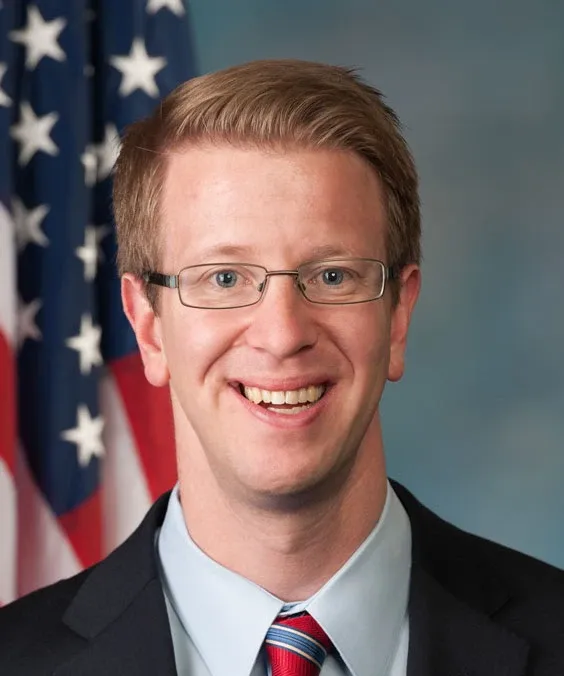
Pramila Jayapal is an American politician serving as the U.S. Representative for Washington's 7th congressional district since 2017. A member of the Democratic Party, she is notable for being the first South Asian woman elected to the U.S. Congress. Throughout her tenure, Jayapal has focused on issues such as healthcare reform, immigration, and social justice, advocating for policies that aim to improve the lives of her constituents and promote equity across the nation.
Well, he`s just so out of touch with where regular people are and struggling at the bottom end of the wage scale.
We can’t go back to voters and say, I’m sorry, we couldn’t do it because the parliamentarian ruled we couldn’t do it.
Are we going to give Mitch McConnell veto power over all the things that we have promised to voters across the country?
Voters gave us the House, the Senate and the White House, and we`re either going to have to include things in reconciliation or we`re going to have to reform the filibuster.
I`ve already said that I think that the parliamentarian should be overruled. That is not unprecedented.
We can`t go back to voters in two years and say, I`m sorry, you know, a parliamentarian, who is doing her job but she`s unelected, not like the rest of us who are elected to these positions, deliver promises to voters -- we can`t go back…
We can’t go back as I said to voters and say sorry, the arcane Senate rules told us we couldn’t do what we promised.
This is an urgent moment and this is a minimum wage increase that will lift 27 million Americans out of poverty, many -- excuse me -- 27 -- lift the wages of 27 million people and lift a million people out of poverty.
What are we supposed to tell voters in two years before the midterms? Sorry, we couldn’t pass the fifteen-dollar minimum wage that we promised you because the Senate parliamentarian advised against it? Two-thirds of voters want this done…
We can’t allow the advisory opinion of the parliamentarian and Republican obstructionism to stand in the way of the promise we made to voters across this country.
It is not going to be sufficient for us to just say, well, we tried, sorry. We`ve got to go to the mat with every tool in the toolbox.
This is not a radical idea, maybe ten years ago when fast food workers first went on strike calling for $15 in 2012, maybe it was considered radical back then. It is mainstream today.
One thing, though, the House is going to pass this reconciliation bill with a $15 minimum wage raise in it, so we want to be very clear the house is going to do our jobs, now the Senate needs to do its job.
I personally do, and I`ll tell you, it`s because either -- I mean, Democrats made a promise to people across this country, that we were going to raise the minimum wage.
We won the Senate majority, the House majority and the White House because black, brown, indigenous, poor working people across this country were crying out for help and for a change in leadership.
We fought very hard to keep the minimum wage provision in the bill. It is in the bill.
There's really no other area of U.S. law that just has one consequence, and I think that this is a critically important area for us to focus on to establish scaleable consequences that are fair, encourage compliance, allow for second…
Deportation is a one-size-fits-all punishment that is unnecessarily cruel and costly both economically and on a human level.
Now, I'm incredibly happy to say that just a few weeks ago Many became a U.S. citizen because he received a pardon from Washington State Governor Jay Inslee.
My colleagues on both sides of the aisle talk about the importance of second chances.
Our immigration system generally takes a one-size-fits-all approach to punishment.
The fact that nearly a quarter of the immigrant population in the United States is undocumented is a failure of our system.
I believe strongly that immigrants are a crucial part of our Nation working on the front lines of COVID-19.
Politicians like Pramila Jayapal