Jan 21, 2010
Reclaiming my time, Mr. Speaker, the question I asked the gentleman was about a statement that he made that it would be more costly to go through litigation than to settlement. I asked the gentleman very specifically if he has…
The Public Record
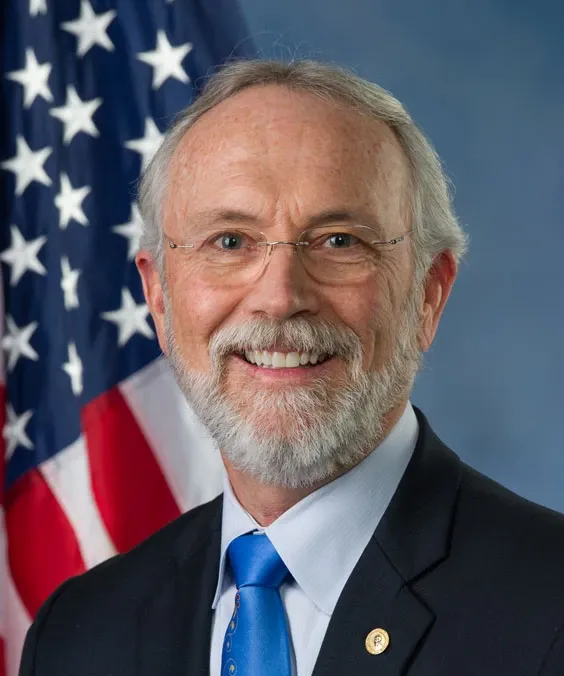
Doc Hastings is a former Republican member of the United States House of Representatives, representing Washington's 4th congressional district from 1995 to 2015. During his tenure, he served on several key committees, including the House Committee on Natural Resources, where he focused on issues related to energy and natural resource management. Hastings was known for his advocacy of agricultural interests and water resource management, reflecting the priorities of his largely rural district. He played a significant role in various legislative efforts, including those aimed at promoting economic development in Eastern Washington.
Reclaiming my time, Mr. Speaker, the question I asked the gentleman was about a statement that he made that it would be more costly to go through litigation than to settlement. I asked the gentleman very specifically if he has…
Mr. Speaker, hopefully we've made it very clear in this debate that the agreement and the settlement of the claims is preferable to litigation when fair resolutions are met. I think most people would agree with that. We certainly do on…
This is an immensely important decision, and I think that it is the responsibility obviously of this Committee and this Congress to try to seek some sort of resolution to it.
Congress must work deliberately, and it is our responsibility to consider the views of the many different interests that are affected.
Any statements to the contrary are clearly an attack on Congress' plenary authority over Indians.
S. 1759 and H.R. 3750 would interfere with fulfillment of a long-deferred federal trust responsibility owed to the Hoopa Valley Tribe.
It fundamentally shifts Congressional policy over recognized Indian tribes in what I consider, Mr. Chairman, to be the right direction.
It is most important for museums and Federal agencies to repatriate human remains found on Federal or Indian lands in a respectful and dignified manner to the families or tribes to whom they are known to be related.
Five of the bills affect public land issues relating to the congressional district represented by the bill sponsors. These are representatives looking after matters in their areas of the country in which they were directly elected by their…
These roadblocks threaten current energy jobs and prevent the creation of new American energy jobs at a time when almost 10 percent of Americans are unemployed.
the roadblocks in this bill will increase our reliance on foreign sources of energy from countries that don't live up to America's high environmental standards.
Unless we take action on an all-of-the-above energy plan, the Administration and the Democrats in Congress will have to explain that they were focused on legislation that will actually make it harder and more expensive to produce American…
At a time our nation should be focused on creating jobs and producing more energy here in America, this legislation erects more roadblocks to energy job creation and production.
This Committee is considering legislation that will make our nation less energy independent and less secure.
It creates a new bureaucracy, it raises the costs of producing energy with higher and new fees, and it potentially adds years of delay to energy development both offshore and on federal lands.
This bill raises fees, expands government bureaucracy, rolls out more red tape, and delays greater wind, solar, oil and natural gas production.
This strikes me as being a political decision rather than a scientific decision if you are only singling out those four dams with four runs.
Instead of opening additional areas for drilling, this bill raises fees and taxes, balloons government bureaucracy, rolls out more red tape, and delays greater wind, solar, oil and natural gas production.
I can't draw any other conclusion from that, unfortunately, based on your testimony.
When nearly 15 million Americans are out of work, the last thing our country needs is for Congress to pass a bill that will eliminate even more jobs in our country.
This decision, which would lock up 40 percent of our country's uranium supply, will cost American jobs.
Politicians like Doc Hastings