Sep 12, 2012
The Obama Administration has never answered basic questions regarding how and why the decision was made to impose a moratorium that put thousands of American out of work.
The Public Record
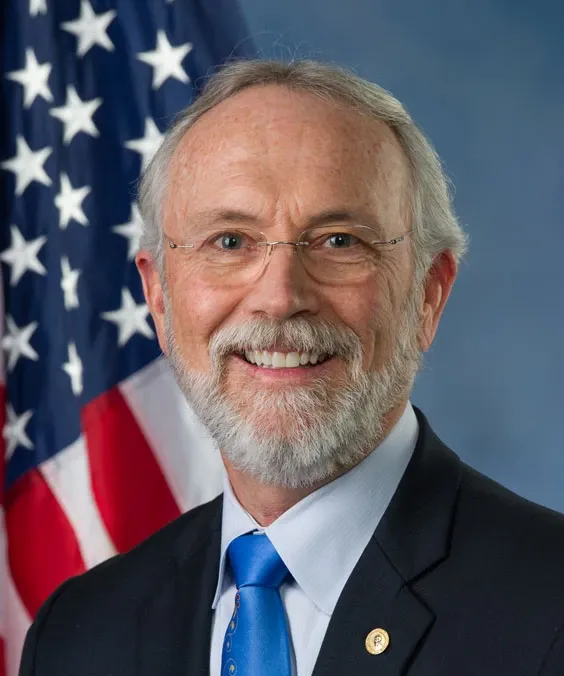
Doc Hastings is a former Republican member of the United States House of Representatives, representing Washington's 4th congressional district from 1995 to 2015. During his tenure, he served on several key committees, including the House Committee on Natural Resources, where he focused on issues related to energy and natural resource management. Hastings was known for his advocacy of agricultural interests and water resource management, reflecting the priorities of his largely rural district. He played a significant role in various legislative efforts, including those aimed at promoting economic development in Eastern Washington.
The Obama Administration has never answered basic questions regarding how and why the decision was made to impose a moratorium that put thousands of American out of work.
A blanket moratorium is not the answer. It will not measurable reduce the risk further and it will have a lasting impact on the nation's economy which may be greater than that of the oil spill.
The people of the Gulf deserve to know how and why that happened, and I hope to get some direct answers today.
A blanket moratorium is not the answer. It will not measurably reduce further risk, and it will have a lasting impact on our Nation's economy which may be greater than that of the oil spill.
I am very pleased to yield 3 minutes to the gentleman from Texas (Mr. Sessions).
I'm very pleased to yield 3 minutes to the author of this legislation, our distinguished colleague from Texas, Chairman Ralph Hall. {time} 1620
I have no more requests for time. If the gentleman yields back, I'm prepared to yield back.
I am very pleased to yield 3 minutes to the gentleman from Florida (Mr. Miller), the author of this legislation.
I asked why family farmers in my rural district should be forced to pay higher electricity bills so people in downtown Seattle can plug in expensive electric vehicles just because Secretary Chu says so.
The only thing this Secretary seems to be generating in this effort is unanswered questions and a great deal of uncertainty.
I fear this Administration is roaring downhill on a freight train to a pre-determined conclusion.
The Secretary needs to scrap this effort, start over, and work with all involved in forming a policy based on need and transparency.
These mandates, as proposed by Obama Administration and Energy Secretary Chu without a clear legal authority, in my view, could dramatically change and undermine the collaborative and low-cost, emissions-free nature of the Federal power…
I joined with 18 of my Pacific Northwest colleagues from both sides of the aisle to reflect many of those concerns.
I commend and support Senator Baucus for his efforts to delay implementation of the Administration's Chu directive until at least early next year.
I asked why family farmers in my rural district in Central Washington should be forced to pay higher electricity bills so people in downtown Seattle can plug in expensive electric vehicles just because the Secretary says so.
I am pleased that Florida is now represented. That is not only good for the Committee but also good for the State of Florida.
Steve has been one of the most active members of that Subcommittee and can always be counted on to ask the tough questions when we have hearings.
In many regions of the country, the Endangered Species Act is being used by groups that do not like development to tie Federal agencies in knots so they cannot issue permits for their activities.
We have jurisdiction over a lot of Federal agencies and Federal statutes that do affect your activities here.
The Natural Resources Committee has also held a number of hearings on the National Ocean Policy, an unauthorized new bureaucratic layer of oversight that will almost certainly restrict everybody's ability to fish.
Fishing plays a big part in the economy of the Gulf of Mexico and particularly here in Florida.
Politicians like Doc Hastings