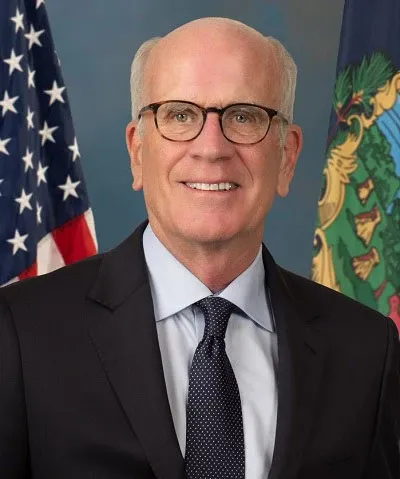
Patrick Leahy
The Public Record
Patrick Leahy is a former United States Senator from Vermont, serving from 1975 until 2023. A member of the Democratic Party, he was the longest-serving senator in Vermont's history and held significant leadership roles, including President pro tempore of the Senate. Throughout his tenure, Leahy was known for his work on issues such as civil liberties, health care, and environmental protection. He played a key role in various legislative efforts, including the Violence Against Women Act and initiatives to reform the criminal justice system.
Mar 23, 2010
I must say, Kit, as I've told you before, it was very helpful to have someone beside me who was a former Governor because you brought a perspective which was very, very helpful.
Mar 23, 2010
The citizen-soldiers and airmen of your National Guard are adding value to America every day that they serve.
Mar 23, 2010
We urge you to reconsider the C-130 Force Structure changes and seriously review alternative courses of action that will preserve our mobility capability for both of the Air National Guard's Federal and State missions.
Mar 22, 2010
As to the distribution of Milcon, certainly if I were in a Guard or Reserve unit, I'd feel as though I wasn't getting what I needed, and we have to admit that.
Mar 10, 2010
I worry about the way this is set up, that we are seeing a shift from rural to urban.
Mar 10, 2010
Vermont and other rural States rely on these programs to build affordable housing for low-income, elderly, and disabled residents.
Mar 10, 2010
I must admit, and as Senator Bond knows, when somebody corners you in the grocery store and they have got a concern, they have got a concern.
Mar 10, 2010
I think we all know the societal value of home ownership and community value and everything else, to say nothing about the economic well-being of the country.
Mar 10, 2010
I worry about this because as I look at the budget, I am afraid there is a shift of priorities from rural areas, rural America to urban areas.
Mar 9, 2010
But why would Congress have the authority to suppress the free speech rights of one corporation when another corporation has a complete right to express their views to advocate for and against a candidate in an election?
Mar 9, 2010
The Court showed a remarkable ignorance of how campaign money can affect legislative decisions.
Mar 9, 2010
Why in the world couldn't they--if they adopted the corporate model of doing business, why couldn't they advocate for or against candidates who supported or failed to support their agenda of dealing with the tragedy of homelessness?
Mar 9, 2010
What is perhaps most disturbing is that the Court made these pronouncements without allowing any opportunity at all for a factual record to be developed.
Mar 9, 2010
I really think the carve-out that was created in the McCain-Feingold legislation in 2002 demonstrates the weakness of the argument that corporations somehow do not have free speech of First Amendment rights.
Mar 9, 2010
I absolutely believe that this is not the kind of open-and-shut question people say.
Mar 9, 2010
I think the rights of Vermonters and all Americans to speak to each other and to be heard should not be undercut by corporate spending.
Mar 9, 2010
This is not consistent with the general sensitivity of the Court to the views of the American people.
Politicians like Patrick Leahy