Apr 26, 2016
the drug that you guys did not develop and you were not doing any R&D on, the dramatic increases in price were all going to fund other company operations either with respect to return on the investors or other materials you were doing?
The Public Record
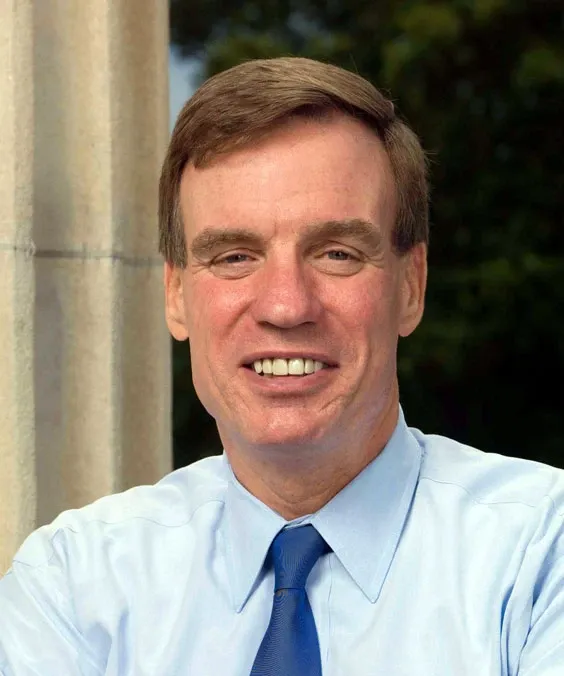
Tim Kaine is a United States Senator from Virginia, serving since January 3, 2013. A member of the Democratic Party, he previously held the position of Governor of Virginia from January 14, 2006, to January 16, 2010. Kaine has been an advocate for various issues including education, healthcare, and military engagement, emphasizing the importance of Congress's role in declaring war and authorizing military force. He also served as the Chair of the Democratic National Committee, contributing to the party's strategy and outreach efforts during his tenure.
the drug that you guys did not develop and you were not doing any R&D on, the dramatic increases in price were all going to fund other company operations either with respect to return on the investors or other materials you were doing?
We want to bring it in connection with the prices for other orphan drugs could be completely unrelated to conditions.
When did that realization strike you that you were basically making a drug that some people needed to stay alive?
The last time I was in China talking at great length about the South China Sea with our counterparts, I said that we are in the ironic situation where the United States has not ratified the Law of the Sea, but we abide by it; China has…
How would the U.S. efforts to address China's land reclamation activities in the South China Sea and also to defend freedom of navigation in that part of the world be more effective if the Senate ratified the U.N. Convention on the Law of…
I appreciate your concern about that, and I hope that we might see the advantages of the U.S. taking it up.
As much as we in politics sometimes rankle under a free press that is free and robust and challenging, we sure would not trade it for anything else.
What measures do you use on the other half of the investment? So it is security, it is prosperity, it is democracy, democratization, transparency?
So big, big challenge, will not be quick, but we need not despair about the ability to move the needle the right way if we invest the right way.
I think the record of success of the U.N. agency CICIG in Guatemala demonstrates that you can improve national efforts with a good external partner.
Thank you, Mr. Chair. I want to express my thanks to you and Senator Cardin for calling this hearing.
So that might be an area for the committee, to the extent that we are interacting with El Salvadoran officials, to hold up Guatemala and Honduras.
There is reason to be hopeful that, if we make these investments the right way and we monitor them the right way, we can see progress.
Certainly, the experience that we have had in working on Plan Colombia over the years suggests you can take a situation that looks just completely bleak and, with persistence, lead to significant progress.
Some of the success of what we are doing... does depend on the degree to which they cooperate with each other.
As we work on maybe a bipartisan and focused strategy, strong demand that that MOU when it is renegotiated includes very significant provisions around this is something that I think we would all probably agree with.
I apologize for being late. Was at another subcommittee hearing, so I may ask questions that you've already covered.
I think the worst are full of passionate intensity in a very sharp degree. And I think the question is whether the best have conviction.
That is a painful and un-American situation that we should not tolerate and it should not be part of our discourse.
I think that is a great answer. I figured that there was a really good answer behind that and I am very glad I asked that question.
The President's Budget, I believe, has a recommendation that we would decommission a carrier wing...
we've really got to think hard about, (a) what we're procuring, and (b) how we're doing it.
Politicians like Tim Kaine