I lay before Congress communications just received from the plenipotentiaries of the United States charged with negotiating peace with Great Britain, showing the conditions on which alone that Government is willing to put an end to the war.
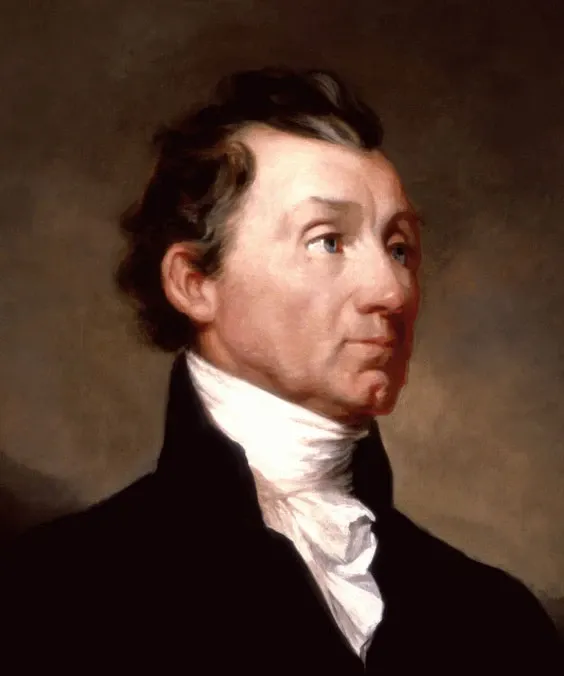
James Madison
The Public Record
James Madison was an American statesman and political theorist who served as the fourth President of the United States from 1809 to 1817. A member of the Democratic-Republican Party, he played a crucial role in the drafting and promotion of the United States Constitution and the Bill of Rights, earning him the title 'Father of the Constitution.' Madison's presidency was marked by the War of 1812, during which he faced challenges such as British interference with American shipping and the burning of Washington, D.C.
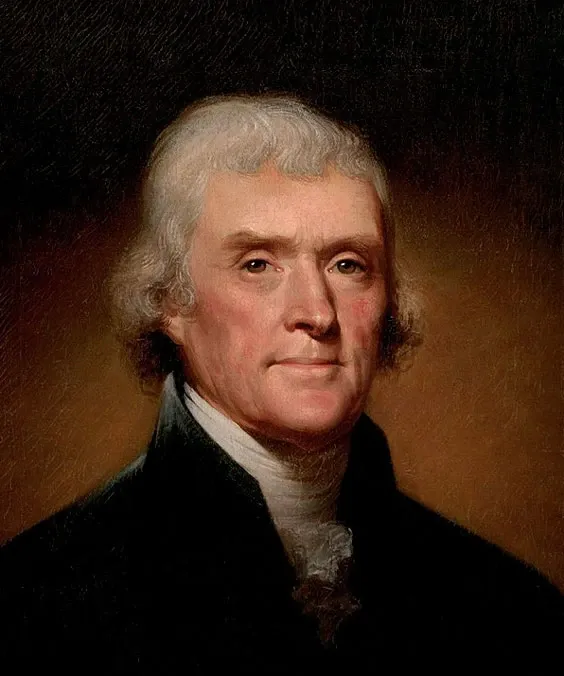
I transmit to Congress, for their information, copies of a letter from Admiral Cochrane, commanding His Britannic Majesty's naval forces on the American station, to the Secretary of State, with his answer, and of a reply from Admiral…
His barbarous policy has not even spared those monuments of the arts and models of taste with which our country had enriched and embellished its infant metropolis.
We have seen them everywhere paying their taxes, direct and indirect, with the greatest promptness and alacrity.
His threats and his barbarities, instead of dismay, will kindle in every bosom an indignation not to be extinguished but in the disaster and expulsion of such cruel invaders.
The American people will face it with the undaunted spirit which in their revolutionary struggle defeated his unrighteous projects.
In offering their blood they give the surest pledge that no other tribute will be withheld.
The destruction of the Capitol by the enemy having made it necessary that other accommodations should be provided for the meeting of Congress, chambers for the Senate and for the House of Representatives, with other requisite apartments…
Whereas advantage has been taken of the loss of a fort more immediately guarding the neighboring town of Alexandria to place the town within the range of a naval force too long and too much in the habit of abusing its superiority wherever…
I, James Madison. President of the United States, do issue this my proclamation, exhorting all the good people thereof to unite their hearts and hands in giving effect to the ample means possessed for that purpose.
On an occasion which appeals so forcibly to the proud feelings and patriotic devotion of the American people none will forget what they owe to themselves, what they owe to their country and the high destinies which await it.
hereby requiring the respective Senators and Representatives then and there to assemble in Congress, in order to receive such communications as may then be made to them and to consult and determine on such measures as in their wisdom may…
I recommend also, as a more effectual safeguard and encouragement to our growing manufactures, that the additional duties on imports which are to expire at the end of one year after a peace with Great Britain be prolonged to the end of two…
The deplorable situation of the savages thrown by the same event on the mercy and humanity of the American commander at Detroit drew from the same source the means of saving them from perishing by famine.
It is possible that a perseverance of the enemy in their cruel policy may render a further expense for the like purpose inevitable.
The necessity imposed by the conduct of the enemy in relation to the savages of admitting their cooperation in some instances with our arms has also involved occasional expense in supplying their wants.
To these abuses it may be added that illegal importations are openly made with advantage to the violators of the law.
To remedy as much as possible these evils, I recommend: That an effectual embargo on exports be immediately enacted.
The tendency of our commercial and navigation laws in their present state to favor the enemy and thereby prolong the war is more and more developed by experience.
To shorten as much as possible the duration of the war it is indispensable that the enemy should feel all the pressure that can be given to it.
Even the fleets and troops infesting our coasts and waters are by like supplies accommodated and encouraged in their predatory and incursive warfare.
That all violations of the nonimportation act be subjected to adequate penalties.
It is found also that the practice of ransoming is a cover for collusive captures and a channel for intelligence advantageous to the enemy.
Supplies of the most essential kinds find their way not only to British ports and British armies at a distance.