I rise today to speak about the unique and essential role of the Senate in our constitutional system of government. In doing so, I am of course addressing the American people whom we all serve, but my message today is intended especially…
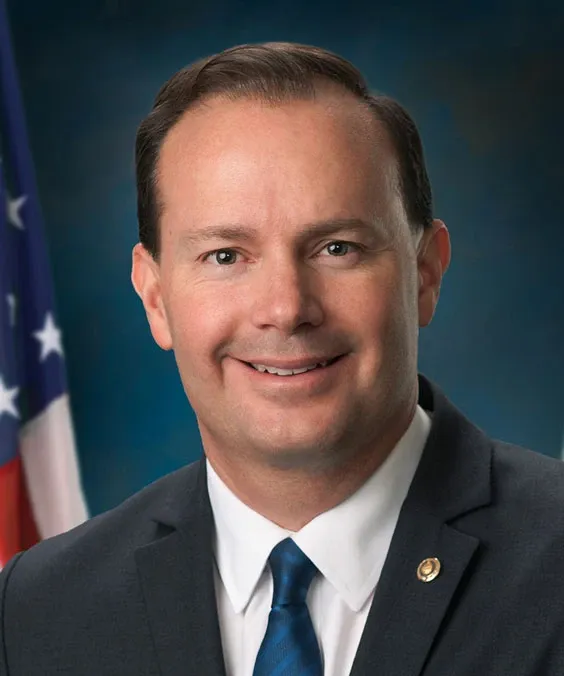
Orrin Hatch
The Public Record
Orrin Hatch was a prominent American attorney and politician who served as a United States Senator from Utah from 1977 to 2019. A member of the Republican Party, Hatch was known for his extensive work on a variety of issues, including healthcare, tax reform, and intellectual property rights. Throughout his tenure, he played a significant role in shaping legislation and was involved in numerous bipartisan efforts.
In obtaining the consent of the United States, it is necessary to get the consent of the U.S. Congress.
The work of the OECD is done by consensus. That is, measures cannot be adopted without the consensus of all member countries.
Such a discussion usually is not helpful, in my opinion, and typically ends up going nowhere.
It seems that a discussion of international tax reform can at times result in a debate of capital export neutrality versus capital import neutrality.
The effective corporate tax rate in the United States is 27.1 percent as compared to the rest of the OECD countries that have an unweighted average of 23.3 percent.
There is no evidence to support the assertion that U.S. multinational corporations are at a competitive disadvantage because they face larger corporate tax burdens than their competitors under a worldwide rather than territorial tax system.
Those bad outcomes would include international norms that increase tax disputes because they are vague.
Failure in the BEPS project could well result in countries taking unilateral, inconsistent actions.
The United States has a great deal at stake in the BEPS project and a strong interest in its success.
I think there is a growing chorus out there among some of my friends on the other side of the aisle to use corporate inversions as a political wedge issue in this election year.
The ultimate answer to this problem--and the only way to completely address the issue of inversions--is to reform our tax code.
The approach in the proposed anti-inversion legislation is so misguided it reminds me of an old joke.
I think that is not only stupid, I think it is going to result in consequences that nobody wants.
I think we are right to expect that the Treasury Department will aggressively represent American employers and their workers in the BEPS negotiations.
We should not be rushed into accepting a bad deal just for the sake of reaching an agreement.
Our primary goals should be to make the U.S. a better place to do business and to allow American companies to more effectively compete with their foreign counterparts in the world marketplace.
I think we can all agree that addressing the shortcomings of our international tax system is a critical step on the road toward comprehensive tax reform.
We really cannot afford to wait, and I want to personally express my regard for our chairman of this committee.
We know that China in particular is systematically stealing critical information from hundreds of U.S. companies.
I think Senator Hatch's bill, where it requires, say, Border Patrol, the Customs people, to actually, if there is a product coming into the States that says Kimber Kable on it, contact us and say, we do not think this is yours, because we…
I believe that your efforts to introduce the Customs reauthorization bill will have a measurable benefit to me and to the CEA members and the U.S. economy, if passed.
The success of our manufacturing sector is vital. Nearly 12 million Americans are directly employed by manufacturing.