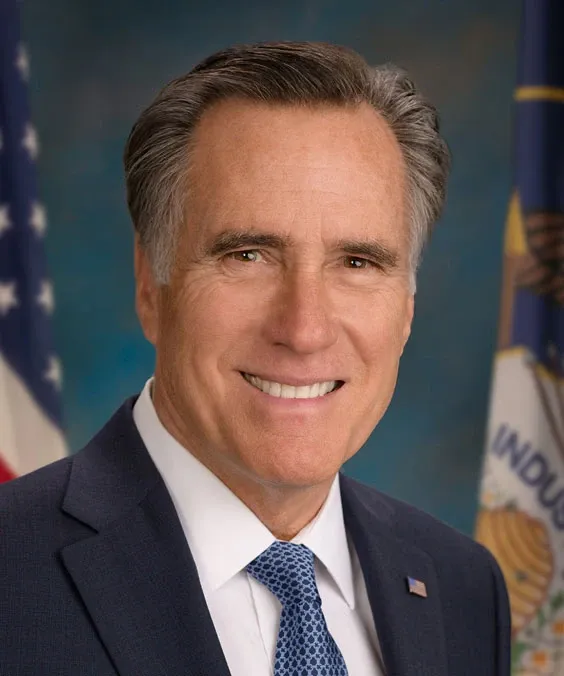
Mike Lee
The Public Record
Mike Shumway Lee is an American attorney and politician currently serving as the junior United States senator from Utah, a position he has held since January 3, 2011. A member of the Republican Party, Lee has focused on issues such as limited government, individual liberties, and constitutional rights throughout his tenure. He has been an advocate for fiscal responsibility and has often emphasized the importance of adhering to the Constitution in legislative matters.
Mar 26, 2012
It is a completely bipartisan bill in the spirit with trying to get things done in a bipartisan way.
Mar 26, 2012
We encourage the State Department to issue Chinese visitor visas that last longer than the current one-year maximum.
Mar 26, 2012
We require the State Department to develop premium processing to expedite issuance of tourist and business visas.
Mar 26, 2012
I believe that the market still has a very high degree of regard, very high regard for Chairman Bernanke, but I believe it is not as solidly entrenched as it was under Greenspan.
Mar 21, 2012
Thank you, Senator Wyden. And I'd also like to thank Senator Baucus and the witnesses today for coming in to provide testimony on these pieces of legislation.
Mar 21, 2012
At the outset, I'd like to speak in support of the Scofield Land Transfer Act, which, if passed, would resolve an issue that has existed for more than a decade.
Mar 20, 2012
Is the precedent, by the way, for the FCC coming up with a spectrum screen, a new spectrum screen or something analogous to that in the middle of a transaction without going through the notice and comment process first?
Mar 20, 2012
So you do not necessarily disagree with those who are suggesting that the spectrum screen ought to be revised.
Mar 20, 2012
With the higher frequency, it has got more carrying capacity, but one of the disadvantages is it cannot go through----
Mar 20, 2012
I think Congress has recognized in the National Cooperative Research Act of 1984 and elsewhere and recognized that the antitrust laws needed to be sensitive to the potential benefits that joint R&D develop.
Mar 20, 2012
The announcement late last year of commercial agreements between four of the country's largest cable companies and the country's largest wireless phone services company understandably attracted some attention.
Mar 20, 2012
Hundreds of millions of Americans pay for cell phones, cable television, home Internet connections, and for home landline connections to the telephone network.
Mar 20, 2012
Some have argued that the wireless market is tending toward a duopoly and that additional spectrum should be sold only to smaller wireless service providers.
Mar 20, 2012
We cannot afford an inpatient program, and at least they will not be using while they are in your jail.
Mar 13, 2012
The Senate has already confirmed more than 80 percent of President Obama's judicial nominees, approving a larger share without a roll call vote than the Senate did under President Bush.
Politicians like Mike Lee