Jul 29, 2013
Everyone who is participating in or watching this hearing can agree that cooperative industry standards are good for consumers, producers, and for the economy as a whole.
The Public Record
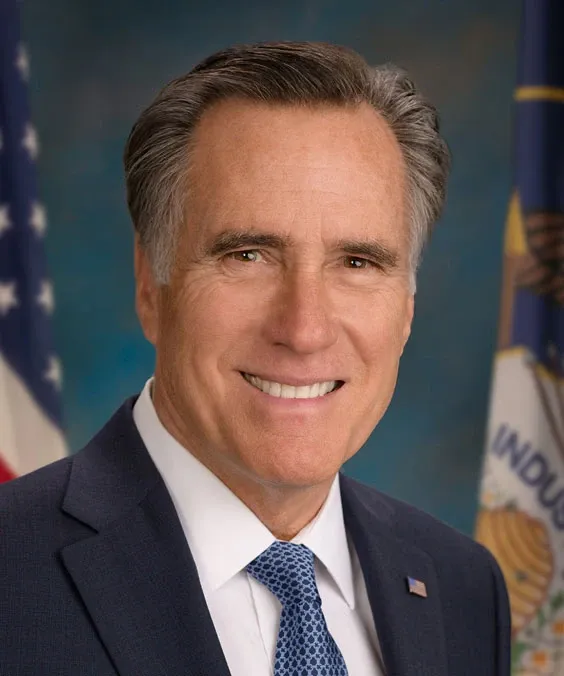
Mike Shumway Lee is an American attorney and politician currently serving as the junior United States senator from Utah, a position he has held since January 3, 2011. A member of the Republican Party, Lee has focused on issues such as limited government, individual liberties, and constitutional rights throughout his tenure. He has been an advocate for fiscal responsibility and has often emphasized the importance of adhering to the Constitution in legislative matters.
Everyone who is participating in or watching this hearing can agree that cooperative industry standards are good for consumers, producers, and for the economy as a whole.
Right. But under current law, that rather diminishes the efficacy, I suppose, of the treble damages provision in that you have got to show that it was a willful, knowing violation of the patent, and even then there is discretion in the…
Companies and individuals that use patents increasingly complain of what is called the 'hold-up,' the scenario in which a holder of a standard-essential patent refuses to grant a license to use its patent or threatens to refuse to grant a…
Thank you, Madam Chair, for scheduling this, and thanks to all of you for coming and providing such insightful and in-depth testimony. I appreciate it.
Any actions that potentially limit participation in a standards development organization could be detrimental to consumers.
And so it requires you to take your best guess, your best guess involving not only whether in the abstract the patent right at issue is going to be upheld, but also how much it is going to cost you to litigate it, how likely the other…
I think I would like to start with Ms. Munck. Ms. Munck, first of all, I should tell you you are in good company. Both I and Senator Coons are the fathers of twins.
Any conflict between these two important elements of our economy necessarily affects consumers and is a matter of real concern for this Subcommittee.
A WRDA has not been authorized since 2007. A new authorization is necessary to continue approved flood control.
Whereas, with Rule of Reason analysis they could continue to take into account the presumption of patent validity and that would operate unhindered in that context.
By the way, when we're in the context of a patent, isn't there something sort of internally inconsistent or contradictory about a standard that would require the patent holder in this context to produce clear and convincing evidence to…
In your testimony you note that we have a statutory directive that exists under current law that all patents are to be presumed valid.
But to the extent that the existence of the patent and the existence of the current patent term as we have it set up, facilitates innovation, leads to innovation.
Mr. Orszag, so much of the discussion today, including some of your discussion with Senator Klobuchar, has focused on the potential harm to customers that consumers might incur from reverse settlements among pharmaceutical manufacturers in…
And it's for that very reason that the Supreme Court has tended, over the course of the last century, to lean more toward the Rule of Reason and away from per se rules of invalidity and also from presumptions of illegality.
A presumption of illegality is proper only when 'an observer with even a rudimentary understanding of economics could conclude that the arrangements in question would have an anti-competitive effect on customers and markets.'
I think you have to presume that the patent is invalid in order, legitimately, to call it pay for delay.
Running against the shot clock here--it's something we deal with a lot in the Senate.
Wouldn't you have to concede that then in that circumstance you've got pro-competitive effects?
I want to talk just a little bit about our use of the term 'pay for delay' today.
On average, it takes 10 years and $1 billion to develop and gain FDA approval for a new drug.
Some brand-name manufacturers have chosen to settle lawsuits filed by generics instead of litigating.
Politicians like Mike Lee