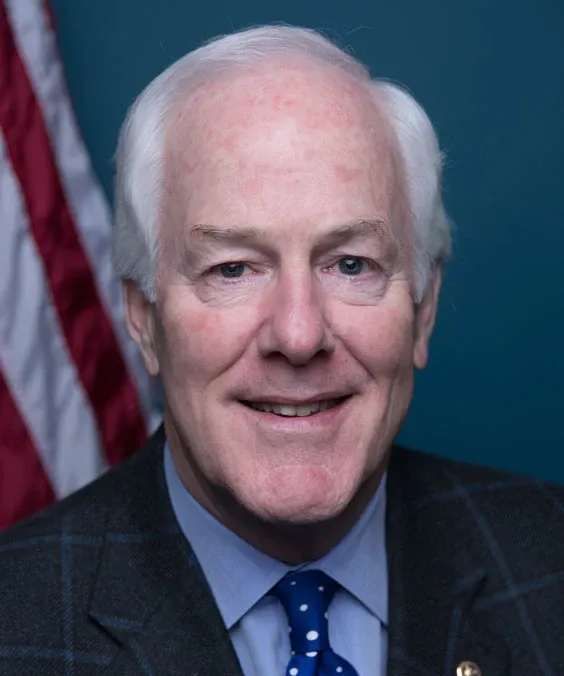
Ted Cruz
The Public Record
Ted Cruz is a United States Senator from Texas, serving since January 3, 2013. A member of the Republican Party, Cruz gained national prominence during his 2016 campaign for the Republican presidential nomination. He is known for his conservative positions on issues such as healthcare, immigration, and tax reform. Cruz has been a vocal advocate for limited government and has often positioned himself as a defender of constitutional rights.
Mar 7, 2023
I think this is an agency that is incredibly important. It is literally entrusted with protecting our lives and the lives of our children and the Biden Administration needs a Senate-confirmed Administrator of the FAA.
Mar 7, 2023
346 people were killed in two horrific crashes because Boeing and the FAA took their eye off the ball when it came to certification of the 737 MAX.
Mar 7, 2023
Do you think Phil Washington could come anywhere close to Acting Administrator Nolen's expertise and knowledge? I think the honest answer would have to be no.
Mar 7, 2023
The Chairwoman and I are working together on an FAA reauthorization which will provide an important opportunity to make further safety reforms that may be necessary.
Feb 16, 2023
So your testimony is this bill benefits Big Pharma and allows them to make more money. Is that right?
Feb 16, 2023
So if you are correct that this bill would hurt patients by driving up costs, typically when one group is being hurt in the economy, somebody else is doing better.
Feb 16, 2023
Explain what you believe would be the negative consequences of this bill for a consumer at home that wants high-quality healthcare, high-quality pharmaceuticals at an affordable price.
Feb 16, 2023
If this bill was enacted into law, based on your economic analysis, how would it impact drug prices for the average American?
Feb 16, 2023
No one wants higher drug prices, and I think we need to look for creative solutions to lower them.
Feb 16, 2023
With every legislative solution, we got to consider the tradeoffs, especially when our solution is to grant additional authority to a government agency.
Feb 16, 2023
Much like everything in healthcare, the cost of drugs historically has risen faster than overall inflation.
Feb 16, 2023
So your testimony is this bill benefits Big Pharma and allows them to make more money. Is that right?
Feb 16, 2023
If this bill was enacted into law, based on your economic analysis, how would it impact drug prices for the average American?
Feb 16, 2023
Explain what you believe would be the negative consequences of this bill for a consumer at home that wants high-quality healthcare, high-quality pharmaceuticals at an affordable price.
Feb 16, 2023
So if you are correct that this bill would hurt patients by driving up costs, typically when one group is being hurt in the economy, somebody else is doing better.
Feb 16, 2023
No one wants higher drug prices, and I think we need to look for creative solutions to lower them.
Feb 16, 2023
With every legislative solution, we got to consider the tradeoffs, especially when our solution is to grant additional authority to a government agency.
Feb 16, 2023
Of course, the relationship between insurers, PBMs, drug companies, and others are complex, opaque, and confusing both to consumers and to providers.
Feb 16, 2023
Thus, much of the higher spending on pharmaceuticals is baked into insurance premiums.
Feb 16, 2023
Thank you, Madam Chair. Thank you to each of the witnesses. Welcome, Senator Grassley.
Feb 16, 2023
Much like everything in healthcare, the cost of drugs historically has risen faster than overall inflation.
Feb 15, 2023
This Administration made a conscious political decision to open the borders and one of the results is they have turned Mexican drug cartels into multi-billionaires.
Politicians like Ted Cruz