Apr 28, 2021
So at the present time can you kind of give us a round-number figure as to the number of staff that you intend to hire?
The Public Record
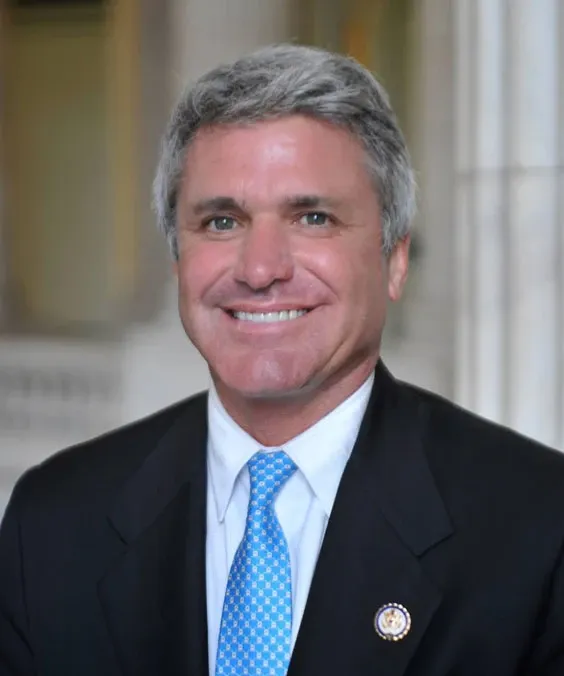
Michael Clifton Burgess is an American politician and physician who has served as the U.S. Representative for Texas's 26th congressional district since 2003. A member of the Republican Party, Burgess has focused on healthcare policy, leveraging his medical background to inform his legislative work. He has been involved in various committees and has advocated for issues such as medical research and veterans' healthcare. Burgess has also been a vocal supporter of conservative fiscal policies and has participated in discussions surrounding healthcare reform.
So at the present time can you kind of give us a round-number figure as to the number of staff that you intend to hire?
Administrator Regan, welcome to our subcommittee. Thank you for testifying today.
I would just ask you in your conversations with House leadership to encourage us as much as is practical to get back to normal voting patterns.
We are sending the wrong message because here we were one of the first groups as a body to avail ourselves of the vaccine.
Anything that restricted the energy production in that sector would likely have a deleterious effect on those jobs, would it not?
With all of the disparaging remarks being offered about the State of Texas, I thought it was important that I be back and at least be prepared to defend the Lone Star State.
The effects of the 3 years of fentanyl class scheduling are clear: the creation and distribution of finished fentanyl and fentanyl-related substances from China has ground to a halt.
Now is not the time to eliminate a proven harm reduction and overdose prevention strategy.
But, I mean, if you have ever been down to the Texas-Mexico border, particularly that sector in the lower Rio Grande Valley, it is very, very difficult to provide those--that interdiction.
I have worked with your predecessor, James Carroll, while we--in two Congresses ago, when we worked on the SUPPORT Act.
I do think we need to revisit Section 230 in the terms of, have you now become actual publishers as opposed to simply carriers of information?
Angie Craig eloquently pointed out how you are putting restrictions on trans-affirming speech.
I challenge my colleagues to really get serious about doing something about this liability shield so that we do have a fair and free internet and people aren't censored.
No, you don't. You all think you do, but you don't because you continue to do a disservice to that law and its intent.
The American people really are tired of you abusing your rights, abandoning their values.
Algorithms don't write themselves. We write them to do what we want them to do.
72 percent of the public thinks it is likely that social media platforms actively censor political views that Big Tech companies find objectionable.
Well, hiding behind Section 230, all of you have denied that there is any bias or inequitable handling of content on your platforms.
But what I have heard today is that there will be some constable, and I am not sure that we will have success in moving forward.
I think we are seeing a lot of the problems that you are frustrated with as a result of parents and families, churches, schools, that aren't taking the primary responsibility.
I think that's right. So--and maybe this is a question for Mr. Shellenberger.
This is a nonpartisan issue because deregulation of the electricity market in Texas actually was passed by the State legislature in 1999, when Democrats were in control of that body.
The reliability of our country's electric supply is not a partisan priority, it's a national priority.
Finally, I'd like to voice my strong concern about the politicization of this crisis. No one single policy, no one single energy source caused this crisis, and no one policy could have prevented it.
Politicians like Michael Burgess