Feb 13, 2012
How many nuclear weapons does the United States need to maintain to convince China not to seek strategic equivalence?
The Public Record
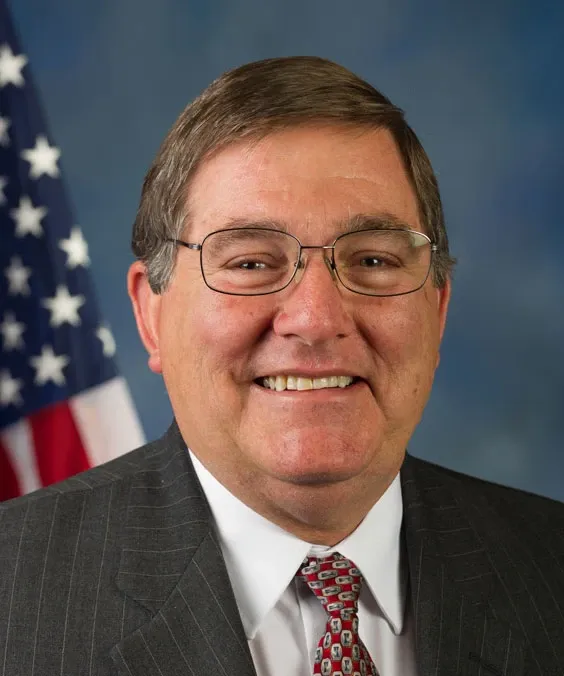
John Cornyn is a United States Senator from Texas, serving since January 3, 2002. A member of the Republican Party, he has held various leadership positions within the Senate, including serving as the Senate Minority Whip. Cornyn has focused on issues such as judicial appointments, immigration reform, and national security throughout his tenure. He is known for his strong support of conservative policies and has frequently aligned with the positions of former President Donald Trump.
How many nuclear weapons does the United States need to maintain to convince China not to seek strategic equivalence?
The credibility of the U.S. nuclear deterrent requires we maintain a ready, trained, and effective force.
What justification can you offer for risking U.S. national security by altering U.S. nuclear strategy in pursuit of deeper reductions?
As long as nuclear weapons exist, the United States must sustain safe, secure, and effective nuclear forces to deter potential adversaries and reassure allies and partners.
Assuring our allies continues to be a fundamental component of STRATCOM's mission.
Implementation of the Stockpile Stewardship program and the nuclear infrastructure investments recommended in the NPR will allow the United States to shift away from retaining large numbers of nondeployed warheads as a hedge against…
The United States will proceed with missile defense in concert with our friends and allies.
Allowing the President to make more concessions to the Russians, to do so would be antithetical to our safety and security
General Kehler, we have been told that the deterrence relationship between the United States and Russia is stable.
The goal of a world without nuclear weapons is a long term pursuit and the conditions that would ultimately permit the United States and other nations to give up all their nuclear weapons without risking greater international instability…
I welcome these statements, and can think of no greater example of the importance of these facts than the United States' relationship with Taiwan.
If hostilities were to break out between China and Taiwan, is the United States currently able to provide an air deterrent over Taiwan?
What message do you believe the current administration's failure to approve the sale of 66 new F-16 C/D fighters sends to the Government of Taiwan?
Should the United States be looking for ways to help Taiwan replace its current submarines?
It is my opinion--and that of a bipartisan group of colleagues who joined me in cosponsoring the Taiwan Airpower Modernization Act--that Taiwan would benefit from the sale of new F-16 C/Ds.
Under the Taiwan Relations Act (TRA), the United States is statutorily obligated to make available to Taiwan such defense articles and defense services as may be necessary to enable Taiwan to maintain a sufficient self-defense capability.
Will you make a commitment to determine whether such a disconnect exists and, if it does, to overhaul the process?
Yet, under the NGB's new Threat-Based Resourcing Model (TBRM), interdiction comprises less than 25 percent of the weighted variables that are used for distributing funding to the States.
Should the commander of NORTHCOM be asked to provide input as to where NGCD funding is allocated?
Do you share the belief that we cannot win the interdiction fight to stop illegal drugs from entering the United States along the Southwest Border, and thus we should reallocate NGCD funding elsewhere?
I have also concluded that the weighted variables in TBRM bear very little relation to National Guard core competencies.
I support the national interdiction goal as set forth in the National Drug Control Strategy; establishing a desired removal rate of 40 percent of the documented flow of cocaine destined for the United States by fiscal year 2015.
With the continued decline of the defense budget over the past 3 years--forcing cuts to personnel, ships, and aircraft--what will be the impact of tripling or quadrupling your fuel costs?
Politicians like John Cornyn