John Cornyn
The Public Record
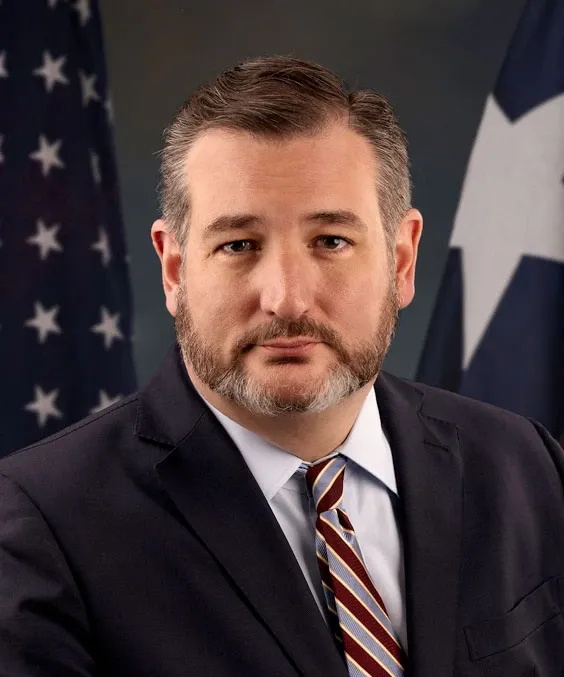
John Cornyn is a United States Senator from Texas, serving since January 3, 2002. A member of the Republican Party, he has held various leadership positions within the Senate, including serving as the Senate Minority Whip. Cornyn has focused on issues such as judicial appointments, immigration reform, and national security throughout his tenure. He is known for his strong support of conservative policies and has frequently aligned with the positions of former President Donald Trump.
Apr 4, 2022
I did ask her about her judicial philosophy. She says she doesn`t have one and hasn`t thought much about it. That`s simply not a credible response, and I believe demonstrates a lack of candor.
Apr 3, 2022
I have concerns that Judge Jackson will be pinch hitting for one team or the other.
Mar 20, 2022
To me, one of the most important aspects of the confirmation hearings is the opportunity to revisit first principles about our Government, separation of powers, freedom of speech.
Mar 20, 2022
It's appeared that the American Bar Association has taken sides, so to speak, in controversial nominations.
Mar 20, 2022
Frankly, on occasion I've been troubled by some of the public advocacy of the American Bar Association on behalf of legal profession that, frankly, did not represent my views.
Mar 20, 2022
Obviously whether or not taxpayers should be required to provide lawyers for people who are not citizens of the United States and who are claiming asylum is a controversial matter.
Mar 20, 2022
Congress passed a bill called the Religious Freedom Restoration Act, which tried to make sure that people's sincerely held religious beliefs could be accommodated under their First Amendment rights.
Mar 20, 2022
I know in times past, the ABA has appeared to be a, frankly, a partisan during some of the judicial confirmation proceedings that I participated in the past, and that's a cause for concern.
Mar 20, 2022
I think the authority comes from we, the people. That's the source of the legitimacy of government.
Mar 20, 2022
But when the Court overrules the decisions made by the people, as they did in 32 of the 35 States that decided to recognize only traditional marriage between a man and a woman, that is an act of judicial policymaking, is it not?
Mar 20, 2022
One of the things Senator Whitehouse and I agree on is he and others frequently ask nominees for the Supreme Court, do you think Brown v. Board of Education is settled law, and believe it or not, some nominees won't answer the question.
Mar 20, 2022
And how do you--and how--because I believe the Court's legitimacy is very important.
Mar 20, 2022
Do you share my concern that when the Court takes on the role of identifying an enumerated right... that they will be vilified as unwilling to assent to this new orthodoxy?
Mar 20, 2022
So you would--you would agree with me that judges should not be politicians.
Mar 20, 2022
Why in the world would you call Secretary of Defense Rumsfeld and George W. Bush war criminals in a legal filing?
Mar 20, 2022
Thank goodness the Supreme Court has been willing to revisit its precedent, or we'd still be living with Plessy v. Ferguson or Dred Scott.
Mar 20, 2022
Congress is not similarly constrained. We can pass broad policies, comprehensive legislation changing policy
Mar 20, 2022
It's just a--it's a mode of analysis by the Court that allows the Court to substitute its opinion for the elected representatives of the people.
Mar 20, 2022
But when the courts decide to identify an unenumerated right and negate anything that conflicts with it, can't you see how they might just--might feel that this is illegitimate or a sort of policymaking that you--that you have disavowed by…
Mar 20, 2022
One of the most important questions under our constitutional form of government and the separation of powers is who decides
Mar 20, 2022
This was done for the purpose of preserving individual freedom and avoiding tyranny, and ensure that our Government was ultimately accountable to the people from whom all political power derives.
Mar 20, 2022
According to our Constitution, courts hear cases and controversies and decide them, nothing more, nothing less.
Mar 20, 2022
I think this is a teachable moment that will remind all of us about the wisdom of the founders who wrote a Constitution that made sure that our rights would be fixed and certain.
Mar 20, 2022
I`m a bit troubled by some of the positions you have taken in arguments that you have made, representing people who have committed terrorist acts against the United States.
Politicians like John Cornyn