Feb 27, 2023
We shouldn't accept that it is just 1.7 or 1.8 or whatever the CBO is projecting.
The Public Record
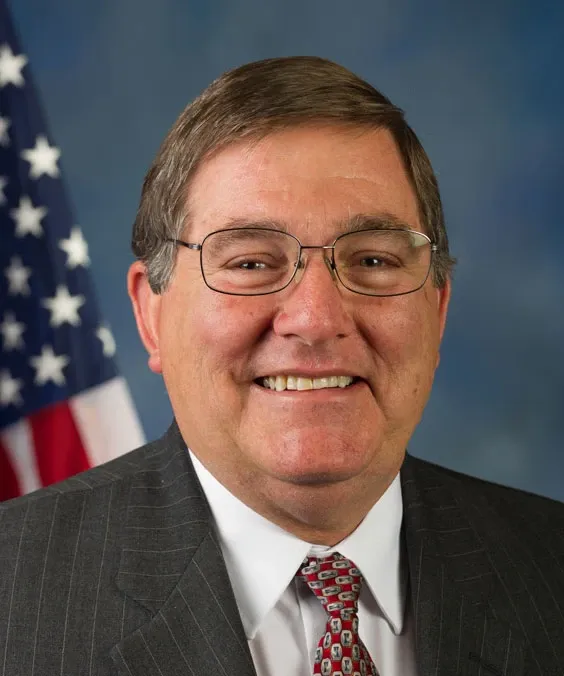
Jodey Arrington is an American politician serving as the U.S. Representative for Texas's 19th congressional district since January 3, 2017. A member of the Republican Party, he has focused on issues such as agriculture, healthcare, and fiscal responsibility during his time in office. Arrington has been active in advocating for policies that support rural communities and economic growth in Texas. He has also served on various committees, contributing to discussions on budgetary and agricultural matters.
We shouldn't accept that it is just 1.7 or 1.8 or whatever the CBO is projecting.
I see the House Budget Committee's responsibilities much more broadly I think than some.
It is going to be a great and satisfying endeavor to go with Brendan Boyle and my Democrat colleagues into the process and make those fundamental reforms.
We are going to get through our budget resolution process early on and through this debt ceiling negotiation.
What they may not see enough of, unfortunately, if they are watching cable news, is that we have a lot of common ground and consensus around making this process work better.
Scott Peters and I from San Diego, Democrat, introduced the Responsible Budget Act that would actually replace the debt ceiling with real debate over real reforms.
I know Sheldon Whitehouse, who is chairing the Budget Committee in the Senate, is big on the debt-to-GDP targets with a glide slope down. I love that idea.
I suspect Democrats don't feel any better than Republicans. Even if your pet projects on either side are buried in this spending, it is just not good business.
I think fixing the broken process, because fundamentally having systemic problems with the institution, or i.e., broken process, is very difficult to yield anything but broken outcomes.
To me, we have got a lot of good things that we can do for our country, a lot of very difficult decisions to make.
I would also say that Republicans have contributed their fair share to this irresponsible fiscal State of the Union.
If we don't intervene, I think the outcome will be disastrous--and possibility irreparable--if it is a sovereign debt crisis.
I contend that the Budget Committee is an A committee because there is not a bigger problem to solve, there is not a greater challenge that we face as a Nation than our runaway spending.
On November 14, the proudest Dimmitt Bobcat, biggest Texas Tech fan, and the legendary west Texas leader Kent R. Hance turns 80 years old. I wish my dear friend and former boss the happiest of birthdays and thank him for his tremendous and…
I thank the gentleman from Michigan for his heartfelt comments and his deep concern for our country and our Nation's future under this gigantic weight of $30-plus trillion in debt and this dark cloud and the clouds that gather. Mr…
I thank my friend from Washington State. My colleagues on the other side of the aisle's efforts to create a national policy that allows for terminating a pregnancy at any stage, for any reason is not only extreme and outside of the…
Moral hazard. We are sleepwalking off the cliff. The problem with this crisis is, as I said, when Humpty Dumpty falls and shatters it is going to be difficult to put him and the exceptional nature and the superpower leadership of this…
I thank the gentleman from Utah (Mr. Moore), beating the drum and sounding the alarm is a big part of it. I think at some point it is hard to calculate and get your mind around the trillions of dollars that are amassing. We have added $7…
We need to continue to develop the B-21 and get it ready for showtime in the next several years.
God Bless America, I mean, seriously. In this institution, you guys are still, you know, giving Americans and Members of Congress hope because of your constructive, bipartisan work.
I want every American to have a stake in the future of our country. I want ownership.
I think some top 1 percent of the income earners who earn 20 percent of the total income in the country pay 40 percent of the taxes doesn't seem fair to me.
70 percent of it will be borne by working people with higher prices of goods and services in the form of lower wages and benefits.
Politicians like Jodey Arrington