Mar 19, 1991
For over 200 years the United States and Poland have been bound by shared values and a commitment to the principles of democracy, human liberty and the rule of law.
The Public Record
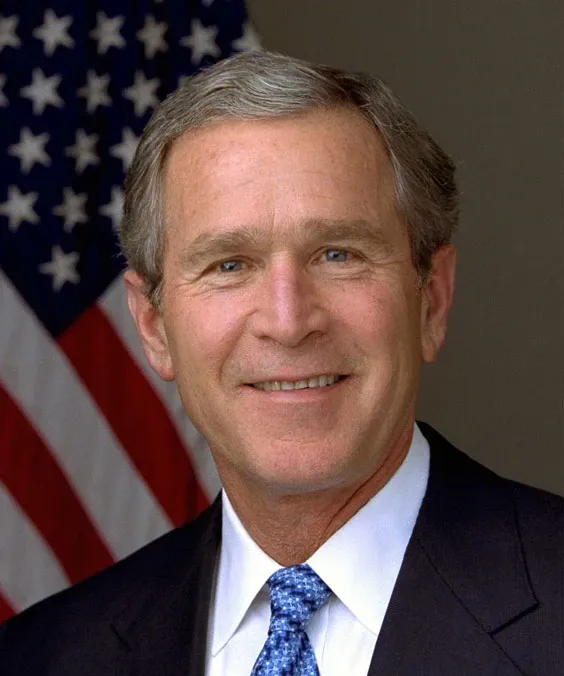
George H.W. Bush was the 41st President of the United States, serving from January 20, 1989, to January 20, 1993. A member of the Republican Party, he previously held the office of Vice President under Ronald Reagan from 1981 to 1989. Bush was a World War II veteran and served in various roles within the U.S. government, including as Director of the Central Intelligence Agency from 1976 to 1977. His presidency is noted for significant events such as the Gulf War and the fall of the Berlin Wall, as well as his efforts in foreign policy and international diplomacy.
For over 200 years the United States and Poland have been bound by shared values and a commitment to the principles of democracy, human liberty and the rule of law.
But you also understand that the cause of freedom cannot end at your own borders, and you proved it during the war in the Persian Gulf.
Today, 200 years later, you have returned General Kosciusko's message to the country of its birth: liberty, security, property.
We rededicate ourselves to the success of free democracy in Poland and throughout Central and Eastern Europe.
Significantly, both the Treaty Between the United States and the Soviet Union on Underground Nuclear Weapon Tests (TTBT) and the Treaty on Underground Nuclear Explosions for Peaceful Purposes (PNET) entered into force.
Eight years ago you were unable to visit Norway to accept the Nobel Peace Prize.
Poland is not lost but has once again been found because men like you still live.
The United States reaffirms its continued strong support for Poland's courageous program of economic reform.
Today, I address you in the name of millions who convey their admiration and love -- the people of the United States.
The dramatic changes in Eastern Europe and in U.S.-U.S.S.R. relations have not diminished the importance of effective and verifiable arms control agreements.
The United States attaches great importance to the consolidation and safeguarding of Poland's democracy and independence, which it considers integral to the new Europe, whole and free.
The year 1990 witnessed the signing of the multilateral Conventional Armed Forces in Europe (CFE) Treaty.
You created a solidarity of spirit that inspired millions of Poles to risk their lives in steel mills, shipyards, and tenements and towns.
No plans yet. It's not set. Note: Dr. Elie Wiesel, founder of the Elie Wiesel Foundation for Humanity, spoke at 10:10 a.m. in the Oval Office at the White House. In his remarks, President Bush referred to Secretary of State James A. Baker…
Well, Secretary Baker had good discussions with Prime Minister Shamir on that. He had good discussions with the heads of many other governments on that. Talked to the Soviets about that, who still have an interest in the Middle East. And…
Well, I think that there's some good talks there. We still have differences, as everyone knows. But let's find common ground. Let's see if we can take these historic enmities and bring them-- eliminate them. And that's what we're going to…
No. We just met for 45 minutes, and then we'll be meeting again, either today or tomorrow. But I responded to a question down either in Bermuda or in Martinique, where I said that there is reason to be hopeful. And I think he found not…
Well, we're going to try. We've just had a meeting with our Secretary of State who had good visits in Israel and in other countries. So, we want to seize the moment. We want to go forward now while there is this feeling of good will and…
I don't give out such nice ones, though. [Laughter] This is beautiful. Thank you very much. Dr. Wiesel. I hope you will sign the peace agreement between Israel and the Arab States with this pen.
Please do. Dr. Wiesel. Mr. President, you have given out so many pens, I think the time has come for you to receive one. [Laughter]
Politicians like George H.W. Bush