May 2, 1991
Well, we'll have to stay tuned to get the answer to that one. But, obviously, we want people talking to each other. Chairman of the Joint Chiefs of Staff Powell
The Public Record
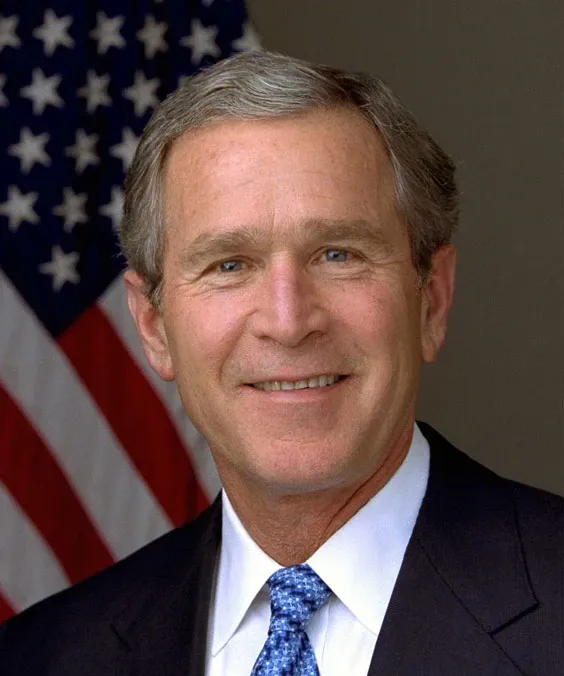
George H.W. Bush was the 41st President of the United States, serving from January 20, 1989, to January 20, 1993. A member of the Republican Party, he previously held the office of Vice President under Ronald Reagan from 1981 to 1989. Bush was a World War II veteran and served in various roles within the U.S. government, including as Director of the Central Intelligence Agency from 1976 to 1977. His presidency is noted for significant events such as the Gulf War and the fall of the Berlin Wall, as well as his efforts in foreign policy and international diplomacy.
Well, we'll have to stay tuned to get the answer to that one. But, obviously, we want people talking to each other. Chairman of the Joint Chiefs of Staff Powell
But it's going--he's making some progress, and I wish I could share with you what it is. But when you're dealing in negotiations that are this sensitive, there are some things that are better kept on a quiet track. I'm just hopeful that we…
Because it's gone on for many, many years, Helen [Helen Thomas, United Press International]. And you don't solve a problem of this complexity overnight.
Well, I don't think it's closing, but with this respect and credibility that we properly have in that part of the world, I think we're better positioned than we have been anytime in the last years to be this catalyst for peace. But I don't…
----that could change any minute. I am not pessimistic. I am determined that we are going to be the catalyst in that troubled corner of the world for peace. Problems there have been going on for years. But I had a long talk with the…
Well, he's traveling a lot. [Laughter] I'll be talking to him this evening, but I don't have any--and there's no immediate plans, but that could change----
Yes, we're going to win. But we're not overconfident; we're not bragging about it. But we're going to work very, very hard. But we are in this to win. It is vital to the United States, to the working people in this country. And it is also…
I believe these developments provide hope that we are on the right path to completing a draft outline.
The United States stands ready to assist in the tasks of relief and reconstruction.
In the first place, I think we're going to be coming out of the recession, particularly with this drop in interest rates. So, I would argue with the people that disagree that we will. Most of the indicators--I think most of the economists…
I've talked trade with Prime Minister Toshiki Kaifu, and it did not come up in our discussions. But whether that's been represented to our trade negotiators, to Ambassador Hills, or others, I simply don't know the answer to your question…
Any decision of that nature is the decision of the President of the United States.
I am determined that we are going to be the catalyst in that troubled corner of the world for peace.
There are problems, and people have different problems in their countries. Some are much more concerned about inflation than other countries--but this is a very strong leadership role by the Fed now that will be helpful, I think, around…
Well, I'll leave that to the markets. I won't go into all that, but I think clearly--and traditionally that has happened, and I certainly expect it to happen.
Lowering the discount rate--and the Fed just announced a half-point reduction to 5.5 percent from 6 percent, and this is good. This will stimulate our economy. I think it will help worldwide as well. It is very good news, and I think it…
I am absolutely certain it is in the best interest of this country we all love so much.
Because of the availability of treble damages, S. 429 could invite a substantial increase in complex antitrust litigation.
We will ensure an adequate transition period for workers in import-sensitive industries.
We must commit ourselves to policies that will promote growth and prosperity into the next century.
Politicians like George H.W. Bush