Jan 3, 1992
I am determined to do everything I can, internationally and domestically, to try to create more jobs.
The Public Record
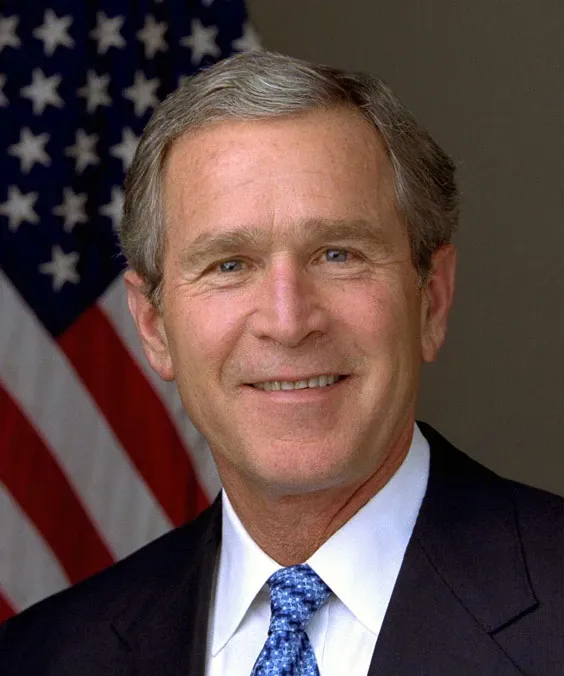
George H.W. Bush was the 41st President of the United States, serving from January 20, 1989, to January 20, 1993. A member of the Republican Party, he previously held the office of Vice President under Ronald Reagan from 1981 to 1989. Bush was a World War II veteran and served in various roles within the U.S. government, including as Director of the Central Intelligence Agency from 1976 to 1977. His presidency is noted for significant events such as the Gulf War and the fall of the Berlin Wall, as well as his efforts in foreign policy and international diplomacy.
I am determined to do everything I can, internationally and domestically, to try to create more jobs.
We have disproportionate responsibilities for security around the world.
The totalitarian powers, the powers that fomented conflict the world over, have indeed become the dominoes of the 1990's.
Your security and your prosperity serve our interests because you can better help build a more stable, more prosperous world.
NAFTA, that North American free trade agreement, is not a threat to Asia.
Singapore has one of the most open economies on Earth, and I appreciate Singapore's leadership on pressing for even greater market freedom around the world.
They will before we're through. Note: The President's 115th news conference began at 2:50 p.m. in the Main Committee Room at Parliament House. In his remarks, he referred to Arthur Dunkel, Chairman of the Trade Negotiation Committee and…
Well, we still need the treaty that exists, that we refer to as ANZUS. As you know, there's been some difficulties with that that it's no point going into now, as much as this is the last question. But nevertheless, the concept of the…
Which was about 12 years before I was out at the Agency. I saw no reason to question it, still see no reason to question it. U.S. Role in the Pacific
No, I didn't have any curiosity because I believed that the Warren Commission, which acted--when was that finding? When was the Warren Commission finding? Was it----
----the Government and also with this private sector group. These farmers were there not as Government officials but wanting to come over and talk to our agricultural experts and to our farmers themselves about this whole program. And I…
Well, they asked that there be consultation on a whole array of things. But I think we're getting it mixed up a little bit with what the---- The Prime Minister. I think it's a mix-up between information----
I'm not sure I understand; I don't know what they've said publicly. What they said is they, the farmers, would like to come over and consult. And I said, ``Come on, let's go.'' This would be good, and I'd like to have some American farmers…
Well, I want to find out exactly what all this means, how it's going to be translated, but clearly, we welcome statements of that nature. I think that's very, very good, very heartening. But I have not had a chance to sit down with Mr…
No, I don't think so. We were extraordinarily helpful in opening the Japanese markets on meat. And indeed, the agricultural leaders that I met with today thanked me for that, similarly for citrus. So, besides that, I love coming to…
No question that it will have a stimulatory effect. It takes a while for that to get through something as complex as the U.S. economy, but it has been very, very well received at home. And I think that it is well-known at home that I plan…
It's too hypothetical a question; let me just cut it off right there. I cannot go into hypothetical--we haven't even gotten to Japan yet. We're still in Australia, remember? The Economy
Well, I wasn't asked to accelerate anything on this visit. I was told by the Australian leadership of the importance of this. We feel that way. Secretary Baker, as you know, has been involved in it, and we strongly support this concept of…
I have full confidence that on a level playing field our workers can compete with anybody, anywhere.
So this new year, 1992, let's look forward to our next century together.
I told them we weren't looking for sympathy, but I pointed out that our wheat production dropped by 30 percent last year.
Protectionism, it closes markets, it ensures poverty, and it costs jobs.
It is essential, believe me, it is absolutely essential, not just for agriculture but for world trade, that those talks succeed.
Politicians like George H.W. Bush