Dec 17, 1867
The principles of American liberty are still the inheritance of this people and ever should be.
The Public Record
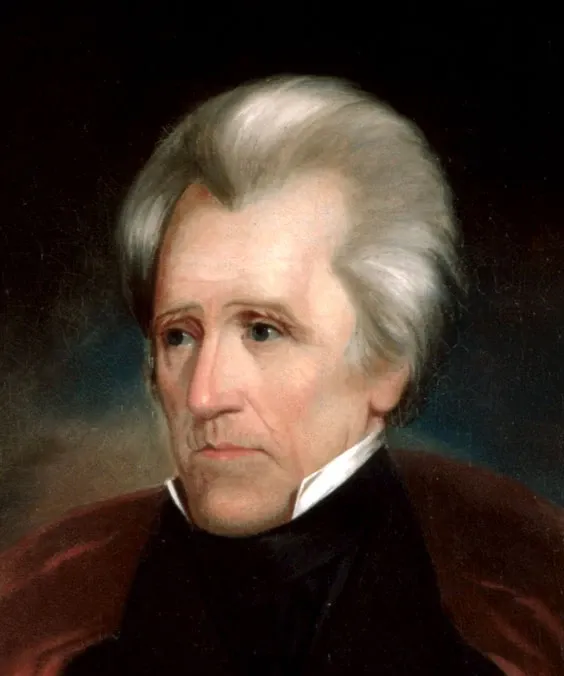
Andrew Johnson was the 17th President of the United States, serving from April 15, 1865, to March 4, 1869. A member of the Democratic Party, he was born in Tennessee and became the first president to assume office following the assassination of Abraham Lincoln. Johnson's presidency was characterized by his strong opposition to the Reconstruction policies implemented by Congress, which aimed to rebuild the South and secure rights for newly freed African Americans. His resistance to these policies ultimately led to his impeachment by the House of Representatives in 1868, although he was acquitted by the Senate and remained in office until the end of his term.
The principles of American liberty are still the inheritance of this people and ever should be.
I respectfully suggest to Congress that some public recognition of General Hancock's patriotic conduct is due, if not to him, to the friends of law and justice throughout the country.
Some public recognition of General Hancock's patriotic conduct is due.
It is desired and advised that all communications in writing intended for the executive department of this Government and relating to public business of whatever kind, including suggestions for legislation, claims, contracts, employment…
This instrument can not be legally binding upon the United States unless sanctioned by the Senate.
In answer to the resolution of the Senate of the 6th instant, concerning the International Monetary Conference held at Paris in June last, I transmit a report from the Secretary of State, which is accompanied by the papers called for by…
This regulation has become necessary for the more convenient, punctual, and regular dispatch of the public business.
But he goes further, and plainly intimates what he means by 'public considerations of a high character,' and this is nothing else than his loss of confidence in his superior.
Under a sense of public duty I am compelled to deny your right under the Constitution and laws of the United States.
Mr. Stanton does not content himself with assuming that public considerations bearing upon his continuance in office form as fully a rule of action for himself as for the President.
It was approved, and at the earliest moment practicable was applied in the form of a proclamation to the State of North Carolina.
Public considerations of a high character constrain me to say that your resignation as Secretary of War will be accepted.
Thus far and upon this vital policy there was perfect accord between the Cabinet and myself.
I make great allowance for a change of opinion, but such a change as this hardly falls within the limits of greatest indulgence.
There was an interval of a week between that date and the order of suspension, during which two Cabinet meetings were held.
You are hereby suspended from office as Secretary of War, and will cease to exercise any and all functions pertaining to the same.
The mutual confidence and general accord which should exist in such a relation had ceased.
The suspension has not been revoked, and the business of the War Department is conducted by the Secretary ad interim.
To the Senate of the United States: I transmit to the Senate, in answer to their resolution of the 25th ultimo, a report from the Secretary of State, with accompanying papers.
It can not be legally accepted by the executive government without the advice and consent of the Senate.
I transmit a report from the Secretary of State and the papers accompanying it.
I transmit to the Senate, in answer to their resolution of the 26th ultimo, a report from the Secretary of State, with accompanying papers.
How far the duty of the President 'to preserve, protect, and defend the Constitution' requires him to go in opposing an unconstitutional act of Congress is a very serious and important question.
Politicians like Andrew Johnson