Oct 18, 2011
I am going to have to leave. I have to go to a cybersecurity hearing. That is a different kind of threat.
The Public Record
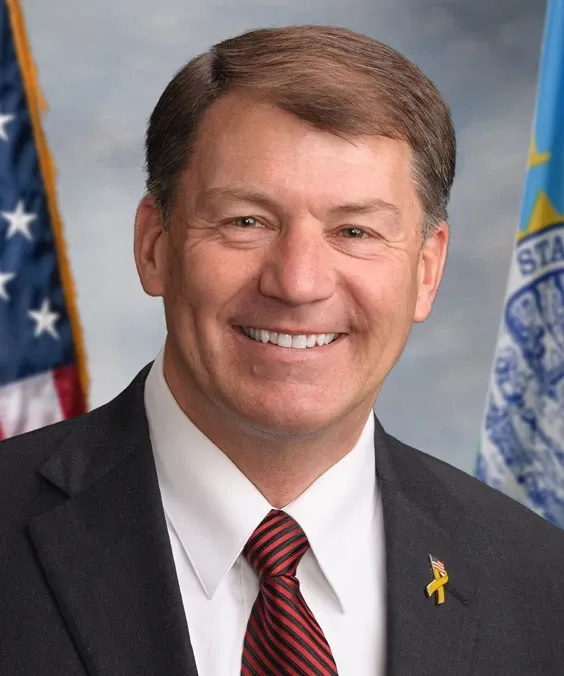
John Randolph Thune is an American politician serving as the senior United States senator from South Dakota since 2005. A member of the Republican Party, Thune has been a prominent figure in national politics, focusing on issues such as immigration enforcement, border security, and federal worker compensation. He has played a significant role in shaping Republican policy in Congress and has been involved in various legislative initiatives throughout his tenure.
I am going to have to leave. I have to go to a cybersecurity hearing. That is a different kind of threat.
I would say, Madam Chair and Senator Inhofe, other members of the Committee, going forward, flood control needs to be the top priority for the Corps, particularly in wet cycles.
I believe that human error contributed to the creation of this particular disaster.
I have said throughout this entire debacle this past summer that the Corps of Engineers needs to be held to account for their management of the Missouri River system this year.
The Corps completely failed when it came to understanding the amount of risk the snow packs contained.
I hope the Corps will not simply repeat the mistakes next year or in future years that occurred this year.
USF is critical for getting service--both phone service to these markets, and then, now, transitioning in to broadband services.
It's very important, in my view, to ensure that the FCC enacts USF reforms that help give all Americans, including those in rural areas and tribes, access to broadband service.
I have to be very frank with you, I'm not sure what kind of business model you could actually create to provide any communication service.
We think it would be unfortunate that if, that that consensus, after having been reached, after so much difficult negotiation, get destroyed as a consequence of making the perfect the enemy of the good.
At the end of the day, though, doesn't the cable company--cable industry, I should say--benefit from achieving a reasonably acceptable result with respect to USF reform, rather than having no result at all, or even maintaining the status…
But the status quo is not acceptable. Too many areas in this country are untouched by universal service support, requiring their consumers and businesses to do without the broadband access they need. That is not fair.
Maybe if we could get that for the record, but it seems to me that some of the delays could be eliminated if there was some basic pre-screening that was done, maybe at the job fair sometime prior to the conditional offer of a job.
The enactment of the Tribal Law and Order Act isn't going to be a silver bullet in solving all those problems, but I do believe it was an important step in the right direction in improving public safety and justice.
The conditions on many of our Nation's reservations, including in our home State of South Dakota, are not acceptable.
I think we were all delighted after working on it for about three years that the Tribal Law and Order Act finally passed last year.
The Tribal Law and Order Act also included a provision that would allow magistrates to hold trials and other court proceedings in Tribal courtrooms, as opposed to Federal courts.
I'm wondering maybe if you could talk a little bit about how BCAP would be used by AltAir and other companies to specifically develop alternative aviation fuels.
The Department of Defense estimates that a $1 rise in the price per barrel of oil equates to $130 million per year in their fuel costs.
Because of our lack of domestic fuel production we're routinely subjected to major price fluctuations that cause taxpayers, consumers and industry billions of dollars each year.
Today, the United States imports nearly 65 percent of its petroleum. By 2030, we're on a course for importing 70 percent.
As you know, renewable energy and alternative fuel projects are very capital-intensive in terms of investment.
Politicians like John Thune