Aug 9, 2009
I've joined with Senator Ron Wyden in introducing the Build American Bonds Act, which enjoys bipartisan support.
The Public Record
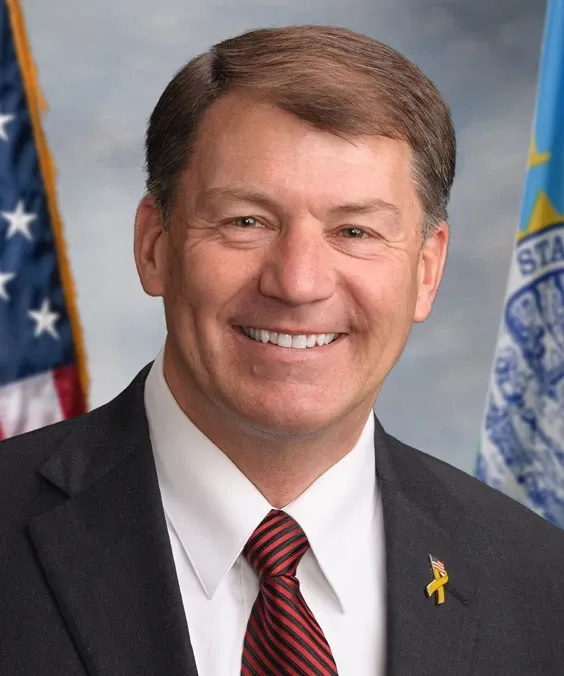
John Randolph Thune is an American politician serving as the senior United States senator from South Dakota since 2005. A member of the Republican Party, Thune has been a prominent figure in national politics, focusing on issues such as immigration enforcement, border security, and federal worker compensation. He has played a significant role in shaping Republican policy in Congress and has been involved in various legislative initiatives throughout his tenure.
I've joined with Senator Ron Wyden in introducing the Build American Bonds Act, which enjoys bipartisan support.
I think it's important to explore the proper role of the Federal Government in ensuring our transportation system can safely and efficiently move freight and passengers throughout the country.
An important consideration for any new Federal transportation financing mechanisms like an infrastructure bank is to ensure all areas of the country, both rural and urban, are not only eligible, but can compete on a level playing field.
But for agriculture to remain competitive, balance must be brought into the game.
We appreciate that you are a co-sponsor of S. 308 and S. 309, bills introduced by Senator Baucus that would strengthen Federal funding for investment in highways in and across rural states.
We greatly appreciate your leadership in developing a proposal that would benefit both rural and urban areas.
But, if there's one example, one thing that the Congress ought to be doing right now that would improve--
If South Dakota didn't have rail, South Dakota industries wouldn't be competitive in grain production.
We're strong supporters of the Build America Bonds program, a $50-billion increase in transportation funding across the country.
I can see where that would be fairly complicated, and certainly be an imposition on pilots.
I'm interested, too, in something that was raised in--and I'm not sure which of your testimony--but, it had to do with this.
Obviously, everybody here, and all of you, want to make sure that we're taking whatever steps we can to make airline travel as safe as is humanly possible.
Let me just ask one question with regard to an issue that I think is on everybody's mind these days, and that is the fiscal situation that we find ourselves in as a nation, trillion dollar deficits projected out as far as the eye can see.
I can say, having served for a number of years with her in the House, there is not anybody who cares more about the people that she represents or works harder on behalf of the people that she represented when she was a Member of the House…
Well, I can say I think we look forward to working with you on that subject as well.
Given the primary thrust of the stimulus was job creation, can anything be done to speed up the timing of some of those awards?
I think that is the correct one. It makes it possible for many of these areas of the Country to participate in renewable fuel production.
If that kind of a law is enacted, a cap and trade program would have sweeping implications for agriculture and for the entire economy.
There is a different definition in the Farm Bill, however, than exists in the Energy Bill which many of us have tried to rectify.
It seems to me at least that the government is being viewed more and more to folks in production agriculture as almost an adversary as opposed to an ally.
I would hope that this Committee would work toward making a change because that, to me, is not something that ought to be a part of any equation or calculation of the carbon footprint of renewable energy.
My view is that Congress and the Administration should be helping farmers and ranchers compete in a global marketplace and not hamstringing their everyday production decisions.
For most Americans, it is the issue of cost and affordability, and seeing these continual increases in the overall cost of healthcare.
I would argue that creating a government program is not the correct way to address these challenges.
Politicians like John Thune