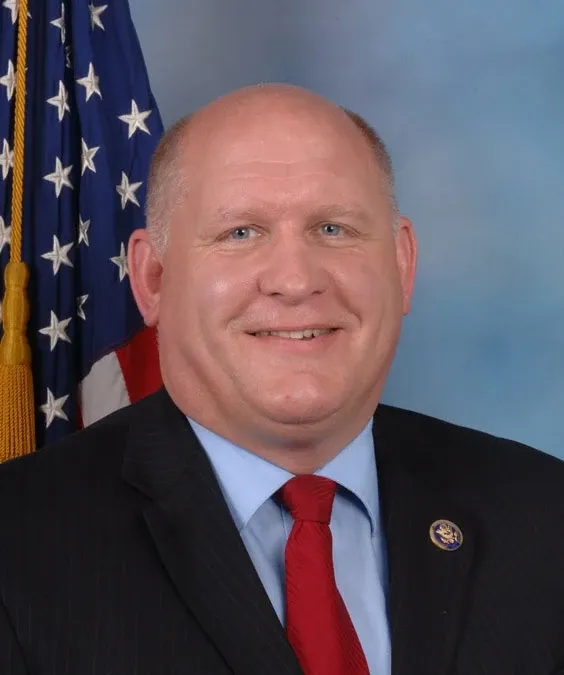
Joe Pitts
The Public Record
Joseph R. Pitts is a former Republican member of the U.S. House of Representatives, serving Pennsylvania's 16th congressional district from 1997 to 2017. During his tenure, Pitts was known for his focus on healthcare, energy, and family issues, often advocating for conservative policies. He played a significant role in various legislative efforts, including those related to the Affordable Care Act and energy independence. Pitts was also involved with the Pennsylvania Family Institute, reflecting his commitment to family values and social issues.
Sep 30, 2015
Together these three bills continue the commitment this Congress has to strengthen the Medicare program and keep the promise for seniors...
Sep 30, 2015
H.R. 556, the Prevent Interruptions in Physical Therapy Act, sponsored by our colleague Representative Gus Bilirakis of Florida...
Sep 30, 2015
Today's hearing will consider three bipartisan legislative bills designed to strengthen the Medicare program.
Sep 29, 2015
I would just remind the gentlewoman that abortion is not health care. I yield 2 minutes to the gentlewoman from Missouri (Mrs. Hartzler), a great leader in the Pro-Life movement.
Sep 29, 2015
I am pleased to yield 5 minutes to the gentleman from New Jersey (Mr. Smith), the chair of the Pro-Life Caucus.
Sep 29, 2015
We should be aware that not a single penny will be cut for women's health care under this bill. I am pleased to yield 2 minutes to the gentleman from North Carolina (Mr. Pittenger).
Sep 29, 2015
I am very pleased to yield 3 minutes to the gentleman from Wisconsin (Mr. Duffy), the prime sponsor of this legislation.
Sep 29, 2015
Unfortunately, the Obama administration puts its own abortion-centered ideology ahead of women's health care. I yield 2 minutes to the gentlewoman from Tennessee (Mrs. Black), an outstanding leader on this issue.
Sep 29, 2015
In response briefly, money is fungible. Everybody knows it. In one pocket, out the other, same pair of pants. $1.2 billion over the last 3 years in Medicaid. The videos, nobody is putting words in their mouth. It is their words, their…
Sep 28, 2015
This is a good bill. It is an important bill. It is a bipartisan bill. I urge my colleagues to vote in favor of H.R. 1624. I yield back the balance of my time.
Sep 17, 2015
It is my hope that through the steps currently taken in these bills, as well as any productive additions that may occur henceforth, this committee can come together to take meaningful steps towards Medicaid certainty, transparency, and…
Sep 17, 2015
That's why I'm so pleased today to be discussing several bipartisan bills that will help boost the accessibility and transparency of the Medicaid program.
Sep 17, 2015
Congress has a responsibility to ensure that proper incentives are put in place to increase the accountability inclusiveness of Medicaid.
Sep 16, 2015
It is just a real shame that it is OK to kill a child 3 months before it is born, but you kill it 3 months after it is born and you are going to go to jail.
Sep 16, 2015
I support efforts to amend the law and give States the discretion to exclude abortion providers from receiving taxpayer funding through Medicaid.
Sep 16, 2015
The real question for all of us is whether that tiny human life has a God-given right to be protected by the law.
Sep 16, 2015
No State should be forced to continue to include providers in their Medicaid program who commit reprehensible acts.
Sep 16, 2015
What must such a baby feel when she is approached by doctors who come to kill rather than to cure?
Sep 10, 2015
Can you explain how it is that Medicaid policy permits million or multimillion dollar lottery winners to retain Medicaid coverage when they can clearly afford to purchase their own health insurance?
Sep 10, 2015
Mr. Pitts, do you think it is appropriate for millionaires or multimillionaires to be receiving Medicaid while at the same time there are disabled children on the waiting lists for home and community-based services?
Politicians like Joe Pitts