Aug 21, 2018
The President's personal lawyer and his former campaign chairman are now confessed or convicted felons.
The Public Record
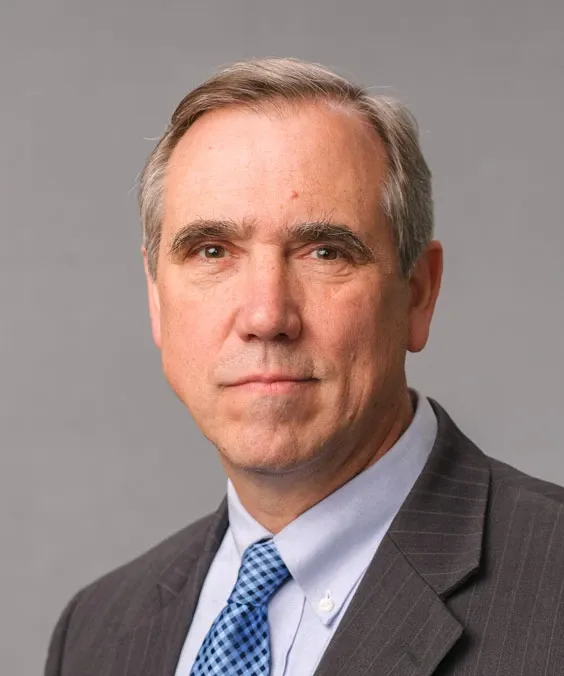
Ron Wyden is an American politician serving as the senior United States senator from Oregon, a position he has held since 1996. A member of the Democratic Party, Wyden has been a prominent advocate for civil liberties, healthcare reform, and technology policy. Throughout his tenure, he has focused on issues such as privacy rights, government surveillance, and access to healthcare, often emphasizing the importance of transparency and accountability in government actions.
The President's personal lawyer and his former campaign chairman are now confessed or convicted felons.
I hope sometime soon to get home again to talk to the communities that have been getting clobbered.
I think folks at Crooked River understand how serious this is as it relates to fire.
It seems to me it is clear that this is going to take some work before we get this out of Committee.
As I indicated, we don't take a back seat to anybody in terms of reducing fire risk.
Thank you very much, Mr. Chairman. I will be brief. I know colleagues have been waiting as well.
A recent investigation by Senator Wyden revealed that wireless carriers were providing customer location to private companies without verifying that users had consented to this disclosure of private information.
Before my colleague leaves the floor, I want to thank her for her thoughtful remarks in recognizing that as we talk about the future of Medicare and Medicaid, what we see is a constant need to update these terrific programs for the times…
I thank my colleague. Mr. President, suffice it to say, the Senator is someone who gets right to the point. She succinctly got to the central question of ensuring that we build on the guarantee that has been Medicare and Medicaid. She has…
Before she leaves the floor, I want to thank my seatmate on the Finance Committee--a strong advocate for the concept that Medicare and Medicaid are guarantees. They are lifelines for working families. It is a pleasure to have you here on…
The days when these pipes are considered neutral are over. Because the whole point of 230 was to have a shield and a sword.
The Federal Trade Commission doesn't have the authority or the resources to be a tougher cop on the beat.
If your dark money policy gives oligarchs in Moscow reason to throw back celebratory vodkas, and if their friends at the NRA have a green light to flood the airwaves with even more election secrecy, you made the wrong call.
At some point, this ceases to be a case of Treasury being slow to respond, and it looks more like actively abetting the coverup of corruption and illegal activity.
This committee is attempting to pursue information that's key to uncovering corruption and protecting our democracy from foreign interference.
I asked that he work with me to crack down on the abuse of shell companies, a magnet for all manner of shadowy, illicit conduct.
This committee is facing levels of stonewalling from the administration on letters and policy issues that I never expected I'd see.
I was not the decision maker with respect to the IRS's recent decision to exempt dark money groups from disclosing donor information.
I would like you to state in writing for the record what happened when it was brought up.
We have had essentially zero responsiveness in terms of our letters on the big issues: the question of documents, NRA and Russia, letters to FinCEN about Michael Cohen.
The reality is, today we have something which is not simpler. In fact, I characterize it as 'simply complicated' for many people with the six schedules.
Politicians like Ron Wyden