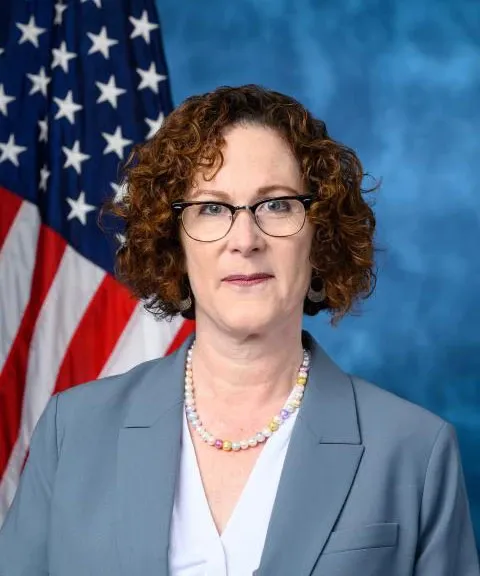
Ron Wyden
The Public Record
Ron Wyden is an American politician serving as the senior United States senator from Oregon, a position he has held since 1996. A member of the Democratic Party, Wyden has been a prominent advocate for civil liberties, healthcare reform, and technology policy. Throughout his tenure, he has focused on issues such as privacy rights, government surveillance, and access to healthcare, often emphasizing the importance of transparency and accountability in government actions.
May 2, 2023
In a moment of national crisis about mental health, with the problems growing at such a rapid rate, the widespread existence of ghost networks is unacceptable.
May 2, 2023
My view is that insurance companies have gotten a free pass for too long letting ghost networks run rampant.
May 2, 2023
When someone who's worried about their mental health or the mental health of a loved one finally works up the courage to pick up the phone and try to get help, the last thing they need is a symphony of 'please hold' music, non-working…
May 2, 2023
In my view, it's a breach of contract for insurance companies to sell their plans for thousands of dollars each month while their product is unusable due to a ghost network.
May 2, 2023
The Behavioral Health Network and Directory Improvement Act (S. 5093), introduced last Congress by Senator Smith and Chairman Wyden, would require audits of plans' provider directories.
May 2, 2023
The results were clear. Our secret shoppers could get an appointment--now this is after people had paid vast sums--they could get an appointment only 18 percent of the time.
May 2, 2023
Too often, Americans who need affordable mental health care hit a dead end when they try to find a provider that's covered by their insurance. Ghost networks mean that the lists of mental health providers in insurance company directories…
May 2, 2023
The fact is, these Americans are being ripped off by what the Government Accountability Office has described as a 'ghost network.'
May 2, 2023
Too often Americans who need affordable mental health care hit a dead end when they try to find a provider that is covered by their insurance. Ghost networks mean that the lists of mental health providers in insurance company directories…
May 2, 2023
I believe, certainly, greater transparency, for example, ought to be an easy one for members of this committee to get around.
May 2, 2023
It is a breach of contract for insurance companies to sell their plans worth thousands of dollars each month, while their product is unusable.
May 2, 2023
What a ghost network is all about is essentially selling health coverage under false pretenses.
May 2, 2023
In any other business, if a product or service does not meet expectations, consumers get a refund.
May 2, 2023
I am going to work with all of my colleagues here on both sides, Democratic and Republican, to get some real accountability for these patients who pay good money for mental health coverage and then find that there is very little 'there'…
Apr 19, 2023
The official estimate says that $540 billion of taxes owed go unpaid each year.
Apr 19, 2023
Democrats are committed to the proposition that it should not cost hundreds of dollars and many more hours of time simply to follow the law and to pay what you owe.
Apr 19, 2023
Apparently, if he does not get what he wants, he is willing to let this country go through a catastrophic default.
Apr 19, 2023
Democrats made a big investment in taxpayer service with the Inflation Reduction Act, and it goes without saying that now the American people have a right to know what they got with that investment.
Apr 19, 2023
The official estimate says that $540 billion of taxes owed go unpaid each year.
Apr 19, 2023
Democrats made a big investment in taxpayer service with the Inflation Reduction Act, and it goes without saying that taxpayers have a right to know what they got with that investment.
Apr 19, 2023
We know in this country we have a tax gap of hundreds and hundreds of billions of dollars.
Apr 19, 2023
It is these wealthy tax cheats--who can pretty much decide what they want to pay and when they want to pay it--that are the challenge.
Politicians like Ron Wyden