Feb 5, 2014
Most of our industry remains comprised of multi-generational, family-owned companies committed to the long-term future of our communities.
The Public Record
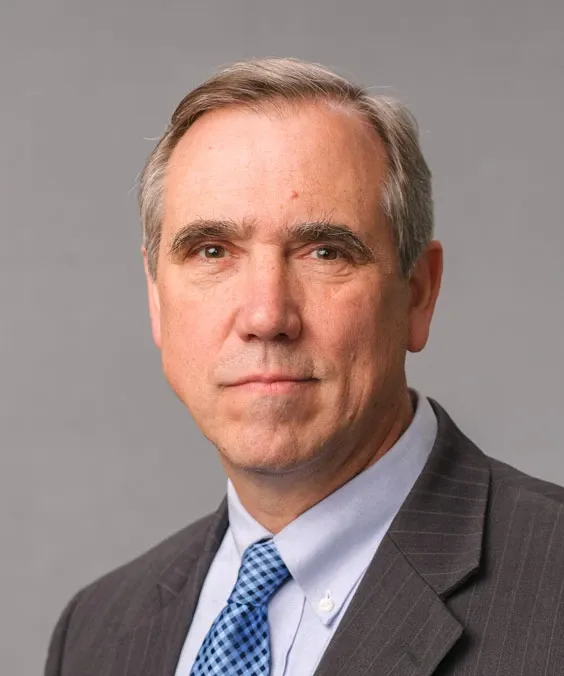
Ron Wyden is an American politician serving as the senior United States senator from Oregon, a position he has held since 1996. A member of the Democratic Party, Wyden has been a prominent advocate for civil liberties, healthcare reform, and technology policy. Throughout his tenure, he has focused on issues such as privacy rights, government surveillance, and access to healthcare, often emphasizing the importance of transparency and accountability in government actions.
Most of our industry remains comprised of multi-generational, family-owned companies committed to the long-term future of our communities.
I want to thank you for your commitment to resolving this challenging problem. I appreciate very much your work on the forest roads fix.
BLM land managers don't manage these lands anymore. They manage paper, process, and litigation.
It is our hope that your committee will come together in conference with the House delegation and incorporate the best elements from each of these pieces of legislation.
Senator Wyden, your bill is an attempt to restore some semblance of rational management to the O&C lands.
Chairman Wyden, we appreciate your leadership on this important issue for the State of Oregon.
We look forward to continuing that work together when you move over to that next seat.
I applaud Senator Wyden for his willingness to step into the circular firing squad which O&C lands have become.
I really want to reinforce Senator Wyden's comments when he initiated this, that perhaps the most important thing about this legislation is, for the first time, it begins to define a new pathway forward, a third path, that kinder and…
Make no mistake about it: Wildfire threatens our water supplies and our very way of life in Colorado.
I'm very pleased, for example, that there's a Farm Bill finally on the way to the President.
Senator Wyden's bill is an attempt to restore some semblance of rational management to the O&C lands.
I still think there's benefits to it. It's a pretty simple approach, but I acknowledge the political reality.
This idea that would neglect, as you and I have talked about, Senator Murkowski, the preventive efforts in the forest, and then you have these massive infernos, and the bureaucracy then raids the prevention fund to put out the fire--that…
Finally, as Senator Murkowski and I have indicated in past meetings, she and I are going to be working very closely together to find bipartisan, collaborative approaches to addressing these issues on a national level.
Our legislation ends the stop-everything approach that has paralyzed forest management.
A huge priority for me and the Governor is a more coherent policy for protecting our rivers, streams, and aquatic features.
My concern is, as it has always been with those kinds of approaches, that we would reignite the timber wars in our part of the United States.
In this room, back in 2007, Larry Craig and I wrote the bipartisan Secure Rural Schools Bill, and that got extended for 1 additional year.
Assuring future decades of reliable harvests that averaged 300 and 350 million board-feet per year will give employers confidence.
I believe getting natural resources policy right represents what is best about our country: wise use of our treasured lands, air, and water.
Politicians like Ron Wyden