Apr 5, 2017
What we have to do is get away from this partisan reconciliation-only kind of approach and say from the get-go that Democrats and Republicans... should sit down at the outset and try to make sure that we have a system that works for…
The Public Record
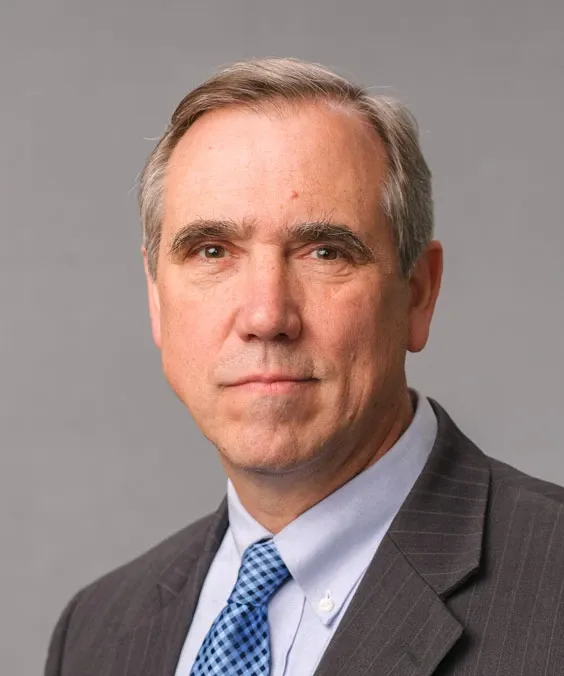
Ron Wyden is an American politician serving as the senior United States senator from Oregon, a position he has held since 1996. A member of the Democratic Party, Wyden has been a prominent advocate for civil liberties, healthcare reform, and technology policy. Throughout his tenure, he has focused on issues such as privacy rights, government surveillance, and access to healthcare, often emphasizing the importance of transparency and accountability in government actions.
What we have to do is get away from this partisan reconciliation-only kind of approach and say from the get-go that Democrats and Republicans... should sit down at the outset and try to make sure that we have a system that works for…
It is grossly unfair to just sit by when you have these two tax systems in America, one of which is stacked against the working family.
You would think that an administration that talks about running government like a business would want to go out and invest in cybersecurity.
What that would mean is that customer service would get worse, more taxpayers would fall victim to hackers and preventable scams.
Apparently, that conversation has not happened, or if it did, the message did not get through.
It looks like this President will choose to keep hiding his returns and ignoring this very low ethical bar.
I will filibuster any bill that weakens strong encryption because it will leave Americans less safe.
I believe the committee needs to lift the fog of secrecy about what really happened to our democracy.
This feeds distrust and causes Americans to question the legitimacy of our government.
The way it would work is instead of sending the money raised by ski area permit fees to the Treasury, the money would stay with the agencies.
No Senator who believes that individual rights are reserved to the people and not to Government can support this nomination.
Transparency with the public and with Congress will be absolutely essential.
I want to thank Mr. Lighthizer for being here today as the committee considers his nomination to be the U.S. Trade Representative.
We urge you to use the confirmation hearings to clarify Mr. Lighthizer's commitment to promoting a U.S. trade policy that benefits all Americans by protecting and promoting labor, environmental, and human rights worldwide.
I hope that the President's forthcoming budget doesn't take even more trade enforcers out of the game.
I hope that at the end of this hearing, Americans will have heard more detail about how the administration plans to meet the extensive promises then-candidate Trump made in the 2016 campaign.
I think the premiere economic issue of our time is how we get wages up for people.
I am going to be in rural Oregon this weekend having town hall meetings, and being able to tell them that the person who is being considered as the nominee for our U.S. Trade Representative has this at the top of the list makes a…
Politicians like Ron Wyden