Jan 2, 2017
Regardless of the outcome of the administration's review, unity with Europe will be crucial, and if confirmed, I will work closely with our European partners on these issues.
The Public Record
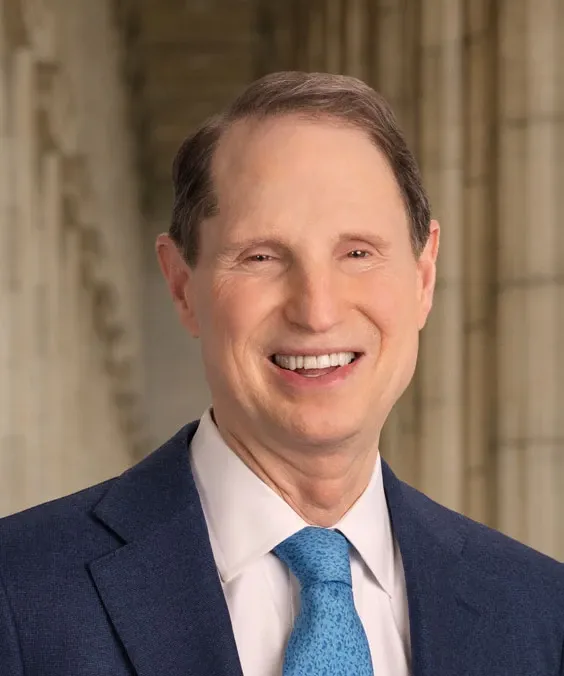
Jeff Alan Merkley is an American politician serving as the junior United States senator from Oregon since January 6, 2009. A member of the Democratic Party, Merkley has focused on issues such as healthcare, climate change, and economic inequality throughout his tenure. He has been an advocate for progressive policies and has worked to address the challenges facing working families in Oregon and across the nation. Merkley is known for his commitment to transparency and accountability in government, often speaking out against perceived injustices and advocating for reforms.
Regardless of the outcome of the administration's review, unity with Europe will be crucial, and if confirmed, I will work closely with our European partners on these issues.
The United States will not accept anything less than the full restoration of Ukraine's territorial integrity.
Promoting human rights and democratic governance is a core element of U.S. foreign policy.
The United States is committed under Article 5 of the North Atlantic Treaty to the collective defense of any and all NATO Allies.
The United States continues to support Ukraine, along with our French and German allies, in pushing for full implementation of the Minsk agreements.
I am committed to upholding the rights of individuals in Russia and elsewhere and will continue to support and uphold laws enacted by Congress such as the Sergei Magnitsky Rule of Law Accountability Act to hold human rights abusers in…
I share your concern about the violence against the LGBTI community in Chechnya that was brought to light by brave journalists at Novaya Gazeta and researchers at Human Rights Watch.
The United States' commitment to Article 5 is ironclad, and the United States backs up this commitment though a broad set of actions, including deterrence and reassurance.
I think one of the most disturbing trend lines of the last couple of years is the creation of an ISIS affiliate in Afghanistan.
When the President says we are not going to dictate how to govern, does this mean we are not going to weigh in on those issues anymore?
A hundred-thousand points of contact is hundred point--a hundred-thousand points of vulnerability, and privacy, confidentiality is so important to diplomatic conversations.
I was surprised, therefore, that the Special Representative for Cybersecurity was on the list to be eliminated by the State Department.
We say our new strategy is to support the Afghan forces. That has been our old strategy.
I do not, sir. And I am not aware, during the preparation of this process, of any plans along those lines.
These kinds of, kind of, basic pieces have a huge impact on the retention of talent, and morale, and the capability of the Department.
Certainly, we have been very concerned about the--both the commercial hacking, the governmental hacking that has occurred by foreign nations and foreign forces, including Russia and North Korea.
The long and short of it is, Afghanistan today, a planning can be held in any one of thousands of buildings.
A government that is capable is a government that is responsive to the needs that are identified by its citizens.
What projects are we actually canceling, in terms of the President's dictates to no longer engage in nation-building?
Well, thank you, Mr. Chairman. And appreciate your bringing up cybersecurity in your initial remarks.
The President has said that we will not dictate to the Afghan people how to live or how to govern their own complex society.
Politicians like Jeff Merkley