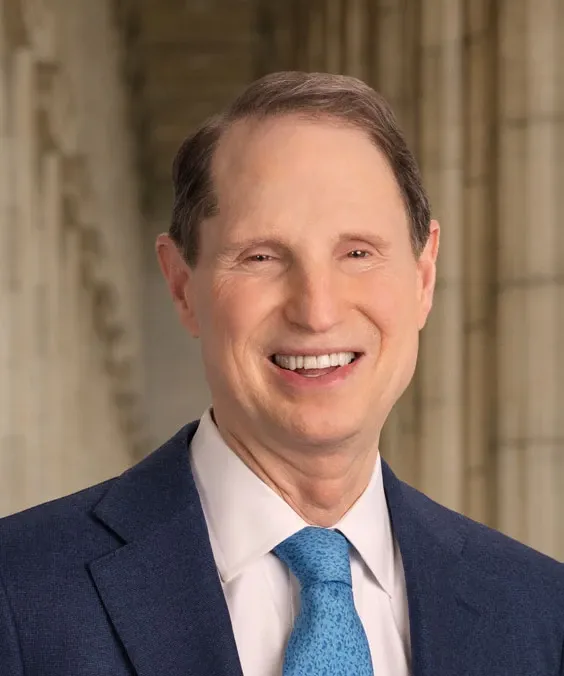
Jeff Merkley
The Public Record
Jeff Alan Merkley is an American politician serving as the junior United States senator from Oregon since January 6, 2009. A member of the Democratic Party, Merkley has focused on issues such as healthcare, climate change, and economic inequality throughout his tenure. He has been an advocate for progressive policies and has worked to address the challenges facing working families in Oregon and across the nation. Merkley is known for his commitment to transparency and accountability in government, often speaking out against perceived injustices and advocating for reforms.
Sep 25, 2017
What are the forms of lethal military assistance that would best serve our goals of supporting the Ukrainian Government while not provoking, if you will, Russian escalation?
Sep 25, 2017
I will just say my experience has been extremely frustrating with the Department of State, and when you say they are committed, those are, at this point, empty words.
Sep 25, 2017
So it is important to follow up the philosophy you just expressed with actual action.
Sep 7, 2017
May I have 2 minutes to conclude my statement? The ACTING PRESIDENT pro tempore. Is there objection? Without objection, it is so ordered.
Sep 5, 2017
We need to have our leaders at the highest level expressing their disapproval of these domestic actions in Turkey.
Sep 5, 2017
It is important for the United States to publicly stand for its own values and the values that the Turkish Government purportedly seeks to uphold.
Sep 5, 2017
It is troubling that a NATO ally may have tampered with election results to allow its president to consolidate power.
Sep 5, 2017
I would argue that the United States needs to continue engaging publicly in terms of expressing our support.
Jul 25, 2017
I do oppose this because essentially when there is consideration of listing, you are on the verge of a listing, there has been a surge in hunting for species that this would encourage.
Jul 17, 2017
There is a proposal to move the State Department Bureau of Population, Refugees, and Migration to the Department of Homeland Security. Good idea, bad idea?
Jul 17, 2017
There is no indication that the administration has raised the issues that Senator Young has talked about.
Jul 17, 2017
In this power struggle that became a tribal conflict, is there a way to put the pieces back together? And if so, how?
Jul 17, 2017
I strongly believe, and we at the ICRC strongly believe that states, especially those that are directly or indirectly involved, and supporting partners, can exercise their leverage over the warring parties on the ground.
Jul 17, 2017
I believe that U.S. leadership, in whatever shape or form it comes, is key and can make a difference, yes.
Jul 17, 2017
I only hope that in any negotiations on the humanitarian assistance budget, Members of Congress avoid splitting the difference between what has been proposed and what expanding needs require.
Jul 17, 2017
The effort to maintain funding must continue--as the voices of the world's most vulnerable populations must be heard.
Jul 17, 2017
The massive cuts proposed in President Trump's FY 2018 budget, particularly regarding support for international organizations involved in humanitarian response, for the International Disaster Assistance (IDA) account and for the Migration…
Jul 17, 2017
I appreciate the opportunity to join this panel and hope that my testimony helps bring more attention to the increasingly dire situations.
Jul 17, 2017
My view, and the view of UNICEF, is that we have to address not just the symptoms, but the causes.
Jul 17, 2017
To have this happen by accident for 16 months in a row is less than 1 out of 1 trillion times 1 trillion. In other words, there is nothing accidental about this.
Jul 17, 2017
Is it essential, as this UNICEF report points out, that we aggressively, as an international community, take on what is often called global warming, which I refer to as climate disruption?
Jul 17, 2017
Our current executive branch, the Trump administration, has cut all funding to UNFPA, drastically reducing the assistance available for responding to women in these situations.
Jul 17, 2017
Particularly in the refugee camps, it seems like we could somehow provide more security to diminish this.
Politicians like Jeff Merkley