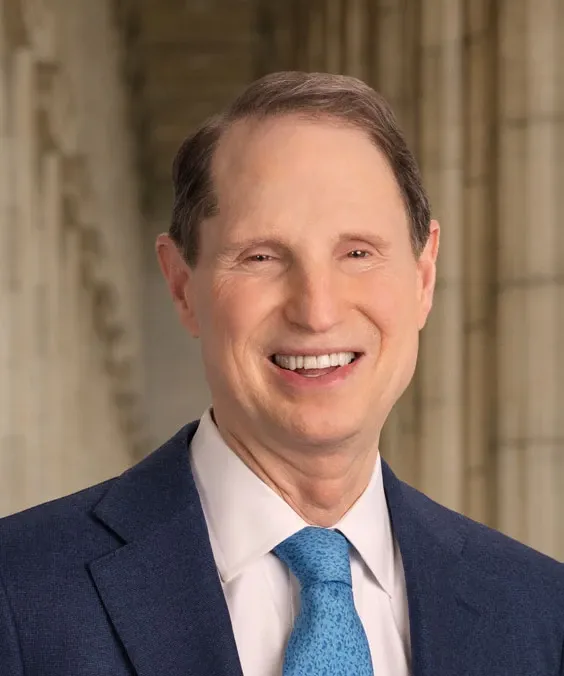
Jeff Merkley
The Public Record
Jeff Alan Merkley is an American politician serving as the junior United States senator from Oregon since January 6, 2009. A member of the Democratic Party, Merkley has focused on issues such as healthcare, climate change, and economic inequality throughout his tenure. He has been an advocate for progressive policies and has worked to address the challenges facing working families in Oregon and across the nation. Merkley is known for his commitment to transparency and accountability in government, often speaking out against perceived injustices and advocating for reforms.
May 9, 2018
I am concerned about the pressing need to improve public safety and fund Tribal police in Indian Country.
May 9, 2018
I also am going to keep pushing in the budget for more funding for thinning our forests.
May 9, 2018
Having the 2020 date of ending that practice of viewing big fires as national disasters I think is very appropriate and helpful.
May 9, 2018
I remain concerned that CMS' deference to state agencies on this issue represents a further erosion of the principle of tribal sovereignty and an abdication of the Federal Government's trust responsibilities.
May 9, 2018
A Dear Tribal Leader letter and subsequent related statements made by HHS personnel on the issue of American Indian and Alaska Native (Al/AN) exemption from Medicaid work requirements revealed a startlingly poor understanding of the unique…
May 9, 2018
Sustainable means cutting healthcare for poor people and damaging rural America, and that's just unacceptable.
May 9, 2018
The Medicaid block grant strategy that you've laid out based on Graham-Cassidy, this would cut about $2,500 per recipient in Oregon.
May 9, 2018
This would be Medicare Part E, and it spends the money people spend on an exchange but lets them choose a better organized option that competes with the regular insurance options.
May 9, 2018
Senator Chris Murphy and I and several of my colleagues have introduced a bill that says let people choose a Medicare policy if they want, a public option.
May 9, 2018
While providing grants to go to rural areas is something that benefits my rural areas, it doesn't increase the overall numbers, and that's the core problem.
May 9, 2018
All I'm hearing from my medical community is we need to train more doctors and more nurses and more PAs, so why does it make sense to cut these programs?
May 8, 2018
But should the United States position itself, work massively to try to have the machine-making role be something that is done here in the United States of America and exported to the world?
May 8, 2018
Absolutely. But they are very happy with the situation as it is with low tariffs to our market and high tariffs to theirs.
May 8, 2018
I think it would get their attention. I am not saying necessarily that is directly the right thing to do, but the fact that we have set up a system where we continue to give them far lower tariffs in our market than vice versa says…
May 8, 2018
So China charges us 15.5 percent tariff on our Ag products, and we charge 5.2 percent on theirs. Why should we not charge them the same tariff that they charge on us?
May 8, 2018
That is an issue that I put on the floor of the Senate as an amendment, and we did get bipartisan support to close that loophole.
Politicians like Jeff Merkley