Sep 9, 2009
On the sophisticated side, we have this extraordinary report from Mr. Markopolos with 29 red flags.
The Public Record
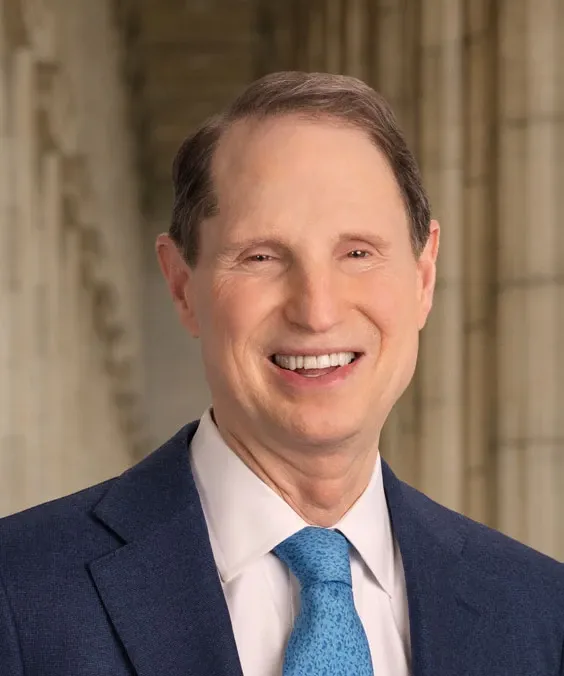
Jeff Alan Merkley is an American politician serving as the junior United States senator from Oregon since January 6, 2009. A member of the Democratic Party, Merkley has focused on issues such as healthcare, climate change, and economic inequality throughout his tenure. He has been an advocate for progressive policies and has worked to address the challenges facing working families in Oregon and across the nation. Merkley is known for his commitment to transparency and accountability in government, often speaking out against perceived injustices and advocating for reforms.
On the sophisticated side, we have this extraordinary report from Mr. Markopolos with 29 red flags.
I think someday my grand-kids are going to look at my kids and say, what, you mean you didn't plug in cars when you were young?
I think it would be really helpful to have the Administration lay out just such a more detailed strategy.
Isn't it possible to take these factors and weave them into a coherent strategy to eliminate our dependence on foreign oil?
I think some of the statistics that were mentioned, Mr. Wellinghoff, I believe you said we can produce hundreds of gigawatts of renewable energy by 2030.
We have here in the United States, right now, the technology, the resources, the know-how to build a clean energy economy.
I will just close by echoing concerns about the community banks and also about our credit union system.
I don't see why--they certainly haven't done a great job on prudential regulation.
The twin peaks model is viewed as advantageous by some because the two principle objectives of financial regulation, systemic protection and consumer protection, are fundamentally in conflict.
I think the thing that the Federal Reserve has done well is monetary policy, not that they haven't made any mistakes.
Do you think it would make more sense to have the holding companies and the banks under the same regulatory agency?
What can we do that would make this tool the most effective one possible to try to prevent this unacceptable threat of a nuclear weapon in Iranian hands?
I think that the most important thing is that it be driven around climate goals and that the good work of the Senate be focused on that.
It has been estimated that if we have regenerative braking and cars can go the first 30 miles, if you will, on electricity, that we would reduce 80 percent of our carbon dioxide production from passenger transportation.
We need the same attitude with which we approached assisting our banks to assist our working families.
Any argument? Do the other folks agree that 12 percent might be about right to aim for by 2012?
It looks like a path to me of catastrophe if we do not proactively change our energy strategy, a catastrophe for our economy.
What I do not want is an energy policy that drives up the cost of energy in the United States of America.
Politicians like Jeff Merkley