Jun 26, 2012
When Congress passed the 1992 Cable Act, for example, cable operators controlled 98 percent of the pay TV distribution market.
The Public Record
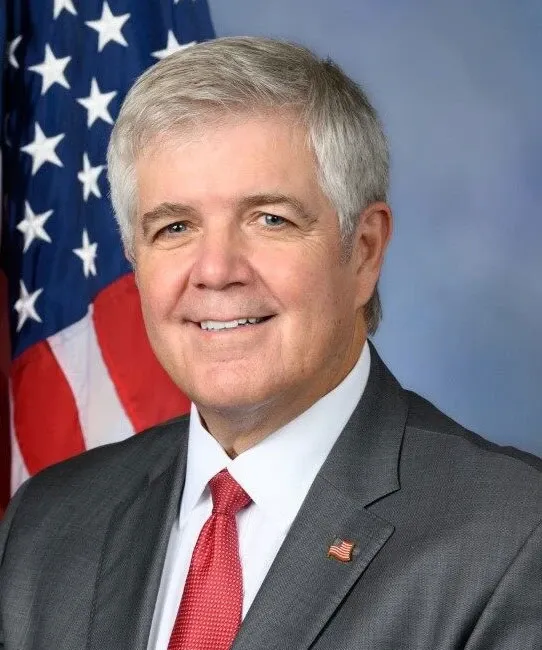
Greg Walden is a former U.S. Representative from Oregon, serving in the House from 1999 to 2021. A member of the Republican Party, he represented Oregon's 2nd congressional district. During his tenure, Walden was known for his work on issues related to healthcare, telecommunications, and energy policy. He played a significant role in the passage of the 21st Century Cures Act, which aimed to accelerate medical product development and bring new innovations to patients more quickly.
When Congress passed the 1992 Cable Act, for example, cable operators controlled 98 percent of the pay TV distribution market.
In today's struggling economy, we are looking at a market that is working, and let's keep it that way.
We applaud you, Representative Eshoo and Congressman Issa, for introducing House Concurrent Resolution 42 which opposes the FM chip.
We oppose a mandate for FM chips in cell phones but also the current effort should simply get a study.
Gone are the days when consumers were limited to radio and just television; and gone, too, should be the archaic policies of the old era of prohibiting free market decisions.
Thank you not only for your leadership on this issue but your testimony today and your encouragement on our bipartisan resolution.
Now is the time to execute a serious game plan that deals with those who would put international politics ahead of an open and prosperous Internet.
If this power grab is successful, I am concerned that the next Arab Spring will instead become a Russia Winter where free speech is chilled, not encouraged, and the Internet becomes a wasteland of unfilled hopes, dreams, and opportunities.
I urge the administration to continue the United States' commitment to the Internet's collaborative governance structure and to reject international efforts to bring the Internet under government control.
If we are not vigilant, just might break the Internet by subjecting it to an international regulatory regime.
And I want America to be number one in broadband. That has been a goal of mine from the very beginning being on this subcommittee.
So I think that this work is really significant. And there was another generation that made sure that people had telephone service--had telephone service. We take that for granted. And that was the lifeline for people in rural communities…
I am one of the members that pushed our leadership very, very hard to include a significant sum of money to make sure that we really reach people and build broadband out to them because the private sector simply was not doing it; it wasn't…
I think it is the correct action to protect taxpayer dollars and ensure that these projects are deployed consistent with the recently enacted legislation.
What have we gotten in return for that $2.5 billion? Well the National Broadband Map is one thing; I think that was about $300 million for the map.
We were told such haste was necessary to get the economy going and the money would go to 'shovel-ready projects.'
The Recovery Act allocated $7.2 billion to these programs, dwarfing previous broadband loan and grant programs in size.
Today marks the third oversight hearing of our subcommittee to examine whether taxpayers are getting their money's worth from the broadband loan and grant programs.
At some point it would be interesting to know, of those projects that are taking so long, how many of those are in these very rural districts.
Families in America are really struggling with the cost of energy, whether it is trying to fuel up their vehicle...
The Obama administration is one that I think has a horribly misguided energy policy. It is not 'all of the above.'
The bottom line is, we're going to protect America from the greatest threat to America and to Americans with this legislation. We need to make sure that our private sector is nimble and flexible and innovative; and tying its hands with…
Politicians like Greg Walden