But it just seems to me that one of the things that ought to be examined, if you are going to be subsidizing second homes, for instance, with a mortgage interest deduction, at a minimum, the reduction for people that are in extreme--and it…
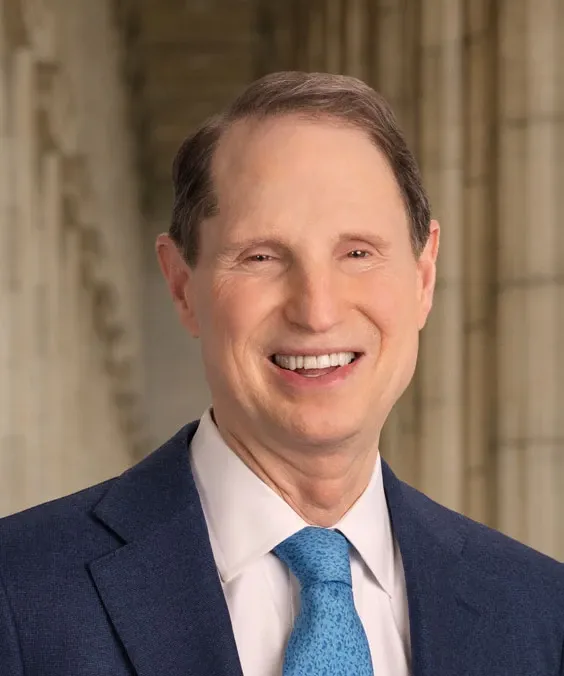
Earl Blumenauer
The Public Record
Earl Francis Blumenauer is an American politician serving as the U.S. Representative for Oregon's 3rd congressional district since 1996. A member of the Democratic Party, Blumenauer has been a prominent advocate for environmental issues and urban development. He has played a significant role in legislation related to transportation, health care, and social justice, often emphasizing the importance of local community input in federal decision-making processes.
Please share research showing that [state and] local governments are going to be interested in making substantial investments to facilitate freight movements for the nation as opposed to problems that people have locally.
With record transit ridership, now is not the time to eliminate guaranteed funding for our nation's public transportation systems.
During the L.A. transit strike in 2003, congestion increased 89 percent. It has a huge impact, not just in communities like L.A., and Chicago, and New York, but in Oklahoma City, Salt Lake
I think there is, in fact, a national priority surrounding things like safe cycling, safe pedestrian activity, and having transit available to people.
You may not think State Routes to School is a high national priority. I invite you to come with me in North Carolina, in Nevada, in Iowa.
What happens in terms of our looking at the connections in terms of intermodalism.
I would hope that you could share with us any research you have that indicates that local governments are going to be interested in making substantial investments to facilitate freight movements for the nation.
Ronald Reagan established the Highway Trust Fund portion that dealt with transit.
I appreciate your referencing that. Indeed, as we get out of the metropolitan areas, mobility for the disabled, for elderly people, for young becomes even more critical.
We need to transition from per gallon taxes to per mile charges, as Congressman Blumenauer rightly said
Obviously people traveling on the highway do get a benefit from people who decide to use other forms of transportation through lower congestion.
A rational government would be borrowing and investing using other peoples' money for free to make our system stronger.
I hope that we will be able to expand our hearings and our analysis to hear from the amazing array of people.
One of the most important trends in America is that people are driving less per capita.
Infrastructure investment would put millions of people to work while it strengthens local economy, the environment, and our national competitiveness.
We need a national system that speaks to the transportation challenges of today.
The federal government has largely failed to maintain a system of aviation facilities, the electrical grid, sewer and water systems, and interstate highways that once was the envy of the world.
I hope that it is the first of several hearings that we have on the Budget Committee dealing with infrastructure finance.
America had a 50 year experiment with devolution, local control over infrastructure.
The majority witnesses focus time their time and energy arguing for devolution--the concept that we don't need a strong federal presence and support in infrastructure development.






