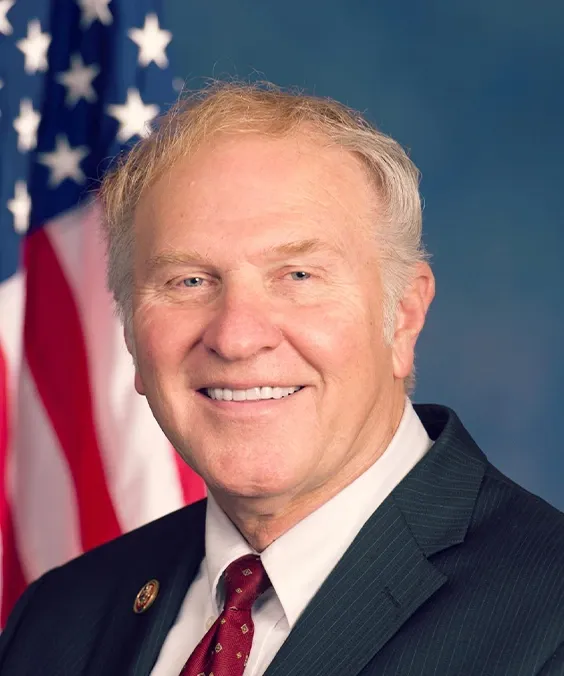
We are a republic whereof one man is as good as another before the law.
Ulysses S. Grant
The Public Record
Ulysses S. Grant was the 18th President of the United States, serving from 1869 to 1877. A member of the Republican Party, he was born in Ohio and became a prominent Union general during the American Civil War, leading the Union Army to victory. His leadership was instrumental in the defeat of the Confederacy, and he is often remembered for his military strategies and determination.
gutenberg.org
We should look to the dangers threatening us, and remedy them so far as lies in our power.
The development of gold and silver mines in the United States and Territories has not only been remarkable, but has had a large influence upon the business of all commercial nations.
Lead, zinc, and copper, from being articles of import, we may expect to be large exporters of in the near future.
So with iron, which formed scarcely an appreciable part of our products half a century ago, we now produce more than the world consumed at the beginning of our national existence.
But for the extraordinary genius and ability of our mechanics, the achievements of our agriculturists, manufacturers, and transporters throughout the country would have been impossible of attainment.
The ingenuity and skill of American mechanics have been demonstrated at home and abroad in a manner most flattering to their pride.
The American system of locating various and extensive manufactories next to the plow and the pasture, and adding connecting railroads and steamboats, has produced in our distant interior country a result noticeable by the intelligent…
The extraordinary effect produced in our country by a resort to diversified occupations has built a market for the products of fertile lands distant from the seaboard and the markets of the world.
One hundred years ago the cotton gin, the steamship, the railroad, the telegraph, the reaping, sewing, and modern printing machines, and numerous other inventions of scarcely less value to our business and happiness were entirely unknown.
Our progress has been great in all the arts--in science, agriculture, commerce, navigation, mining, mechanics, law, medicine, etc.; and in general education the progress is likewise encouraging.
Our liberties remain unimpaired; the bondmen have been freed from slavery; we have become possessed of the respect, if not the friendship, of all civilized nations.
If anything better can be done to direct the country into a course of general prosperity, no one will be more ready than I to second the plan.
A revival of shipbuilding, and particularly of iron steamship building, is of vast importance to our national prosperity.
How to induce capital to employ labor is the question.
I have expressed the opinion, and repeat it, that the first requisite to the accomplishment of this end is the substitution of a sound currency in place of one of a fluctuating value.
If employment can be given to all the labor offering itself, prosperity necessarily follows.
I have stated that three elements of prosperity to the nation--capital, labor, skilled and unskilled, and products of the soil--still remain with us.
They are all old persons, who could have taken no part in the rebellion, and the services for which they were awarded pensions were in defense of the whole country.
I recommend the restoration of this bounty to all such.
Treat the negro as a citizen and a voter, as he is and must remain, and soon parties will be divided, not on the color line, but on principle.
Many a good citizen votes the opposite, not because he agrees with the great principles of state which separate parties, but because, generally, he is opposed to negro rule.
Under existing conditions the negro votes the Republican ticket because he knows his friends are of that party.
Let there be fairness in the discussion of Southern questions, the advocates of both or all political parties giving honest, truthful reports of occurrences, condemning the wrong and upholding the tight, and soon all will be well.
While I remain Executive all the laws of Congress and the provisions of the Constitution, including the recent amendments added thereto, will be enforced with rigor, but with regret that they should have added one jot or tittle to…
Politicians like Ulysses S. Grant