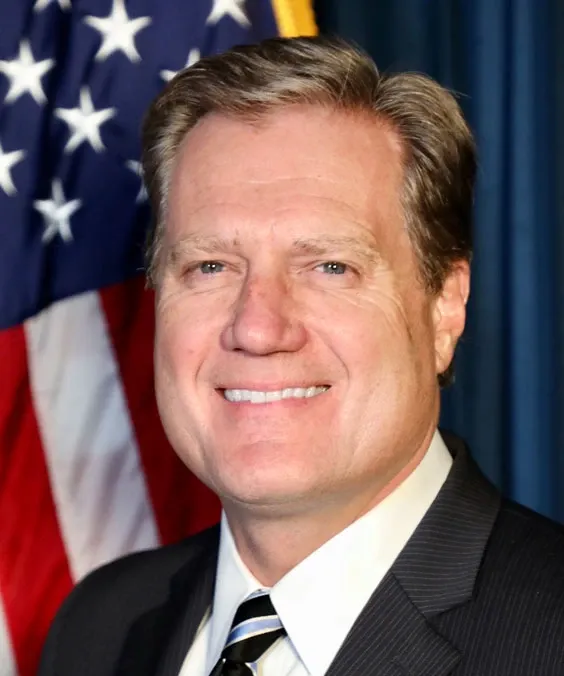
Steve Chabot
The Public Record
Steve Chabot is a Republican politician from Ohio who served multiple terms in the U.S. House of Representatives. His first term began in 1995 and he served until 2001, returning to Congress in 2003 and remaining until 2021. During his time in office, Chabot was known for his focus on fiscal responsibility and social security issues, often advocating for budgetary restraint and the importance of maintaining a balanced federal budget. He has been a vocal supporter of conservative economic policies and has emphasized the need to control government spending.
Mar 27, 2012
I think the fact that the Taiwanese Government has decided to move itself in the direction of the criminalization of politics is unfortunate as well.
Mar 27, 2012
Having been one of the founding chairs of the Congressional Taiwan Caucus...
Mar 27, 2012
It's critical that CBP officers be able to communicate valuable information with rightsholders.
Mar 27, 2012
Intellectual Property in the United States is responsible for spurring new industry, developing useful technology, and creating jobs.
Mar 21, 2012
The business of this country is generally conducted in English and that has been accepted for a long time.
Mar 20, 2012
We need to do everything humanly possible to take care of those people, and make sure that they have the best quality of lives.
Mar 20, 2012
I think it was a lackadaisical effort that was made in order to attain that permission of Iraq for our folks to be there without being prosecuted, et cetera.
Mar 20, 2012
I am sick and tired of also hearing that all of these casualties that were caused by America's intervention.
Mar 20, 2012
I think that we ought to do some soul searching, all of us Americans who are engaged in policy.
Mar 20, 2012
I would argue this administration did that to maintain, to keep a campaign promise, and that was a terrible mistake in my view.
Mar 20, 2012
I find a little bit of an inability on both sides of this issue looking back.
Mar 20, 2012
I did not listen to Gary Ackerman, I went along with it, and the President, it was after 9/11.
Mar 20, 2012
Maliki's actions have been widely interpreted as part of a brazen effort to consolidate his power by weakening Sunni politicians whom he considers to be threats.
Mar 20, 2012
The situation on the ground has, in my view, degenerated significant, in no small part due to a sectarian political crisis which has been triggered by the actions of Iraqi Prime Minister Nouri al-Maliki.
Mar 6, 2012
He was one of the people on this committee that we are clearly going to miss.
Feb 15, 2012
The Government of Egypt has taken numerous actions which have directly escalated the situation, calling into question its commitment to the principles of democratic governance.
Feb 15, 2012
The current crisis surrounding the December 29 raids on several NGOs are deeply, deeply disturbing.
Feb 14, 2012
Recent developments, however, do not leave me optimistic about Egypt's future.
Feb 14, 2012
Over the past year, the Supreme Council of the Armed Forces, under the leadership of Field Marshal Tantawi, has ruled Egypt with the stated goal of turning power over to a civilian government as soon as possible.
Feb 14, 2012
It is clear that Islamists will dominate the Egyptian political landscape over the next year.
Feb 1, 2012
The threat posed by the Iranian regime take on new and more dire geostrategic significance when coupled with the potential for alliances with oppressive anti-American regimes in our own hemisphere.
Politicians like Steve Chabot